
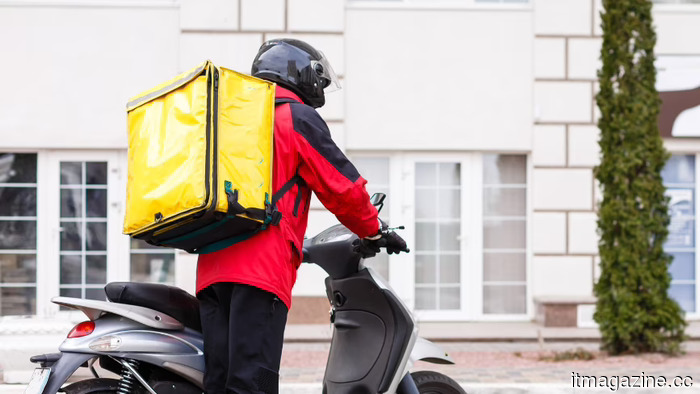
Alibaba offers $1.5 billion for grocery chain Pupu, doubling the proposal made by Sun Art.
Alibaba Group is proposing $1.5 billion to acquire Pupu, one of China's remaining independent online grocery platforms, as reported by Bloomberg. This offer exceeds a previous $600 million bid from Sun Art Retail, previously an Alibaba affiliate and now supported by the private equity firm DCP Capital.
This move follows Meituan's agreement to spend $717 million to acquire the Chinese operations of rival Dingdong Fresh, which is still pending antitrust approval. Pupu stands out as one of the last significant independent grocery delivery services in the country.
The significance of Pupu
Pupu manages a 30-minute delivery network that spans approximately 10 cities in the Fujian, Guangdong, Sichuan, and Hubei provinces. It reportedly generates annual revenue exceeding 30 billion yuan (around $4.2 billion), making it a highly valuable player in China's instant retail sector. The platform offers fresh produce, daily necessities, and fast-moving consumer goods from local warehouses. For Alibaba, acquiring Pupu would provide an efficient means to enhance warehouse density, supplier connections, and cold-chain logistics that would typically take years to establish.
The 150 billion yuan delivery competition
Alibaba, Meituan, and JD.com have been aggressively investing to dominate local commerce and fresh produce, which is a consumer segment in China that remains relatively underdeveloped online. Reports from 36Kr indicate that the three companies have collectively spent over 150 billion yuan in the past year on food delivery and instant retail incentives.
Order volumes that once ranged from 80 to 90 million surged past 200 million during peak competition. At one point, Meituan was reportedly losing around 2 yuan per order, while some rivals faced losses of up to 6 yuan.
Regulatory scrutiny from Beijing
This bidding competition unfolds at a challenging time. On June 11, Beijing’s market regulator criticized Alibaba, JD.com, Pinduoduo, Douyin, and Xiaohongshu for misleading marketing practices during the annual 618 shopping festival, resulting in a 6% drop in Alibaba’s Hong Kong shares. Chinese grocery platforms have engaged in a prolonged series of subsidy-driven price battles, exacerbating what the government describes as "involution"—excessive competition—which it has attempted to rein in since imposing a record 18.2 billion yuan fine on Alibaba in 2021. While consolidation could lessen market fragmentation, it also raises concerns about concentrating power among a few leading platforms.
Strategic implications
Alibaba divested its 73.7% share in Sun Art to DCP Capital for roughly $1.6 billion, part of a larger divestment strategy to refocus on core e-commerce and AI initiatives. This sale crystallized around a $1.8 billion loss on an investment Alibaba had made only two years prior.
The bid for Pupu indicates that Alibaba is not stepping back from local commerce but is transitioning from operating physical hypermarkets to managing instant delivery systems. “This suggests that Alibaba is serious about local commerce again, but it also implies that profitability in the Chinese e-commerce sector may remain highly competitive for a while," commented Charu Chanana, chief investment strategist at Saxo Markets.
Market response
On Friday, Meituan’s shares fell by up to 3.1% in Hong Kong, while Alibaba’s stock increased by as much as 3.5%. This disparity indicates investors’ perception that Alibaba is gaining traction in a segment historically dominated by Meituan.
The rising valuations highlight the increasing scarcity of independent delivery assets. Alibaba’s $1.5 billion offer places a valuation on Pupu at approximately 0.36 times its revenue, a considerable premium over the $600 million bid, yet still reasonable for a platform with daily consumer engagement in a market where the three major Chinese tech firms are contending for the same clientele.
Caveats
The sale process remains confidential, and discussions are ongoing. No deal is assured, and the terms may change. Meituan's planned acquisition of Dingdong is pending antitrust approval, and any sale of Pupu to a larger industry player might also undergo similar regulatory scrutiny from Beijing. The rising bids could suggest a shift in focus from profitability back to market share competition, prompting questions about whether consolidation will genuinely resolve the subsidy-driven delivery battles or merely consolidate them among fewer, larger entities.
Other articles
 Comments on Reddit are now receiving video responses, and this feature may be more beneficial than it appears.
Reddit's implementation of video comments might enhance the usefulness of replies in communities focused on DIY, cooking, makeup, fitness, and tutorials, as demonstrating a step visually can often be clearer than describing it in words.
Comments on Reddit are now receiving video responses, and this feature may be more beneficial than it appears.
Reddit's implementation of video comments might enhance the usefulness of replies in communities focused on DIY, cooking, makeup, fitness, and tutorials, as demonstrating a step visually can often be clearer than describing it in words.
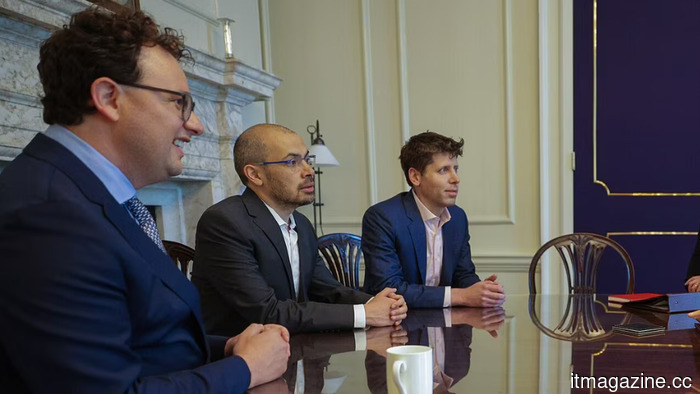 AI competitors Altman, Amodei, and Hassabis attend the G7 summit.
CEOs from OpenAI, Anthropic, and Google DeepMind are set to participate in the G7 in France next week, coinciding with two of them getting ready for significant IPOs and dealing with oversight regarding AI governance.
AI competitors Altman, Amodei, and Hassabis attend the G7 summit.
CEOs from OpenAI, Anthropic, and Google DeepMind are set to participate in the G7 in France next week, coinciding with two of them getting ready for significant IPOs and dealing with oversight regarding AI governance.
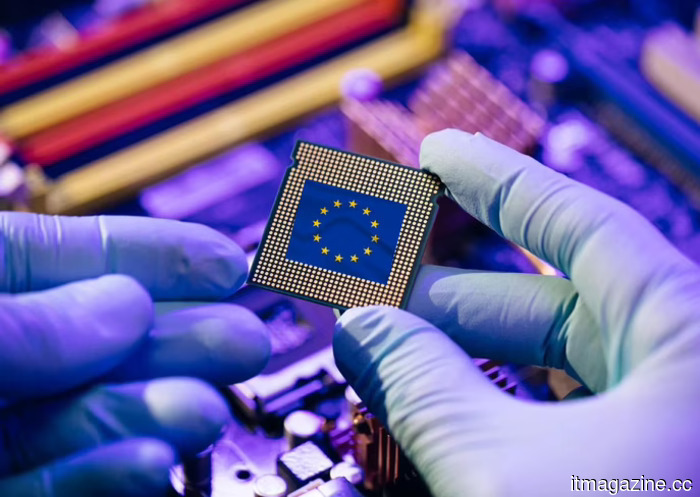 Infineon inaugurates a €5 billion semiconductor factory in Dresden, marking the first success of the EU Chips Act.
Infineon's €5 billion Smart Power Fab will officially open on July 2 in Dresden, where it will manufacture power chips for AI data centers. This marks the first significant achievement of the EU Chips Act following the cancellation of Intel's project in Magdeburg.
Infineon inaugurates a €5 billion semiconductor factory in Dresden, marking the first success of the EU Chips Act.
Infineon's €5 billion Smart Power Fab will officially open on July 2 in Dresden, where it will manufacture power chips for AI data centers. This marks the first significant achievement of the EU Chips Act following the cancellation of Intel's project in Magdeburg.
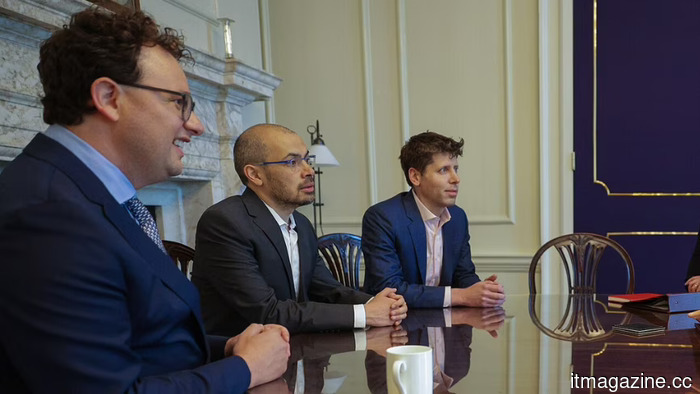 Leaders in AI, including Altman, Amodei, and Hassabis, are set to attend the G7 summit.
CEOs of OpenAI, Anthropic, and Google DeepMind are set to participate in the G7 meeting in France next week, with two of them gearing up for significant IPOs while dealing with scrutiny over AI governance.
Leaders in AI, including Altman, Amodei, and Hassabis, are set to attend the G7 summit.
CEOs of OpenAI, Anthropic, and Google DeepMind are set to participate in the G7 meeting in France next week, with two of them gearing up for significant IPOs while dealing with scrutiny over AI governance.
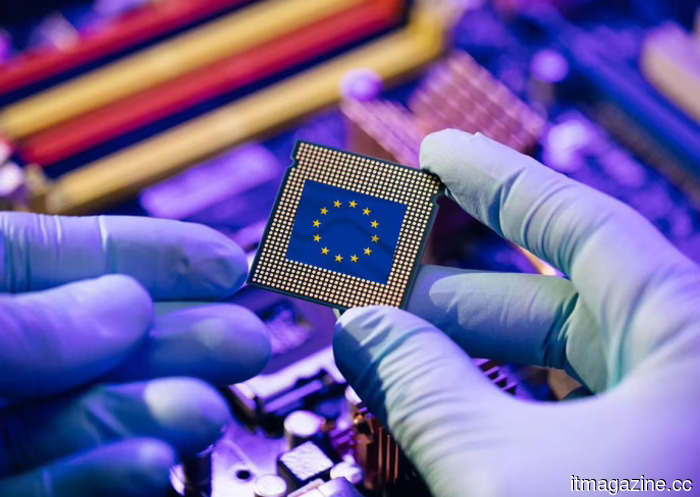 Infineon inaugurates a €5 billion manufacturing facility in Dresden, marking the first success of the EU Chips Act.
Infineon's €5 billion Smart Power Fab will open on July 2 in Dresden, focusing on the production of power chips for AI data centers. This marks the first significant achievement of the EU Chips Act following the cancellation of Intel's project in Magdeburg.
Infineon inaugurates a €5 billion manufacturing facility in Dresden, marking the first success of the EU Chips Act.
Infineon's €5 billion Smart Power Fab will open on July 2 in Dresden, focusing on the production of power chips for AI data centers. This marks the first significant achievement of the EU Chips Act following the cancellation of Intel's project in Magdeburg.
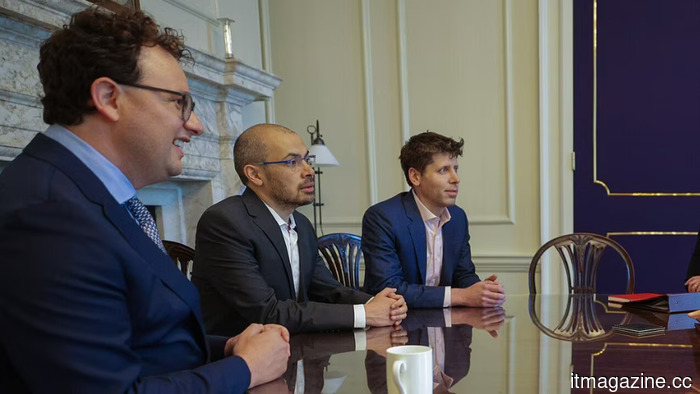 AI competitors Altman, Amodei, and Hassabis are heading to the G7 summit.
The CEOs of OpenAI, Anthropic, and Google DeepMind will be present at the G7 in France next week, as two of the three get ready for significant IPOs and encounter scrutiny regarding AI governance.
AI competitors Altman, Amodei, and Hassabis are heading to the G7 summit.
The CEOs of OpenAI, Anthropic, and Google DeepMind will be present at the G7 in France next week, as two of the three get ready for significant IPOs and encounter scrutiny regarding AI governance.
Alibaba offers $1.5 billion for grocery chain Pupu, doubling the proposal made by Sun Art.
Alibaba is proposing $1.5 billion for the Chinese grocery platform Pupu, which is over twice the amount of a competing offer from Sun Art Retail. This agreement would escalate its competition with Meituan in the instant delivery sector.