
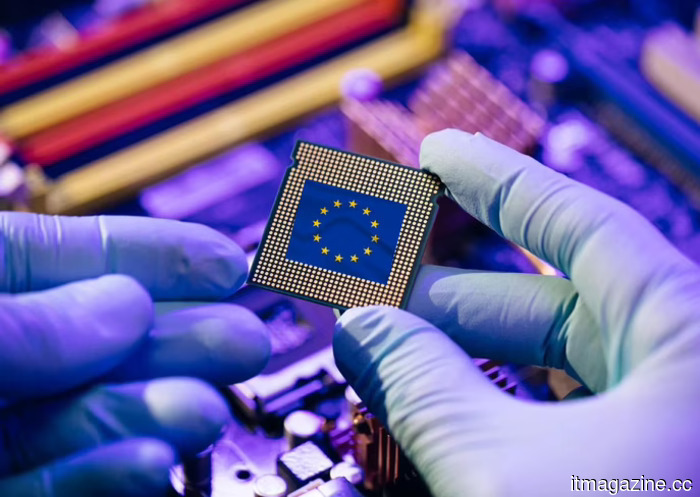
Infineon inaugurates a €5 billion semiconductor factory in Dresden, marking the first success of the EU Chips Act.
**Summary:** Infineon is set to launch a €5 billion power chip factory in Dresden on July 2, supported by €1 billion in subsidies from the EU Chips Act. This factory marks the first significant success of the act following the cancellation of Intel’s Magdeburg project.
Infineon Technologies is gearing up to inaugurate its largest single investment, a €5 billion semiconductor factory located on its Dresden campus, on July 2. The Smart Power Fab, which has received around €1 billion in EU Chips Act subsidies, will manufacture power semiconductors for AI data centers, electric vehicles, and renewable energy systems. The opening is ahead of the original timeline by three months. "The AI data centers being constructed and planned globally will consume double the electricity by 2030 compared to today," stated COO Alexander Gorski, emphasizing that this equals the total electricity consumption of Germany.
**A Notable Achievement for the Chips Act**
This new facility is a significant accomplishment for the EU's semiconductor sovereignty plan, initiated during the COVID-related supply shortages to double Europe's global chip production share from 10% to 20% by 2030. This target is widely regarded as unrealistic, especially after Intel’s flagship project in Magdeburg was scrapped in August 2025, due to a lack of customer commitments as indicated by Intel's CEO.
In reaction, Brussels has proposed Chips Act 2.0, which would enable the Commission to provide direct manufacturing funding and grant emergency powers to override existing semiconductor supply contracts during shortages. Infineon’s Dresden factory, located next to TSMC’s first European chip facility, illustrates that Europe can still lure substantial semiconductor investments despite the broader strategy’s shortcomings.
**The AI Power Chip Focus**
Infineon does not manufacture advanced AI processors akin to those made by Nvidia; instead, it produces the power semiconductors that manage and convert electricity in the data centers hosting these processors, crucial components as AI workloads increase energy demands. The company’s revenue from data centers has surged from €250 million in fiscal 2024 to more than €700 million in 2025, with expectations to reach €1.5 billion in fiscal 2026 (approximately 10% of total sales) and €2.5 billion in 2027. Bank of America has raised its revenue forecast for Infineon’s AI power segment by €500 million to €4.5 billion for 2028.
**Production Details**
The Smart Power Fab will utilize 300-millimeter thin wafers and manufacture chips in both silicon and silicon carbide, materials that enhance energy efficiency in high-power settings. So far, approximately €2 billion has been invested in construction, with an additional €3 billion expected to be spent gradually as demand increases.
Infineon has already secured a notable customer for its silicon carbide products; on June 8, the company announced a collaboration with Siemens to provide CoolSiC MOSFET power modules for Siemens' SENTRON 3QD2 solid-state circuit breakers, which protect AI data centers and factories from electrical failures. These semiconductor breakers can interrupt current in microseconds, up to 1,000 times faster than traditional electromechanical systems, a vital capability as facilities transition to direct-current power grids.
"AI data centers and factories are becoming more electrified and complex," remarked Andreas Weisl, Infineon's chief sales officer for industrial and infrastructure, highlighting the increased risk of electrical failures.
The facility, at full capacity, could generate up to €5 billion in annual revenue, though Gorski refrained from providing specifics on when that target might be realized. The fab is anticipated to create up to 1,000 jobs in Dresden.
**Market Response**
Infineon’s stock has more than doubled this year, recently reaching a 52-week high of €89.67. Morgan Stanley has raised its price target from €63 to €91, while Deutsche Bank has increased its target from €70 to €90, with both maintaining their buy ratings. This stock surge reflects a significant shift in investor attitudes toward companies that provide infrastructure for the AI sector rather than those directly developing AI models. Major technology firms are investing over $700 billion in data center projects this year, and Infineon’s power chips play a crucial role in bridging electricity grids and GPU clusters.
**Cautions Ahead**
The €5 billion revenue potential at full capacity is a long-term forecast and does not represent an immediate commitment, as it relies on demand that is not yet fully realized. Although Infineon's data center revenue is rapidly increasing, it still constitutes only about 10% of total sales, indicating the company remains heavily reliant on the automotive sector.
Achieving the EU’s 20% semiconductor production target by 2030 remains elusive, and one successful fab does not mitigate the structural challenges that contributed to Intel's decision to withdraw. The ability of the proposed Chips Act 2.0 to
Other articles
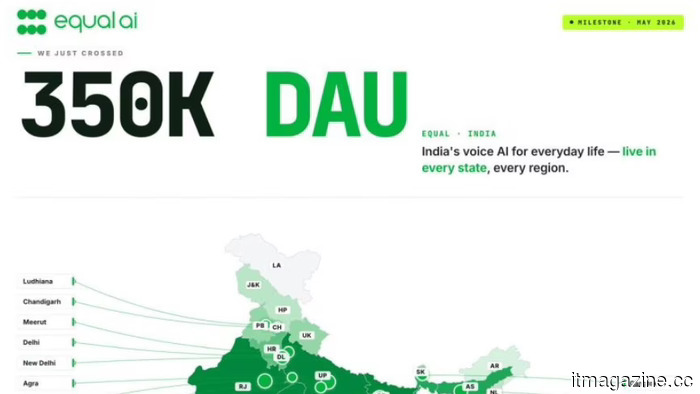 Equal AI secured $30 million to filter phone calls for Indians who receive 20 spam calls weekly.
Equal AI's application handles unknown calls, inquiries about the reason for the call, and provides a summary. It boasts 1 million monthly users in India. The $30 million funding round was led by Prosus Ventures.
Equal AI secured $30 million to filter phone calls for Indians who receive 20 spam calls weekly.
Equal AI's application handles unknown calls, inquiries about the reason for the call, and provides a summary. It boasts 1 million monthly users in India. The $30 million funding round was led by Prosus Ventures.
 Infineon inaugurates a €5 billion manufacturing facility in Dresden, marking the first success of the EU Chips Act.
Infineon's €5 billion Smart Power Fab will open on July 2 in Dresden, focusing on the production of power chips for AI data centers. This marks the first significant achievement of the EU Chips Act following the cancellation of Intel's project in Magdeburg.
Infineon inaugurates a €5 billion manufacturing facility in Dresden, marking the first success of the EU Chips Act.
Infineon's €5 billion Smart Power Fab will open on July 2 in Dresden, focusing on the production of power chips for AI data centers. This marks the first significant achievement of the EU Chips Act following the cancellation of Intel's project in Magdeburg.
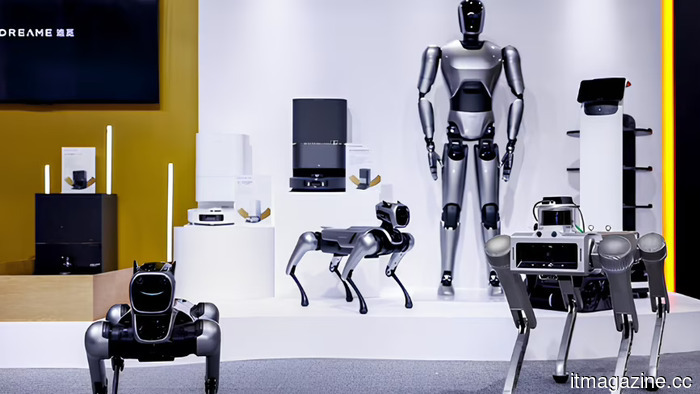 Dreame, the leading robot vacuum manufacturer globally, is considering an IPO in Hong Kong.
Dreame Technology is contemplating a listing in Hong Kong as early as next year. The company, valued at $9.6 billion, leads robot vacuum sales across 30 nations and is developing a hypercar.
Dreame, the leading robot vacuum manufacturer globally, is considering an IPO in Hong Kong.
Dreame Technology is contemplating a listing in Hong Kong as early as next year. The company, valued at $9.6 billion, leads robot vacuum sales across 30 nations and is developing a hypercar.
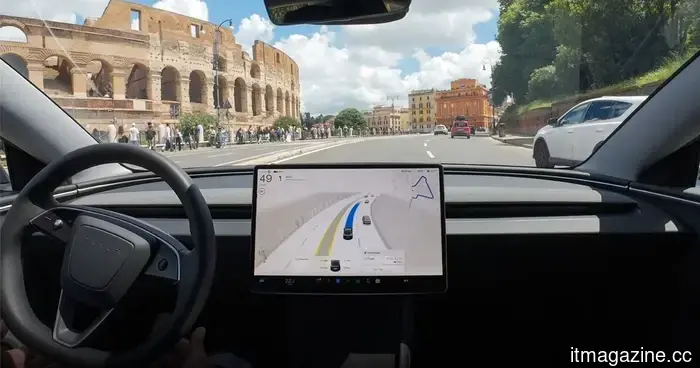 The latest Tesla FSD update includes a new feature that showcases a preview of your vehicle's parking strategy.
The update to Tesla's FSD 14.3.4 introduces a new on-screen message that displays as the vehicle nears its destination, outlining how it intends to park.
The latest Tesla FSD update includes a new feature that showcases a preview of your vehicle's parking strategy.
The update to Tesla's FSD 14.3.4 introduces a new on-screen message that displays as the vehicle nears its destination, outlining how it intends to park.
 Leaders in AI, including Altman, Amodei, and Hassabis, are set to attend the G7 summit.
CEOs of OpenAI, Anthropic, and Google DeepMind are set to participate in the G7 meeting in France next week, with two of them gearing up for significant IPOs while dealing with scrutiny over AI governance.
Leaders in AI, including Altman, Amodei, and Hassabis, are set to attend the G7 summit.
CEOs of OpenAI, Anthropic, and Google DeepMind are set to participate in the G7 meeting in France next week, with two of them gearing up for significant IPOs while dealing with scrutiny over AI governance.
 Alibaba offers $1.5 billion for grocery chain Pupu, doubling the proposal made by Sun Art.
Alibaba is proposing $1.5 billion for the Chinese grocery platform Pupu, which is over twice the amount of a competing offer from Sun Art Retail. This agreement would escalate its competition with Meituan in the instant delivery sector.
Alibaba offers $1.5 billion for grocery chain Pupu, doubling the proposal made by Sun Art.
Alibaba is proposing $1.5 billion for the Chinese grocery platform Pupu, which is over twice the amount of a competing offer from Sun Art Retail. This agreement would escalate its competition with Meituan in the instant delivery sector.
Infineon inaugurates a €5 billion semiconductor factory in Dresden, marking the first success of the EU Chips Act.
Infineon's €5 billion Smart Power Fab will officially open on July 2 in Dresden, where it will manufacture power chips for AI data centers. This marks the first significant achievement of the EU Chips Act following the cancellation of Intel's project in Magdeburg.