
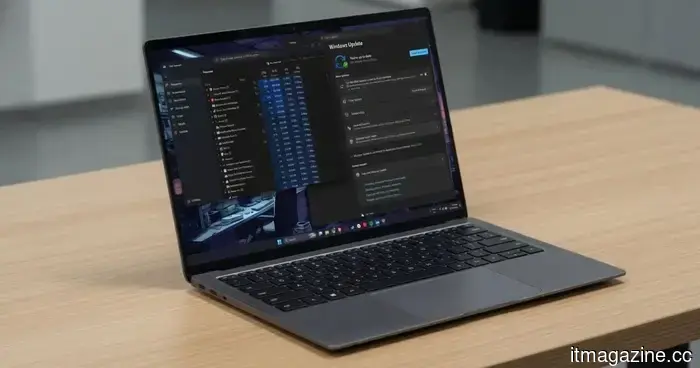
Your Windows 11 PC is now capable of running AI tasks natively, even without the Copilot+ badge.
For much of the past year, Microsoft has been asserting that the future of AI on Windows is centered around Copilot+ PCs. To access Microsoft’s most advanced local AI features, a dedicated Neural Processing Unit (NPU) was necessary. That was the expectation. However, Microsoft now seems to be changing those expectations.
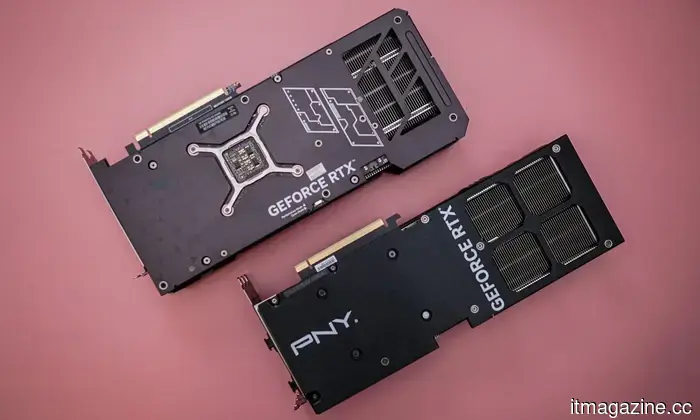
Recent updates indicate that Windows 11's local Language Model APIs can now operate on non-Copilot+ PCs, as long as they are equipped with an Nvidia GeForce RTX 30-series GPU (or newer) with a minimum of 6GB of VRAM. At first glance, this appears to be an update aimed at developers. In reality, it could mark one of the most notable changes in Microsoft’s AI PC strategy since the introduction of Copilot+ PCs last year. More importantly, it prompts a question that has persisted since the onset of the AI PC era: Did we actually need NPUs for this functionality in the beginning?
The Copilot+ exclusivity phase was always somewhat awkward.
When Copilot+ PCs launched in June 2024, Microsoft marketed them as the entry point for local AI experiences on Windows. To be eligible, a device had to feature 16GB of RAM, SSD storage, and an NPU capable of achieving at least 40 TOPS of AI performance. The messaging implied that these specialized chips were necessary for running AI workloads locally. While this was true regarding efficiency, it didn't present the complete picture.
Anyone acquainted with AI hardware was already aware that GPUs could effectively handle these workloads. In fact, contemporary graphics cards are often much more powerful than NPUs for processing language models and generative AI applications. This is why many enthusiasts experimenting with local AI tools, from small language models to image generators, have relied on GPUs for years. Yet, Windows’ native AI experiences remained confined to systems labeled as Copilot+.
This led to a peculiar scenario: a gaming PC with an RTX 4070 had sufficient power to run AI models locally but couldn’t access Microsoft’s native AI framework due to the absence of an NPU. On the other hand, a lighter laptop with a qualifying NPU could. This recent change doesn’t completely eliminate that gap, but it certainly makes it narrower than before.
Microsoft may be laying the groundwork for AI that goes beyond NPUs.
The newly broadened Language Model APIs enable developers to utilize local AI features on compatible Nvidia hardware. Microsoft states that these APIs can now function on non-Copilot+ systems outfitted with RTX 30-series GPUs or later, given they possess at least 6GB of VRAM. Powered by Phi Silica, Microsoft’s compact on-device language model, these APIs can assist with tasks such as summarizing text, rewriting content, converting text to tables, formatting information, and generating responses from prompts.
Consider it a lightweight, local iteration of the AI features people commonly associate with services like ChatGPT. The key difference is that everything operates directly on the device instead of in the cloud. This is significant for two reasons: First, regarding privacy—keeping AI processing contained on your PC ensures sensitive documents, notes, emails, and drafts remain secure. Second, concerning performance—local AI functionalities can be executed instantly without reliance on cloud servers, subscriptions, or an internet connection.
What’s particularly interesting is how Microsoft intends to distribute these capabilities. If an application requires Phi Silica, Windows can retrieve the necessary model via Windows Update and run it locally on supported hardware. Thus, the operating system seems to be beginning to perceive AI models as components of Windows rather than premium features restricted to a particular class of PCs. This represents a notable shift in philosophy.
Is this the beginning of the end for Copilot+ exclusives?
However, before getting too enthusiastic, it’s important to note that this doesn’t imply every AI functionality will suddenly be available on older Windows machines. Features like Recall, Click to Do, and some of Microsoft’s AI-enhanced creative tools still appear to be tied to systems with NPUs. The newly expanded support currently only pertains to Language Model APIs, which are mainly focused on text-based AI applications.
Still, historical trends indicate that such barriers seldom remain permanent. Once Microsoft proves that local AI can function effectively on mainstream RTX hardware, it becomes increasingly difficult to justify why certain AI experiences should remain exclusive to NPUs. Developers are likely to focus on whether the AI experience is effective, regardless of whether it’s powered by an NPU or a GPU. Consumers are unlikely to care either. For this reason, this update feels more impactful than the documentation change may imply.
For now, it’s just one API. However, it also signifies Microsoft's initial substantial step toward recognizing something many PC enthusiasts have long argued: capable GPUs were never the limiting factor. If local AI can operate efficiently on millions of existing RTX-enabled PCs, the difference between a “Copilot+ PC” and a standard Windows PC may soon hold much less significance than Microsoft initially anticipated.

Other articles
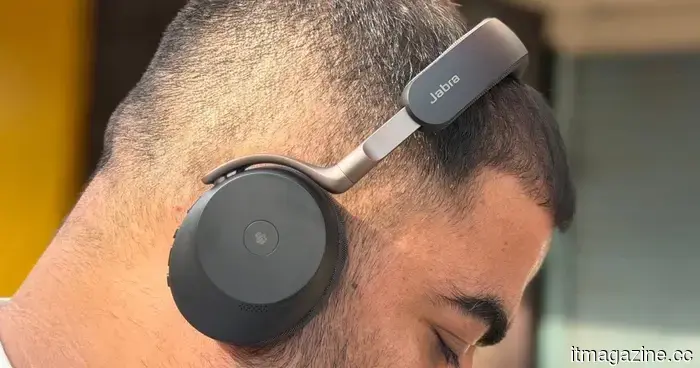 Jabra Evolve3 75 review: After wearing this work headset for several weeks, I found it to be quite impressive.
The Jabra Evolve3 75 is a high-end product that, despite its elevated price, provides an excellent microphone, an elegant design, impressive battery life, wireless charging capability, and a powerful experience for music listening.
Jabra Evolve3 75 review: After wearing this work headset for several weeks, I found it to be quite impressive.
The Jabra Evolve3 75 is a high-end product that, despite its elevated price, provides an excellent microphone, an elegant design, impressive battery life, wireless charging capability, and a powerful experience for music listening.
 AI requires discernment rather than just a job outline: Michael Ronis discusses the future of hiring.
AI can process a thousand resumes in just hours, but it cannot assess interpersonal relationships, cultural compatibility, or career aspirations. Recruiter Michael Ronis contends that the essential question is not if AI will take over human roles, but rather where human involvement is necessary.
AI requires discernment rather than just a job outline: Michael Ronis discusses the future of hiring.
AI can process a thousand resumes in just hours, but it cannot assess interpersonal relationships, cultural compatibility, or career aspirations. Recruiter Michael Ronis contends that the essential question is not if AI will take over human roles, but rather where human involvement is necessary.
 Coinbase introduces an AI agent capable of trading cryptocurrency and funding research on your behalf.
Coinbase's new AI agent is capable of executing trades, rebalancing portfolios, and purchasing premium data through the x402 protocol. It operates within ChatGPT and Claude via MCP.
Coinbase introduces an AI agent capable of trading cryptocurrency and funding research on your behalf.
Coinbase's new AI agent is capable of executing trades, rebalancing portfolios, and purchasing premium data through the x402 protocol. It operates within ChatGPT and Claude via MCP.
 Google developed an AI capable of predicting football plays before they occur.
Google DeepMind has introduced TacticAI, an AI system created in collaboration with Liverpool FC, capable of anticipating football player movements up to eight seconds ahead and offering tactical suggestions for set pieces.
Google developed an AI capable of predicting football plays before they occur.
Google DeepMind has introduced TacticAI, an AI system created in collaboration with Liverpool FC, capable of anticipating football player movements up to eight seconds ahead and offering tactical suggestions for set pieces.
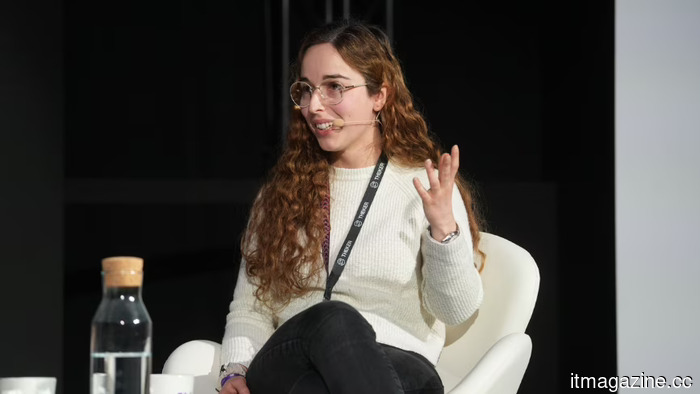 Barcelona's THEKER secures €73M to implement AI-powered factory robots that learn while working.
THEKER secured €73M from CRV, Samsung, and LVMH for versatile factory robots that can be deployed within days and enhance their capabilities autonomously. This marks Samsung's initial investment in Spain.
Barcelona's THEKER secures €73M to implement AI-powered factory robots that learn while working.
THEKER secured €73M from CRV, Samsung, and LVMH for versatile factory robots that can be deployed within days and enhance their capabilities autonomously. This marks Samsung's initial investment in Spain.
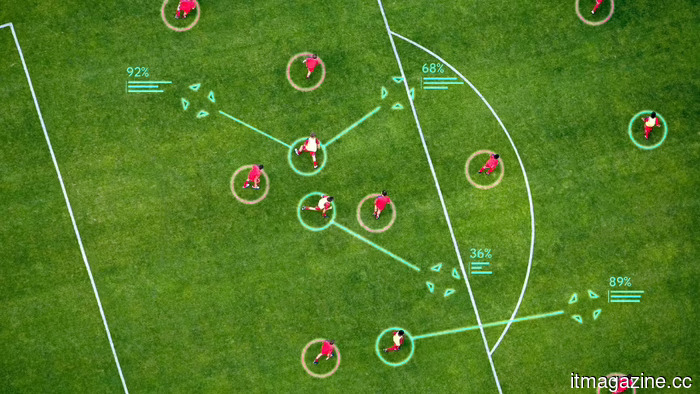 Google DeepMind's TacticAI is capable of forecasting football plays 8 seconds in advance. Palmeiras is the first to implement this technology.
Google's TacticAI forecasts player movements 8 seconds in advance by analyzing broadcast video. Liverpool specialists favored its strategies 90% of the time compared to the traditional methods.
Google DeepMind's TacticAI is capable of forecasting football plays 8 seconds in advance. Palmeiras is the first to implement this technology.
Google's TacticAI forecasts player movements 8 seconds in advance by analyzing broadcast video. Liverpool specialists favored its strategies 90% of the time compared to the traditional methods.
Your Windows 11 PC is now capable of running AI tasks natively, even without the Copilot+ badge.
Microsoft's recent AI move might make millions of current Windows PCs much more significant than anticipated.