

AI requires discernment rather than just a job outline: Michael Ronis discusses the future of hiring.
Artificial intelligence has emerged as a significant force influencing recruitment in the context of a global talent competition. The amount of data available to companies, the rapidity of filtering candidate pools, and the sophistication of searches that can be conducted within minutes represent notable advancements. However, amidst the excitement regarding automation, Michael Ronis, founder of Janbrook Partners, contends that many companies are focusing on the wrong question.
“AI unlocks many possibilities regarding access to information,” Ronis states. “You can now investigate various aspects and conduct searches in a far more intricate manner than before. The true game changer lies in the accessibility of information and the capability to analyze it comprehensively.”
Ronis believes that the current discussion centers primarily around whether AI can substitute human recruiters, a notion he completely dismisses. He argues that the more crucial question is: when should a human intervene?
Recent studies indicate that 88% of employers are now using AI to expedite talent acquisition and candidate assessment. Ronis notes that this trend is easily justified, as the sheer volume of applications makes some level of automation essential. With companies receiving over a million applications annually, he points out that managing such a large number manually would be nearly impossible.
Ronis has witnessed this reality himself. “We posted an ad for a remote recruiter position and received a thousand resumes within hours,” he shares. “At that point, bring on the AI.”
Nonetheless, he feels that the industry has confused efficiency with effectiveness, and the financial implications of this mix-up are becoming apparent. Replacing an employee can cost between 50% and 200% of their yearly salary when taking into account recruitment fees, onboarding, training, and lost productivity. Additionally, he has noticed that high employee turnover continues to be a challenge for employers across various sectors, especially during the initial year of employment.
Ronis believes that recruitment success should not be evaluated solely by the speed of filling a position. A more significant measure is the long-term performance and retention of that hire within the organization.
Many companies, he argues, prioritize cutting hiring costs through automation, often overlooking the financial repercussions of inadequate retention. “If you automate to the point that you ignore cultural fit, you end up in a situation where you may pay less initially but have to pay for it again later,” Ronis states.
His concern is not that AI lacks analytical capacity, but rather that it cannot assess the subtle human dynamics that often determine a candidate's success. “Ultimately, recruiting hinges on relationships,” he explains. “Data can assist up to a certain extent but cannot replicate the rapport and the qualitative aspects that inform hiring decisions.”
These dynamics gain importance as candidates advance through the recruitment process. While AI can identify qualifications, rank applicants, and highlight relevant profiles, Ronis emphasizes that it cannot reliably assess a candidate's commitment, career aspirations, interpersonal style, or compatibility with a company's culture.
“You may find yourself well into the process with a candidate who isn't genuinely interested or has drastically different salary expectations,” Ronis notes. “AI has limitations; at some point, human intervention is necessary.”
Trust is another critical factor. As organizations depend more on automated systems, Ronis believes many job seekers have become cynical about whether their applications are genuinely being considered. “Candidates lack trust in the process,” he remarks. “They often feel their resumes go unseen.”
In his opinion, this rising skepticism can pose difficulties for employers aiming to establish strong relationships with candidates. The diminishing trust can impact an employer's reputation and candidate engagement, especially in competitive job markets where top talent often has various opportunities.
Ronis also considers cultural fit an area where human judgment is crucial. Each organization has distinct interpersonal dynamics and workplace expectations that algorithms or keyword searches cannot fully encapsulate. “There are underlying dynamics in every office environment. You need to find the balance that fits. That’s fundamentally what the hiring process is about: identifying the person who best fits the role,” he explains.
From his viewpoint, the most effective recruitment strategies balance the strengths of both AI and human input. AI can enhance research, identify patterns, and assist recruiters in managing vast amounts of information. Meanwhile, human professionals add judgment, intuition, relationship-building capabilities, and the ability to evaluate traits that may not be reflected in a resume.
Ronis states, “The key difference lies in the human element. Just because the data is available doesn’t necessarily lead to the right results.”
Recruitment has always focused on finding the right candidate, not just processing applications more rapidly. While technology may facilitate the search, Ronis stresses that discernment remains essential in transforming a candidate into a successful long-term employee.
Other articles
 Google developed an AI capable of predicting football plays before they occur.
Google DeepMind has introduced TacticAI, an artificial intelligence system created in collaboration with Liverpool FC that can anticipate football player movements up to eight seconds ahead and also provide tactical suggestions for set pieces.
Google developed an AI capable of predicting football plays before they occur.
Google DeepMind has introduced TacticAI, an artificial intelligence system created in collaboration with Liverpool FC that can anticipate football player movements up to eight seconds ahead and also provide tactical suggestions for set pieces.
 Your smart home concludes at the back door — wireless robotic lawn mowers aim to transform that.
Pause for a moment to consider how many aspects of your home have become automated. Your robotic vacuum takes care of the floors. The thermostat adjusts the temperature before you even get home. The doorbell camera identifies those who come to your door. Now, step outside. You will see that your lawn is still waiting for you to take […]
Your smart home concludes at the back door — wireless robotic lawn mowers aim to transform that.
Pause for a moment to consider how many aspects of your home have become automated. Your robotic vacuum takes care of the floors. The thermostat adjusts the temperature before you even get home. The doorbell camera identifies those who come to your door. Now, step outside. You will see that your lawn is still waiting for you to take […]
 Jabra Evolve3 75 review: After wearing this work headset for several weeks, I found it to be quite impressive.
The Jabra Evolve3 75 is a high-end product, and despite its premium price, it excels as an excellent microphone, features a stylish design, boasts impressive battery life, supports wireless charging, and delivers sufficient quality for music listening.
Jabra Evolve3 75 review: After wearing this work headset for several weeks, I found it to be quite impressive.
The Jabra Evolve3 75 is a high-end product, and despite its premium price, it excels as an excellent microphone, features a stylish design, boasts impressive battery life, supports wireless charging, and delivers sufficient quality for music listening.
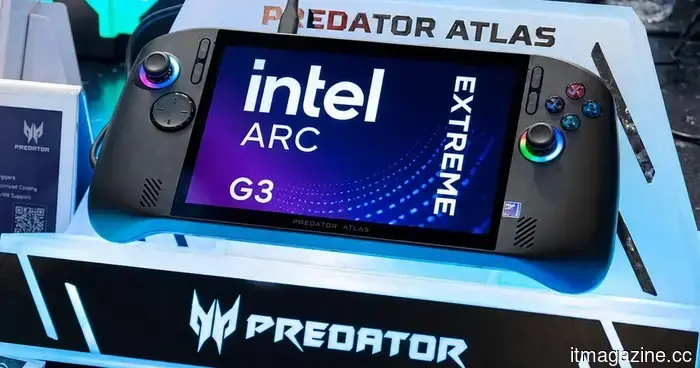 Intel’s Arc G3 Extreme might provide the unexpected turn that handheld gaming has been looking for.
I had the opportunity to try out MSI's Claw and Acer's Predator Atlas, both powered by Intel's Arc G3 Extreme, at Computex, and the outlook for handheld gaming appears to be very encouraging.
ShinyHunters compromised over 100 companies by exploiting a zero-day vulnerability in Oracle PeopleSoft that had not been patched.
ShinyHunters took advantage of CVE-2026-35273 (CVSS 9.8) to compromise over 100 organizations utilizing Oracle PeopleSoft. Among them, two-thirds are educational institutions. A patch is not available at this time.
Intel’s Arc G3 Extreme might provide the unexpected turn that handheld gaming has been looking for.
I had the opportunity to try out MSI's Claw and Acer's Predator Atlas, both powered by Intel's Arc G3 Extreme, at Computex, and the outlook for handheld gaming appears to be very encouraging.
ShinyHunters compromised over 100 companies by exploiting a zero-day vulnerability in Oracle PeopleSoft that had not been patched.
ShinyHunters took advantage of CVE-2026-35273 (CVSS 9.8) to compromise over 100 organizations utilizing Oracle PeopleSoft. Among them, two-thirds are educational institutions. A patch is not available at this time.
 Reddit has introduced the ability for users to respond to any post using video comments.
Reddit has introduced video comments in all public SFW communities. Users now have the ability to upload or record short videos as replies, in addition to text, images, and GIFs.
Reddit has introduced the ability for users to respond to any post using video comments.
Reddit has introduced video comments in all public SFW communities. Users now have the ability to upload or record short videos as replies, in addition to text, images, and GIFs.
AI requires discernment rather than just a job outline: Michael Ronis discusses the future of hiring.
AI can process a thousand resumes in just hours, but it cannot assess interpersonal relationships, cultural compatibility, or career aspirations. Recruiter Michael Ronis contends that the essential question is not if AI will take over human roles, but rather where human involvement is necessary.