
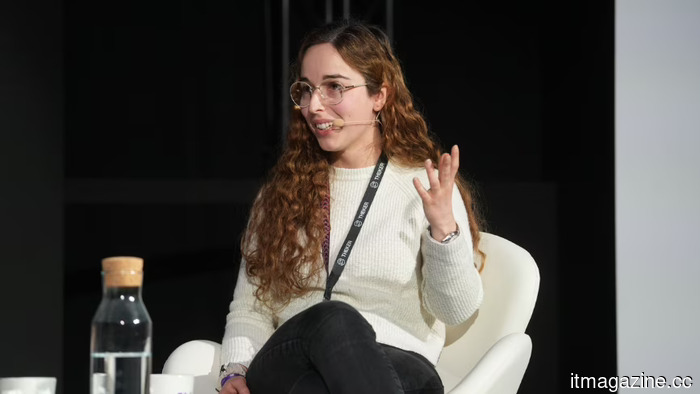
Barcelona's THEKER secures €73M to implement AI-powered factory robots that learn while working.
**TL;DR** Barcelona's THEKER secured €73M led by CRV with participation from Samsung and LVMH for AI-native factory robots. It's the first investment for both Samsung and LVMH in a Spanish startup.
THEKER, the Barcelona-based AI robotics firm, has successfully raised €73 million ($85 million) in a Series A funding round aimed at scaling its generalist factory robots for various industrial production environments. The round was spearheaded by CRV, with contributions from Samsung, LVMH, Cathay Innovation, 20VC, Henkel Ventures, Korelya, and Bright Pixel Capital. This investment represents Samsung’s initial venture into a Spanish company, LVMH’s first investment in the Spanish startup scene, and CRV’s inaugural investment in Spain.
This funding round comes less than a year after THEKER completed Spain’s largest seed round at €18 million. The quick transition from seed to Series A highlights what the company describes as significant commercial deployment momentum rather than merely laboratory demonstrations.
“We didn't create THEKER for pilot projects,” stated co-founder Carla Gómez Cano. “Our goal was to produce robots that function upon arrival and keep improving after that.”
The latest updates from the EU tech landscape, an insightful piece from our founder Boris, and some questionable AI-generated artwork. It's complimentary, sent weekly to your inbox. Sign up now!
THEKER introduces a novel category of industrial robot: AI-native, generalist machines that adapt in real time to fluctuating environments, mixed SKUs, irregular shapes, and operational variations without the need for manual reprogramming. In contrast to traditional industrial robots, which are rigid and expensive to reconfigure, THEKER claims its systems can be deployed in days and continuously learn during production.
The robots are already operational in various production environments throughout Europe, focusing on manufacturing, logistics, and retail. The company reports that they assist operators in increasing throughput, minimizing downtime, and addressing ongoing labor shortages.
Founded by Gómez Cano and Jiaqiang Ye Zhu, THEKER incorporates advanced vision, control systems, and large language models into robots that function without pre-set programming. The investment will be used to enhance its proprietary AI and robotics technology and to grow the team in software, electronics, mechanical engineering, and deployment efforts.
“What Carla, Jiaqiang, and the team have created is uniquely valuable, an intricate technical platform combined with genuine commercial deployment momentum,” noted Reid Christian, general partner at CRV. “We believe THEKER has the potential to become a leading robotics company of this generation.”
This funding comes amid a rising trend of European robotics investments in 2026. Germany's RobCo secured €100 million for modular AI-driven manufacturing systems, Stuttgart's Sereact raised €93 million to expand its physical AI platform to the US, and NEURA Robotics raised up to $1.4 billion in the largest full-stack robotics round to date. While THEKER's raise is smaller, it signals a significant move from Samsung and LVMH, two major industrial and luxury conglomerates, choosing to invest in a robotics company rather than a software enterprise.
Many robotics firms struggle to bridge the divide between research demonstrations and reliable robots for real-world factories. THEKER asserts it has successfully crossed that threshold. The €73 million in funding is intended to determine whether the robots can perform as promised at scale across different industries and regions. Factory trials in Germany conducted by Siemens and Nvidia have demonstrated that industrial deployment is feasible, and THEKER aims to establish Barcelona as a leader in this field.
Other articles
 Jabra Evolve3 75 review: After wearing this work headset for several weeks, I found it to be quite impressive.
The Jabra Evolve3 75 is a high-end product that, despite its elevated price, provides an excellent microphone, an elegant design, impressive battery life, wireless charging capability, and a powerful experience for music listening.
Jabra Evolve3 75 review: After wearing this work headset for several weeks, I found it to be quite impressive.
The Jabra Evolve3 75 is a high-end product that, despite its elevated price, provides an excellent microphone, an elegant design, impressive battery life, wireless charging capability, and a powerful experience for music listening.
 Your ChatGPT costs may soon see a significant reduction.
OpenAI is considering significant price reductions as it competes with Anthropic for clients. With companies hesitant about AI expenses and Google offering lower prices, your costs for AI services may soon decrease.
Your ChatGPT costs may soon see a significant reduction.
OpenAI is considering significant price reductions as it competes with Anthropic for clients. With companies hesitant about AI expenses and Google offering lower prices, your costs for AI services may soon decrease.
 Why the upcoming AI safety issue is the interaction between models.
When an AI agent is equipped with tools and has access to a real execution environment, it must be regarded as an untrusted process. Bar Mazuz, a former cyber researcher from Unit 8200, discusses why the protection of communication between agents is an underestimated infrastructure issue.
Why the upcoming AI safety issue is the interaction between models.
When an AI agent is equipped with tools and has access to a real execution environment, it must be regarded as an untrusted process. Bar Mazuz, a former cyber researcher from Unit 8200, discusses why the protection of communication between agents is an underestimated infrastructure issue.
 Jabra Evolve3 75 review: After wearing this work headset for several weeks, I found it to be quite impressive.
The Jabra Evolve3 75 is a high-end product, and despite its premium price, it excels as an excellent microphone, features a stylish design, boasts impressive battery life, supports wireless charging, and delivers sufficient quality for music listening.
Jabra Evolve3 75 review: After wearing this work headset for several weeks, I found it to be quite impressive.
The Jabra Evolve3 75 is a high-end product, and despite its premium price, it excels as an excellent microphone, features a stylish design, boasts impressive battery life, supports wireless charging, and delivers sufficient quality for music listening.
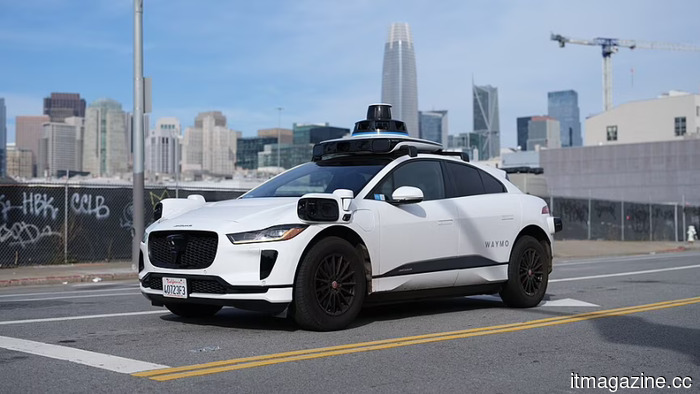 Waymo has introduced a subscription plan for its regular robotaxi passengers at a price of $29.99 per month.
Waymo Premier offers priority matching for power users, allows free cancellations, and provides 10% loyalty credits. Initially, it is available by invitation only in San Francisco, Los Angeles, and Phoenix.
Waymo has introduced a subscription plan for its regular robotaxi passengers at a price of $29.99 per month.
Waymo Premier offers priority matching for power users, allows free cancellations, and provides 10% loyalty credits. Initially, it is available by invitation only in San Francisco, Los Angeles, and Phoenix.
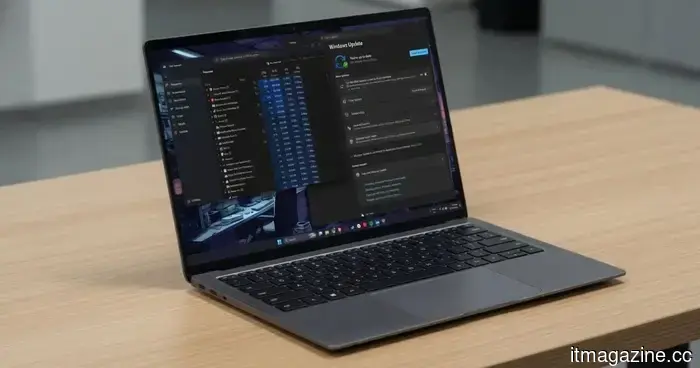 Your Windows 11 PC is now capable of running AI tasks natively, even without the Copilot+ badge.
Microsoft's recent AI move might make millions of current Windows PCs much more significant than anticipated.
Your Windows 11 PC is now capable of running AI tasks natively, even without the Copilot+ badge.
Microsoft's recent AI move might make millions of current Windows PCs much more significant than anticipated.
Barcelona's THEKER secures €73M to implement AI-powered factory robots that learn while working.
THEKER secured €73M from CRV, Samsung, and LVMH for versatile factory robots that can be deployed within days and enhance their capabilities autonomously. This marks Samsung's initial investment in Spain.