
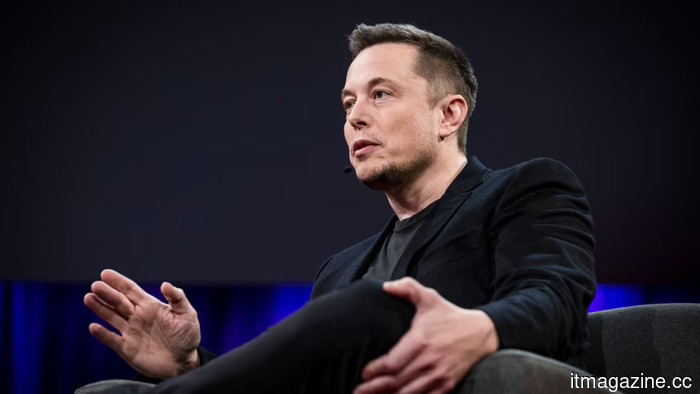
Tesla Full Self-Driving
TL;DR: Elon Musk describes the ability to sleep during a Tesla commute as the “acid test” for Tesla's Full Self-Driving (FSD). His robotaxis in Austin have crash rates that are four times higher than those of human drivers, and four million HW3 Tesla vehicles are incapable of achieving unsupervised driving.
Musk has stated that the capacity to fall asleep in a Tesla and awaken at your destination is the ultimate test for genuine autonomy. He first articulated this idea in 2014 and reiterated it during Tesla’s Q1 2025 earnings call, expressing confidence that it would be available in several US cities by the end of that year—a prediction that did not materialize. In the Q1 2026 earnings call in April, Musk postponed the timeline again, indicating that unsupervised Full Self-Driving for consumers wouldn't be available until at least Q4 2026. He also acknowledged that Hardware 3, found in about four million Teslas, "simply does not have the capability to achieve unsupervised FSD."
Tesla’s safety page indicates one significant collision per 5.3 million miles with FSD Supervised, compared to one per 660,000 miles for the average driver in the US. The fleet reached 10 billion cumulative FSD miles by May 2026. However, these statistics reflect FSD Supervised—a Level 2 system where a human driver must remain alert and ready to take control—and are not directly comparable to unsupervised driving. Tesla employs different crash-counting methods than those used by the NHTSA, a discrepancy that safety researchers have consistently highlighted.
Tesla’s driverless robotaxi service in Austin serves as a practical assessment of unsupervised driving. It was launched in June 2025 with safety drivers and began offering fully driverless rides in January 2026, now covering 245 square miles of central Texas with around 20 vehicles. The safety record reveals a different picture than the promotional figures; Tesla reported 14 crashes to the NHTSA over approximately 800,000 miles of Austin robotaxi operations through February 2026, resulting in a crash rate of one every 57,000 miles—about four times worse than the average for human drivers as stated on its safety page.
As of late May 2026, Tesla had only 42 vehicles authorized for driverless operation in Texas, in contrast to Waymo’s 577. The fleet has been contracting rather than expanding, as Tesla has delayed aggressive growth until FSD v15 is ready, which Musk has projected for late 2026 or early 2027. The assertion that around eight million Teslas are using “robotaxi-derived software” is technically accurate only in that FSD Supervised shares a codebase with the robotaxi system; these eight million vehicles operate at Level 2 and require human supervision. Additionally, half of these vehicles—four million with Hardware 3—cannot operate unsupervised, regardless of software updates.
From 2016 to early 2024, Tesla marketed FSD as “Full Self-Driving Capability” without mentioning “supervised.” In March 2024, the product was renamed to “Full Self-Driving (Supervised)” with version 12.3.3. In June 2026, owners learned that Tesla had retroactively altered past purchase agreements to include the term “supervised,” obscuring the original contract language. Tesla is facing a certified class action lawsuit in the US regarding false advertising linked to FSD and statements made between October 2016 and August 2024. The European Transport Safety Council has advised EU member states to adopt a “precautionary approach” to Tesla's system, highlighting the dangers of driver overreliance.
The reported figure of 5.3 million miles per crash is provided by Tesla through a methodology that diverges from that of the NHTSA and pertains to FSD Supervised rather than unsupervised driving. The only data available for unsupervised driving comes from the Austin robotaxi fleet, which indicates a crash rate about four times worse than that of human drivers. The claim regarding one owner driving 52,000 miles on FSD v14 without disengagement could not be independently verified; documented records show the longest confirmed streak was 2,833 miles without intervention, with average intervention-free distances around 25 miles.
Musk's “acid test” of being able to sleep during your commute has been anticipated in various forms since 2014. The current projection estimates that unsupervised FSD for consumer vehicles will not be available before Q4 2026 and will only apply to vehicles with HW4 hardware in validated geographical areas. Four million HW3 owners, who invested up to $15,000 for FSD, will necessitate hardware upgrades that Tesla has yet to determine in terms of pricing or scheduling.
Other articles
 Tesla's Full Self-Driving
Musk claims that true autonomy involves being able to sleep during your commute. Tesla's robotaxis in Austin experience crashes every 57,000 miles, which is four times worse than the average for human drivers.
Tesla's Full Self-Driving
Musk claims that true autonomy involves being able to sleep during your commute. Tesla's robotaxis in Austin experience crashes every 57,000 miles, which is four times worse than the average for human drivers.
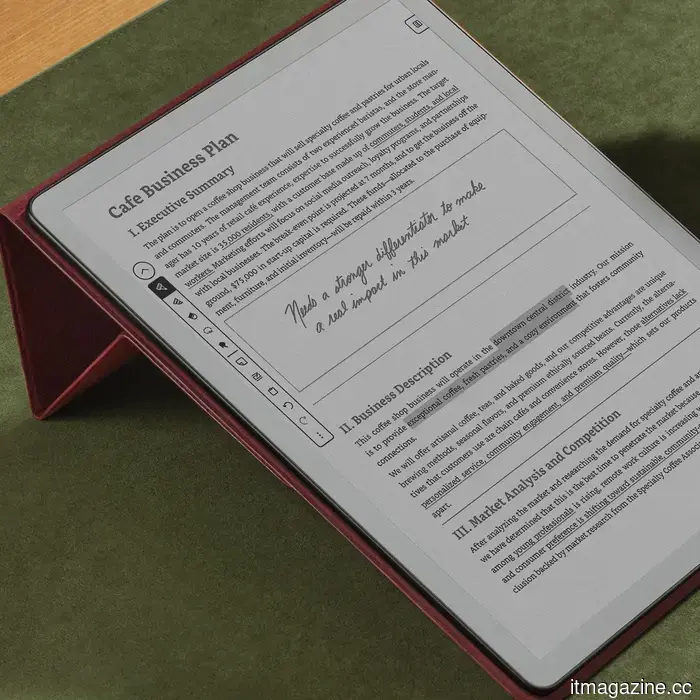 The most budget-friendly Kindle Scribe is now available for purchase on Amazon.
The least expensive Kindle Scribe is now available for $429.99, and Amazon has introduced the new Story So Far AI reading feature on all recent Kindle models.
The most budget-friendly Kindle Scribe is now available for purchase on Amazon.
The least expensive Kindle Scribe is now available for $429.99, and Amazon has introduced the new Story So Far AI reading feature on all recent Kindle models.
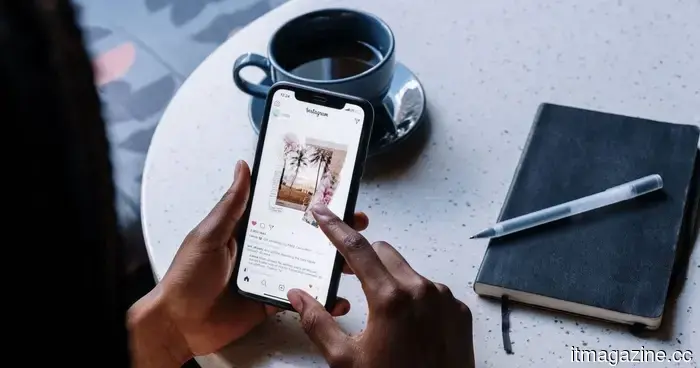 You can now specify to Instagram’s algorithm exactly what content you'd like to appear on your main feed.
Instagram is offering users genuine control over their feeds with Your Algorithm, a feature that allows you to add and remove topics throughout the entire app.
You can now specify to Instagram’s algorithm exactly what content you'd like to appear on your main feed.
Instagram is offering users genuine control over their feeds with Your Algorithm, a feature that allows you to add and remove topics throughout the entire app.
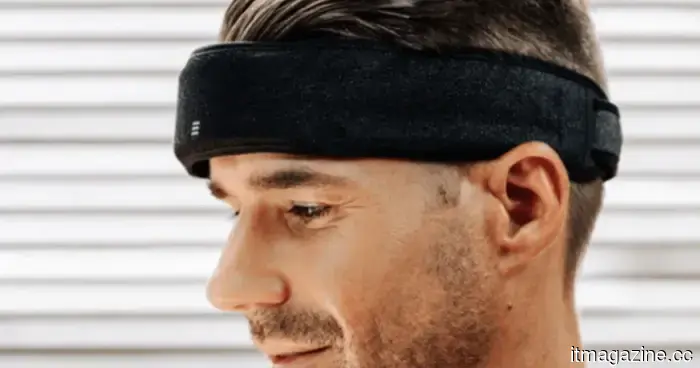 The Shift of Personalized Wellness Devices Away from One-Size-Fits-All Approaches
From fitness trackers to sensory technologies, an expanding range of devices is investigating how tailored guidance can be integrated into daily wellness practices. Ten years ago, the majority of wellness products required individuals to adhere to a uniform routine: download the app, stick to the plan, and wish for successful outcomes. This method mirrored the way many health and wellness...
The Shift of Personalized Wellness Devices Away from One-Size-Fits-All Approaches
From fitness trackers to sensory technologies, an expanding range of devices is investigating how tailored guidance can be integrated into daily wellness practices. Ten years ago, the majority of wellness products required individuals to adhere to a uniform routine: download the app, stick to the plan, and wish for successful outcomes. This method mirrored the way many health and wellness...
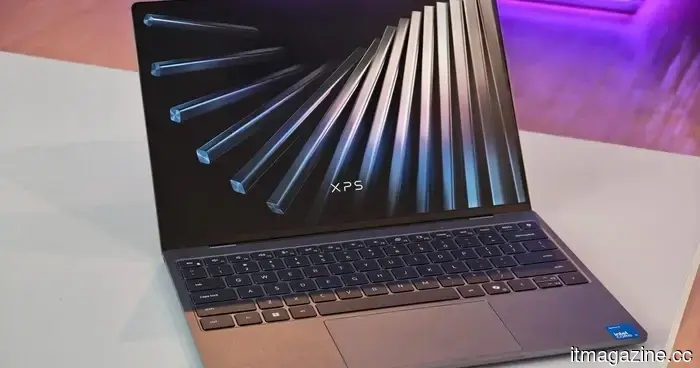 I believed that affordable Windows laptops were a thing of the past, but Computex has restored my optimism.
Computex 2026 revitalized the budget Windows laptop market, as Dell and Acer unveiled high-quality devices that directly compete with Apple’s MacBook Neo.
I believed that affordable Windows laptops were a thing of the past, but Computex has restored my optimism.
Computex 2026 revitalized the budget Windows laptop market, as Dell and Acer unveiled high-quality devices that directly compete with Apple’s MacBook Neo.
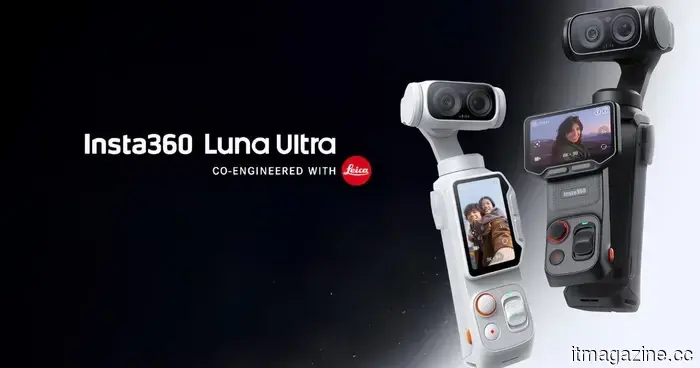 Insta360 Luna Ultra provides creators with 8K recording capabilities and enhanced stabilization features.
Insta360 has introduced the Luna Ultra, an 8K gimbal camera with dual lenses that has been developed in collaboration with Leica, aimed at creators in search of portable video tools for cinematic purposes.
Insta360 Luna Ultra provides creators with 8K recording capabilities and enhanced stabilization features.
Insta360 has introduced the Luna Ultra, an 8K gimbal camera with dual lenses that has been developed in collaboration with Leica, aimed at creators in search of portable video tools for cinematic purposes.
Tesla Full Self-Driving
Musk claims that genuine autonomy involves being able to sleep during your commute. Tesla's robotaxis in Austin experience crashes every 57,000 miles, which is four times the average rate for humans.