
Meta disconnects Manus from data systems and starts reversing the agreement.
**TL;DR** Meta has disconnected Manus from its internal systems and instructed employees to phase out the platform. The $2 billion acquisition is being reversed following a directive from Beijing to unwind it in April, while Manus's founders seek to raise $1 billion for a buyback.
Meta has set up a data barrier that separates it from Manus, the agentic AI service it purchased for $2 billion in December 2025. Since early June, Manus and its team have been restricted from accessing Meta’s internal data systems, and Meta staff can no longer utilize Manus tools for their projects, as reported by Bloomberg. An internal memo seen by Bloomberg directed employees to transfer any existing Manus projects onto Meta’s systems and to refrain from initiating new projects on the platform. The memo indicated that Meta is in the process of "sunsetting" Manus.
**Reason for Unwinding the Deal**
In April 2026, China’s National Development and Reform Commission ordered the dismantling of the deal after a four-month regulatory investigation that began shortly after the acquisition was made public. The NDRC determined that the agreement infringed upon foreign investment and technology export laws, even though Manus had moved its headquarters and key personnel from China to Singapore in 2025. The investigation intensified in March when Chinese officials barred co-founders Xiao Hong and Ji Yichao from leaving the country and summoned them for questioning in Beijing. This intervention signaled to Chinese AI entrepreneurs that establishing in Singapore does not exempt them from Beijing's oversight.
**The Buyback Strategy**
Manus’s founders, Xiao Hong, Ji Yichao, and Zhang Tao, are considering avenues to secure around $1 billion from external investors to facilitate a buyback that aligns with the $2 billion valuation Meta agreed to. The founders might also invest their own capital to cover any remaining amount, as reported by Bloomberg last month. If the buyback is successful, the next move would be to establish Manus as a Chinese joint venture with these backers, potentially leading to an IPO in Hong Kong. It remains uncertain whether discussions around fundraising have progressed significantly.
**What Remains Connected**
Despite the operational disconnect, Manus continues to develop its features. It has integrated data from Similarweb, introduced e-commerce capabilities from Shopify, and as of this week, still allows users to connect to Meta’s Ads Manager, Instagram, Gmail, and GitHub. Manus employees have relocated to Meta’s Singapore offices. Investors such as Tencent, ZhenFund, and HSG have already received payments from the acquisition, complicating any efforts to completely undo the deal.
**From Viral Success to Cautionary Example**
Launched in invitation-only beta in March 2025, Manus debuted with a demo that garnered over a million views in just 20 hours, showcasing an autonomous AI agent capable of web browsing, coding, file management, and performing multi-step tasks independently. It was celebrated as China’s second “DeepSeek moment,” signaling a potential challenge to Silicon Valley’s supremacy in agentic AI. The trajectory, from viral success to $2 billion exit to regulatory dissolution, occurred in less than a year. China has since enacted stricter outbound investment regulations, affording regulators greater authority to block international AI transactions involving Chinese technology, talent, or intellectual property, regardless of the company's incorporation location.
**The Challenges Ahead**
The operational separation is a move towards unwinding the acquisition, but it does not constitute the entire unwinding process. The complexities of reversing a finalized deal where investors have already received payouts remain unresolved, and the $1 billion fundraising has not yet been confirmed. Some Manus features, such as the links to Meta’s Ads Manager and Instagram, are still operational despite the data barrier, raising questions about the completeness of the separation. The ability of Manus to continue as an independent entity after losing access to Meta’s infrastructure and resources is uncertain, particularly if it must be restructured as a Chinese joint venture under more stringent regulatory oversight.
Other articles
 OpenAI and Anthropic caution about the dangers of AI as they compete to go public.
Both AI laboratories released papers advocating for a worldwide deceleration in the advancement of frontier AI. Additionally, they both introduced new flagship models and submitted IPO applications within the same two weeks.
OpenAI and Anthropic caution about the dangers of AI as they compete to go public.
Both AI laboratories released papers advocating for a worldwide deceleration in the advancement of frontier AI. Additionally, they both introduced new flagship models and submitted IPO applications within the same two weeks.
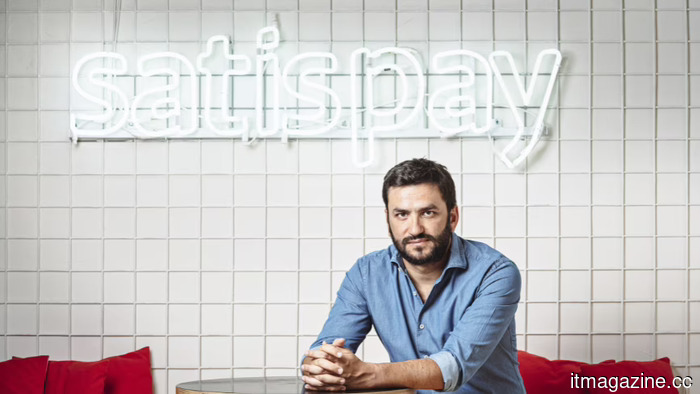 Satispay is said to be planning to raise EUR 120 million for stock trading.
The Italian payments unicorn Satispay is said to be seeking to raise as much as EUR 120 million to broaden its services into stock and ETF trading, savings, and pensions, with a shareholder vote scheduled for 29 June.
Coupang faces a historic fine of $409 million due to a data breach in South Korea.
South Korea's privacy authority imposed a fine of 624.7 billion won ($409 million) on Coupang following the revelation by a former employee that 33.7 million customer accounts were compromised in the nation's largest data breach.
Satispay is said to be planning to raise EUR 120 million for stock trading.
The Italian payments unicorn Satispay is said to be seeking to raise as much as EUR 120 million to broaden its services into stock and ETF trading, savings, and pensions, with a shareholder vote scheduled for 29 June.
Coupang faces a historic fine of $409 million due to a data breach in South Korea.
South Korea's privacy authority imposed a fine of 624.7 billion won ($409 million) on Coupang following the revelation by a former employee that 33.7 million customer accounts were compromised in the nation's largest data breach.
 Meta has disconnected Manus from its data systems and has started to dismantle the agreement.
Meta established a data firewall and instructed employees to wind down Manus after Beijing mandated the reversal of the $2 billion acquisition. The founders are aiming for $1 billion for a buyback.
Meta has disconnected Manus from its data systems and has started to dismantle the agreement.
Meta established a data firewall and instructed employees to wind down Manus after Beijing mandated the reversal of the $2 billion acquisition. The founders are aiming for $1 billion for a buyback.
 China’s Workers' Daily advocates for protections for workers in the AI sector.
The official newspaper of China's trade union calls on regulators to safeguard workers amidst the rise of AI, cautioning that 70 million jobs are at risk of being displaced and advocating for oversight of algorithms.
OpenAI integrates Visa into ChatGPT for payments via AI agents.
OpenAI is integrating Visa into ChatGPT, allowing AI agents to shop and make payments at any Visa merchant. This marks their second attempt at commerce, but there is no set launch date or pricing information available yet.
China’s Workers' Daily advocates for protections for workers in the AI sector.
The official newspaper of China's trade union calls on regulators to safeguard workers amidst the rise of AI, cautioning that 70 million jobs are at risk of being displaced and advocating for oversight of algorithms.
OpenAI integrates Visa into ChatGPT for payments via AI agents.
OpenAI is integrating Visa into ChatGPT, allowing AI agents to shop and make payments at any Visa merchant. This marks their second attempt at commerce, but there is no set launch date or pricing information available yet.
Meta disconnects Manus from data systems and starts reversing the agreement.
Meta established a data firewall and instructed employees to wind down Manus after Beijing demanded the reversal of the $2 billion acquisition. The founders are pursuing $1 billion for a buyback.