
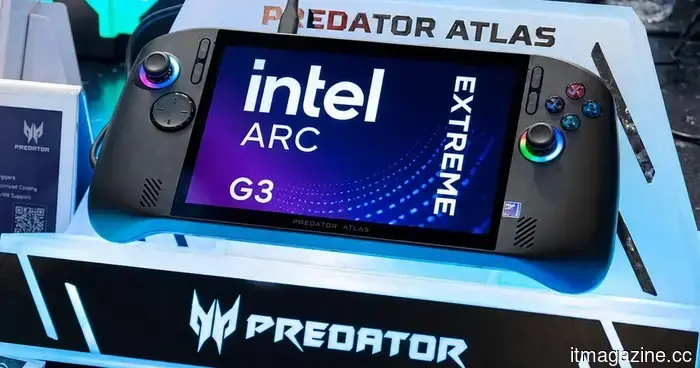
Intel’s Arc G3 Extreme might provide the unexpected turn that handheld gaming has been looking for.
In recent years, if there’s one gadget category that I’ve obsessively followed, it’s handheld gaming PCs. I’ve invested hundreds of hours into the Steam Deck, purchased an original ROG Ally for myself, and most recently, conducted an extensive review of the ROG Xbox Ally X. I’ve witnessed this market grow from an interesting experiment into a viable substitute for gaming laptops, perfect for quick gaming on the couch or while traveling. However, I’ve also encountered its most significant weakness firsthand. Regardless of how advanced these devices become, there always seems to be a compromise—be it battery life, overheating issues, performance, or software inconsistencies.
So, when I arrived at Computex 2026 and had the opportunity to spend time with Acer's new Predator Atlas 8 and MSI's latest Claw 8 EX AI+, I was genuinely excited. It wasn’t just their impressive appearance, but rather what they represented: real competition in a market that desperately needs it. Honestly, Intel’s new Arc G3 Extreme processor could be the most significant handheld announcement we’ve seen in years. And quite frankly? It’s about time.
Intel’s Arc G3 Extreme seems like the reset button that the company has long needed.
For years, AMD has dominated the Windows gaming handheld market, powering devices like the ROG Ally and Lenovo Legion Go with its Ryzen Z-series chips. Intel’s earlier attempts fell short due to inconsistent drivers and less efficient performance, but the new Arc G3 Extreme represents a true fresh start. Unlike past efforts that used laptop processors, this is a graphics-first platform designed specifically for handheld gaming, utilizing Intel’s new Panther Lake architecture and produced on the advanced Intel 18A process.
The highlight is the integrated GPU, featuring 12 next-generation Xe3 graphics cores, supporting hardware ray tracing and XeSS 3, including Multi Frame Generation. The aim is not only to achieve higher frame rates but to do so efficiently, allowing handheld gamers to enjoy smoother AAA gameplay without depleting the battery excessively. Intel even claims performance increases of up to 42 percent compared to rival solutions in certain scenarios, alongside notable enhancements in performance per watt.
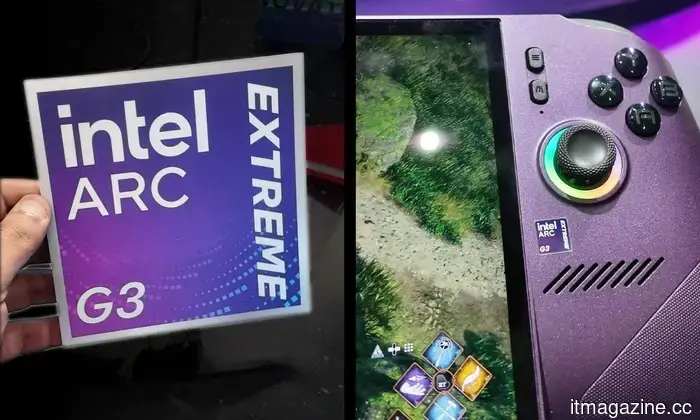
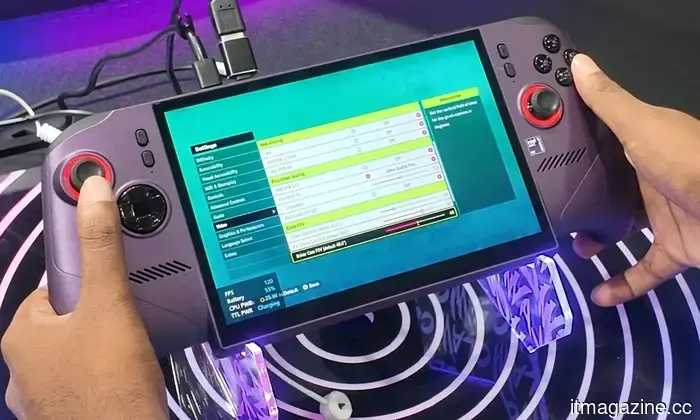
Naturally, those claims will require thorough independent verification, but after my hands-on experience with the hardware, they no longer seem unrealistic. What impressed me was not the FPS counter but rather how polished the entire experience felt. Games loaded swiftly, animations were seamless, and I didn’t notice any annoying stutter or awkward frame pacing. Everything simply functioned well, which is surprisingly refreshing in a category that often requires considerable patience from early adopters.
Intel appears to have made notable advancements in the software realm as well. Previous Arc products were frequently criticized for driver inconsistencies, but my brief hands-on session suggested that the company has significantly matured. While a controlled demo environment can’t replace long-term testing, the overall experience felt unexpectedly refined. Having spent years using predecessor handhelds, I’ve almost become accustomed to making sacrifices. Reducing wattage to save battery. Lowering graphics settings for smoother gameplay. Connecting to a charger because a demanding AAA game is rapidly draining power. Now, using Intel’s new platform genuinely led me to ponder if those compromises are finally diminishing.
My hands-on with the Acer Predator Atlas and MSI Claw
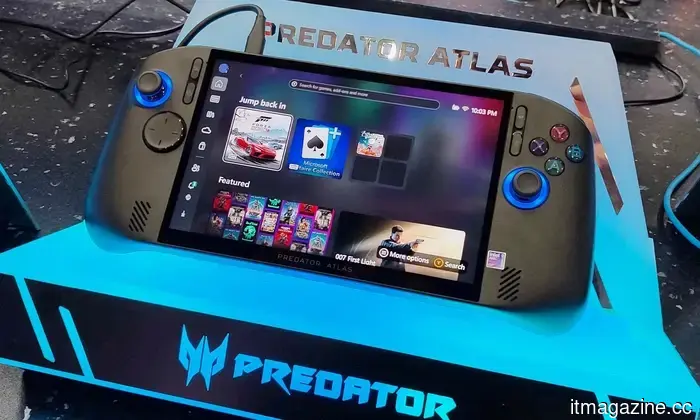
While Acer has previously ventured into the handheld market with devices like the Nitro Blaze series, the Predator Atlas 8 feels like the company’s first significant flagship move in this category. It offers comfortable ergonomics, responsive controls, and a premium build that immediately inspires confidence. Its custom AeroBlade cooling kept the device cool even under heavy gaming, and the vibrant 8-inch 120Hz display was easy to see under the bright lights of the Computex show floor. More crucially, once I started gaming, I completely lost sight of the specs and simply enjoyed the experience, which may be the highest praise any gaming device can receive.
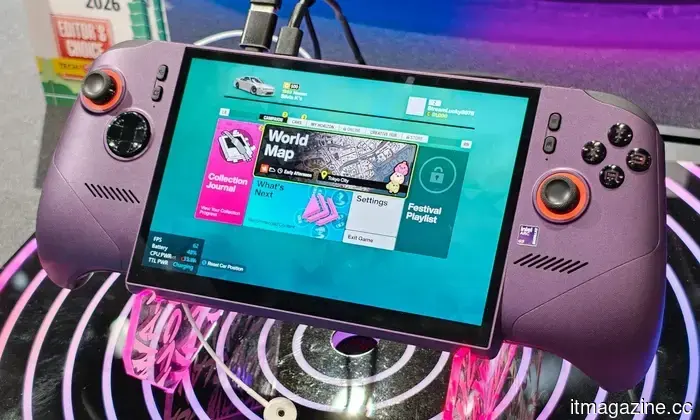
Conversely, the MSI Claw 8 EX AI+ appears to be the product of MSI genuinely responding to feedback from its earlier handhelds. The revamped ergonomics make it much more comfortable to hold, the buttons and triggers provide satisfying tactile feedback, and the overall experience is noticeably improved. Coupled with Intel’s Arc G3 Extreme and XeSS 3 enhancements, gameplay felt consistently smooth, and Windows’ dedicated Xbox fullscreen interface made navigation feel much closer to console use than traditional PC.
The outlook is promising, but there’s one significant drawback.
After trying both handhelds, I didn’t leave with the impression that either Acer or MSI had produced the superior machine. Instead, my mind remained focused on the processor driving them. That’s perhaps the highest compliment I can give Intel. For the first time in years, AMD faces a serious contender in the premium handheld market, and the Arc G3 Extreme appears to be more than just another ambitious claim on a slide. However, the real test will begin once these devices reach reviewers’ desks, where battery life, sustained
Other articles
 Google DeepMind's TacticAI is capable of forecasting football plays 8 seconds in advance. Palmeiras is the first to implement this technology.
Google's TacticAI forecasts player movements 8 seconds in advance by analyzing broadcast video. Liverpool specialists favored its strategies 90% of the time compared to the traditional methods.
Google DeepMind's TacticAI is capable of forecasting football plays 8 seconds in advance. Palmeiras is the first to implement this technology.
Google's TacticAI forecasts player movements 8 seconds in advance by analyzing broadcast video. Liverpool specialists favored its strategies 90% of the time compared to the traditional methods.
 Bezos's Prometheus secures $12 billion at a $41 billion valuation to develop AI for engineering physical products.
Jeff Bezos's AI company Prometheus has secured $12 billion in funding from JPMorgan, Goldman Sachs, and BlackRock, achieving a valuation of $41 billion. The startup is developing an "artificial general engineer."
Bezos's Prometheus secures $12 billion at a $41 billion valuation to develop AI for engineering physical products.
Jeff Bezos's AI company Prometheus has secured $12 billion in funding from JPMorgan, Goldman Sachs, and BlackRock, achieving a valuation of $41 billion. The startup is developing an "artificial general engineer."
 AI requires discernment rather than merely a job description: Michael Ronis discusses the future of hiring.
AI is capable of sifting through a thousand resumes in a matter of hours, yet it lacks the ability to assess rapport, cultural alignment, or career aspirations. According to recruiter Michael Ronis, the key issue isn't if AI will take over human roles, but rather in which areas humans need to intervene.
AI requires discernment rather than merely a job description: Michael Ronis discusses the future of hiring.
AI is capable of sifting through a thousand resumes in a matter of hours, yet it lacks the ability to assess rapport, cultural alignment, or career aspirations. According to recruiter Michael Ronis, the key issue isn't if AI will take over human roles, but rather in which areas humans need to intervene.
 Jabra Evolve3 75 review: After wearing this work headset for several weeks, I found it to be quite impressive.
The Jabra Evolve3 75 is a high-end product that, despite its elevated price, provides an excellent microphone, an elegant design, impressive battery life, wireless charging capability, and a powerful experience for music listening.
ShinyHunters compromised over 100 companies via an unpatched zero-day vulnerability in Oracle PeopleSoft.
ShinyHunters took advantage of CVE-2026-35273 (CVSS 9.8) to compromise over 100 organizations utilizing Oracle PeopleSoft, with two-thirds of them being universities. There is currently no available patch.
Jabra Evolve3 75 review: After wearing this work headset for several weeks, I found it to be quite impressive.
The Jabra Evolve3 75 is a high-end product that, despite its elevated price, provides an excellent microphone, an elegant design, impressive battery life, wireless charging capability, and a powerful experience for music listening.
ShinyHunters compromised over 100 companies via an unpatched zero-day vulnerability in Oracle PeopleSoft.
ShinyHunters took advantage of CVE-2026-35273 (CVSS 9.8) to compromise over 100 organizations utilizing Oracle PeopleSoft, with two-thirds of them being universities. There is currently no available patch.
Intel’s Arc G3 Extreme might provide the unexpected turn that handheld gaming has been looking for.
I had the opportunity to try out MSI's Claw and Acer's Predator Atlas, both powered by Intel's Arc G3 Extreme, at Computex, and the outlook for handheld gaming appears to be very encouraging.