

AI requires discernment rather than merely a job description: Michael Ronis discusses the future of hiring.
Artificial intelligence has emerged as a significant force in shaping recruitment amid a global competition for talent. The amount of data accessible to companies, the rapid filtering of candidate pools, and the ability to conduct complex searches in mere minutes represent substantial advancements. However, Michael Ronis, founder of Janbrook Partners, believes that many organizations are focusing on the wrong question amidst the excitement around automation.
"AI opens many avenues in terms of information access," states Ronis. "Now, you can conduct research and undertake searches in much more sophisticated ways than previously possible. The key game changer is the access to data and the capacity to analyze it."
He contends that the current debate often centers on whether AI can replace recruiters, a notion he entirely dismisses. Ronis argues that a more important question to consider is when a human should intervene in the process.
Recent surveys indicate that 88% of employers are now using AI to speed up talent acquisition and candidate screening. The appeal is clear, according to Ronis, as the sheer volume of applications makes some level of automation essential. With companies receiving over a million applications annually, utilizing AI becomes critical because managing such a volume manually would be virtually impossible.
Ronis has encountered this reality personally. "We posted an ad for a remote recruiter position and received a thousand resumes within hours," he recounts. "At that moment, I want AI."
However, he believes that the industry has confused efficiency with effectiveness, and warns that the financial implications of this confusion are becoming apparent. Replacing an employee can cost between 50% and 200% of their annual salary when factoring in recruitment fees, onboarding, training, and lost productivity. Simultaneously, he notes that employee turnover remains a challenge for employers, especially during the initial year of employment.
Ronis maintains that recruitment should not be measured solely by how quickly a position is filled. A more significant measure is how well that hire performs and stays with the company over time.
He suggests that many organizations concentrate on minimizing hiring costs through automation while neglecting the financial impacts of inadequate retention. "If you automate to the point that you overlook cultural fit, you end up in a situation where you buy it cheap and have to buy it again," Ronis warns.
His concern isn't that AI lacks analytical skills, but that it cannot assess the subtle human dynamics crucial for determining a candidate's success. "Ultimately, recruiting involves relationships," he explains. "The data can take you only so far; it cannot replicate the rapport or the nuances involved in hiring decisions."
These dynamics grow increasingly important as candidates progress further in the recruitment process. While AI can identify qualifications, rank candidates, and highlight relevant profiles, Ronis points out that it cannot reliably assess a candidate's commitment, career motivations, interpersonal style, or fit within a company's culture.
"You might find yourself deep into the process with someone who isn't genuinely interested or has vastly different salary expectations," Ronis states. "AI has its limitations, and at a certain juncture, human intervention is necessary."
Trust is another factor. As organizations depend more on automated systems, Ronis believes many job seekers have become wary about the meaningfulness of their applications. "Candidates lack trust in the process," he notes. "Many times, they don't believe their resumes are being seen."
He views this growing skepticism as a potential hurdle for employers aiming to cultivate strong relationships with candidates. This decline in trust can impact an employer's reputation and candidate engagement, particularly in competitive job markets where top talents often have multiple options.
Ronis emphasizes that human judgment remains crucial in assessing cultural fit. Each organization possesses unique interpersonal dynamics and workplace expectations that cannot be entirely captured by algorithms or keyword matching. "Every office has underlying dynamics. You need to strike a balance to ensure the right fit. That’s the essence of the hiring process—identifying the individual who best fits the role," he clarifies.
He believes that the most effective recruitment strategies are those that integrate both AI and human insight. AI can expedite research, identify patterns, and help recruiters manage large amounts of information. Meanwhile, human professionals bring judgment, intuition, relationship-building capabilities, and the ability to evaluate traits not found on a resume.
"The key distinction lies in the human element," Ronis observes. "The existence of information doesn't automatically lead to the correct outcome."
Ultimately, recruitment has always been about finding the right individual, rather than merely accelerating the application process. While technology can enhance the search, Ronis insists that discernment remains the critical factor that transforms a candidate into a successful long-term hire.
Other articles
 Jabra Evolve3 75 review: After wearing this work headset for several weeks, I found it to be quite impressive.
The Jabra Evolve3 75 is a high-end product, and despite its premium price, it excels as an excellent microphone, features a stylish design, boasts impressive battery life, supports wireless charging, and delivers sufficient quality for music listening.
Jabra Evolve3 75 review: After wearing this work headset for several weeks, I found it to be quite impressive.
The Jabra Evolve3 75 is a high-end product, and despite its premium price, it excels as an excellent microphone, features a stylish design, boasts impressive battery life, supports wireless charging, and delivers sufficient quality for music listening.
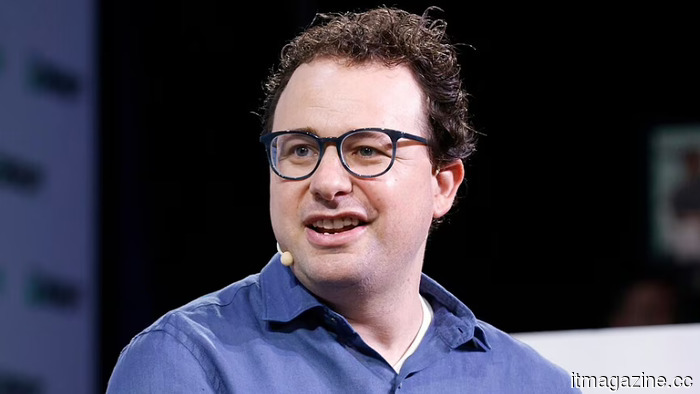 Anthropic is investing $150 million to place 1,000 AI fellows in nonprofit organizations, with no degree necessary.
Anthropic's Claude Corps is set to place 1,000 fellows at nonprofit organizations for a year, offering each a salary of $85,000. Applications are currently being accepted, and a college degree is not necessary. The inaugural cohort will begin in October.
Anthropic is investing $150 million to place 1,000 AI fellows in nonprofit organizations, with no degree necessary.
Anthropic's Claude Corps is set to place 1,000 fellows at nonprofit organizations for a year, offering each a salary of $85,000. Applications are currently being accepted, and a college degree is not necessary. The inaugural cohort will begin in October.
 Saily has just converted the eSIM into a $1 disposable phone number.
Saily's new US phone number add-on offers travelers an affordable secondary line for making calls, sending texts, receiving 2FA codes, and maintaining privacy for their primary number.
Saily has just converted the eSIM into a $1 disposable phone number.
Saily's new US phone number add-on offers travelers an affordable secondary line for making calls, sending texts, receiving 2FA codes, and maintaining privacy for their primary number.
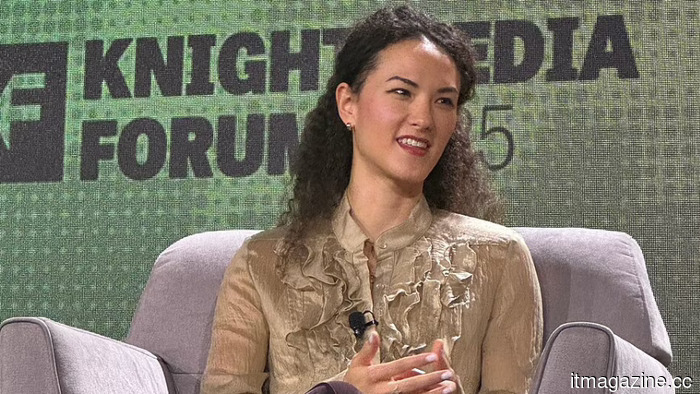 Bluesky introduces group chats and shifts focus to communities as user growth levels off at 44.8 million.
Bluesky has introduced group chats for up to 50 participants and is developing communities similar to those on Reddit. This shift occurs as user growth slows down and X discontinues its own community features.
Bluesky introduces group chats and shifts focus to communities as user growth levels off at 44.8 million.
Bluesky has introduced group chats for up to 50 participants and is developing communities similar to those on Reddit. This shift occurs as user growth slows down and X discontinues its own community features.
 Google developed an AI capable of predicting football plays before they occur.
Google DeepMind has introduced TacticAI, an AI system created in collaboration with Liverpool FC, capable of anticipating football player movements up to eight seconds ahead and offering tactical suggestions for set pieces.
Google developed an AI capable of predicting football plays before they occur.
Google DeepMind has introduced TacticAI, an AI system created in collaboration with Liverpool FC, capable of anticipating football player movements up to eight seconds ahead and offering tactical suggestions for set pieces.
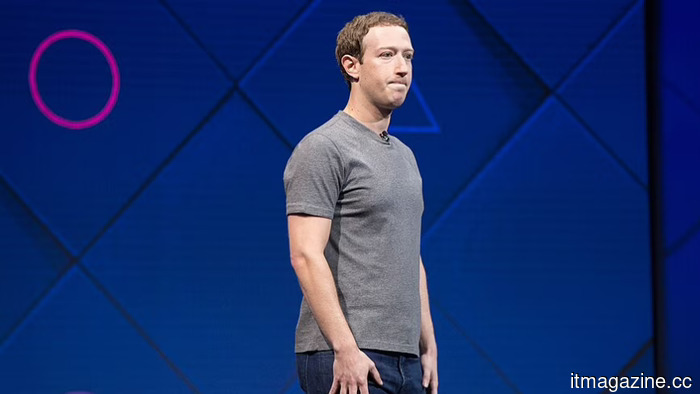 Meta introduces a desktop version and an AI assistant to its Edits, a competitor to CapCut.
Meta's Edits app will introduce an AI assistant that utilizes Instagram data to propose video ideas, along with a desktop version. Over fifty percent of Reels viewers engage with Edits content on a daily basis.
Meta introduces a desktop version and an AI assistant to its Edits, a competitor to CapCut.
Meta's Edits app will introduce an AI assistant that utilizes Instagram data to propose video ideas, along with a desktop version. Over fifty percent of Reels viewers engage with Edits content on a daily basis.
AI requires discernment rather than merely a job description: Michael Ronis discusses the future of hiring.
AI is capable of sifting through a thousand resumes in a matter of hours, yet it lacks the ability to assess rapport, cultural alignment, or career aspirations. According to recruiter Michael Ronis, the key issue isn't if AI will take over human roles, but rather in which areas humans need to intervene.