
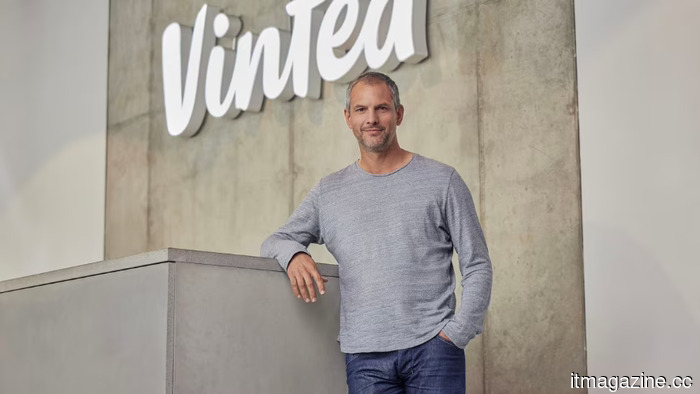
Vinted's CEO states that the US is a
TL;DR: The CEO of Vinted's marketplace indicates that the $9 billion secondhand platform sees "enormous opportunity" in the US but warns that achieving success may take years. Vinted, a Lithuanian secondhand marketplace valued at €8 billion following an €880 million secondary share sale in April, is expanding into the United States and views the American resale market as holding significant potential, according to CEO Adam Jay. During London Tech Week on Sunday, Jay mentioned to CNBC that the move toward secondhand consumption represents "a fundamental change" that is "here to stay." The company resumed active marketing in the US earlier this year after being inactive there since 2013, but Jay noted that developing the American market could take "weeks, months, or even years."
These comments accompany Vinted's financial performance, which reflects both its growth and the expenses related to its expansion strategy. In 2025, revenue increased by 38% to €1.1 billion, and gross merchandise value grew by 47% to €10.8 billion. However, net profit declined by 19% to €62 million as the company heavily invested in its logistics service Vinted Go, its payment system Vinted Pay, and geographic expansion into new markets such as the US, Latvia, Estonia, and Slovenia.
The April secondary transaction, led by EQT Growth with new investors such as Schroders Capital and Teachers’ Venture Growth, valued Vinted at a 60% premium compared to the €5 billion it reached in October 2024. This deal provided liquidity for early investors and employees but did not generate new primary capital. Vinted claims to be "IPO-ready" without a set timeline; Jay did not provide details regarding the timing or location of a potential listing.
Vinted's financial stability is noteworthy, as the company remains cash-positive, generating €137 million in free cash flow in 2025 (a 36% year-on-year increase), and has shown its ability to raise nearly a billion euros in private capital without issuing new shares that would dilute existing ownership. This financial position alleviates any urgency to go public, permitting Vinted to time an IPO strategically rather than based on investor liquidity demands.
The US market marks Vinted's first expansion beyond Europe and signifies its most significant competitive challenge. According to Jay, high shipping costs pose the greatest hurdle in a market where established competitors like Poshmark, ThredUp, and Mercari already cater to secondhand customers. eBay, which reported $79.6 billion in GMV in 2025, is also enhancing its fashion segment through a pending $1.2 billion acquisition of Depop, a resale platform focused on Gen Z that has been heavily investing in AI-driven listing tools from Etsy.
Vinted's strategy for expansion goes beyond geographical reach. Initially a fashion-only marketplace, the company has gradually included categories like electronics, books, toys, and household items. Jay noted that the team was initially apprehensive about expanding categories due to users' appreciation for the platform's simplicity but ultimately received enough indicators, such as creative listings of non-fashion items by users, to move forward. Vinted Ventures, the company's investment arm, is also supporting related commerce startups, most recently leading a $26 million round for live-commerce platform Tilt as a defensive strategy against Whatnot's expansion in Europe.
The term "Vinted math" describes a consumer behavior pattern where buyers consider resale value when making new purchases and check Vinted before shopping at retail. According to Vinted’s 2025 Impact Report, users saved €21.6 billion on fashion compared to retail prices, paying an average of 72% less. These figures stem from the company’s reporting and should be seen more as a marketing initiative rather than independently audited savings data, but they do align with broader industry trends.
Research from GlobalData suggests that the global secondhand apparel market is growing at around twice the rate of the overall apparel market and is projected to reach $393 billion by 2030. This trend benefits Vinted, but the company's success in the US will rely on whether it can tackle the shipping-cost issue identified by Jay as a major barrier, while competing against established platforms with existing American infrastructure and brand recognition.
Vinted currently operates in 26 countries, with France and the UK being its largest markets. Founded in 2008 in Vilnius by Milda Mitkutė and Justas Janauskas, Vinted became Lithuania’s first tech unicorn in 2019 and recorded its first annual profit in 2023 under group CEO Thomas Plantenga. The company's ability to replicate its European success in the US, where competition is more intense, shipping costs are challenging, and consumer attitudes toward secondhand products differ from those in France and the UK, will play a crucial role in determining whether Vinted's IPO, whenever it occurs, will be valued as a European leader or a global entity.
Other articles
 Forget about RGB lighting; Aston Martin’s gaming PC is styled for Monaco.
Chillblast and Aston Martin’s exclusive gaming PCs add a touch of British Racing Green, feature RTX 5090 performance, include leather details, and come at collector-level prices for your workspace.
Forget about RGB lighting; Aston Martin’s gaming PC is styled for Monaco.
Chillblast and Aston Martin’s exclusive gaming PCs add a touch of British Racing Green, feature RTX 5090 performance, include leather details, and come at collector-level prices for your workspace.
 TSMC does not dismiss the possibility of increasing prices due to rising chip manufacturing costs caused by inflation.
The CFO of TSMC informed the BBC that rising inflation is increasing expenses, and while the company may consider price increases, it has dismissed the possibility of abrupt "fourfold, fivefold" jumps.
TSMC does not dismiss the possibility of increasing prices due to rising chip manufacturing costs caused by inflation.
The CFO of TSMC informed the BBC that rising inflation is increasing expenses, and while the company may consider price increases, it has dismissed the possibility of abrupt "fourfold, fivefold" jumps.
 Two Russian APT groups are taking advantage of a WinRAR vulnerability that was fixed nearly a year ago to target Ukraine.
Gamaredon and SHADOW-EARTH-066 are taking advantage of CVE-2025-8088 in WinRAR to obtain credentials and documents from Ukrainian targets, almost a year following the release of a patch.
Two Russian APT groups are taking advantage of a WinRAR vulnerability that was fixed nearly a year ago to target Ukraine.
Gamaredon and SHADOW-EARTH-066 are taking advantage of CVE-2025-8088 in WinRAR to obtain credentials and documents from Ukrainian targets, almost a year following the release of a patch.
 iPadOS 27: All the details about the new features coming to your iPad.
iPadOS 27 will be released this fall, featuring a brand-new Siri AI, enhanced photo tools, simplified Shortcuts, and a more organized Safari. Here’s all the information we have so far regarding the upcoming updates for your iPad.
iPadOS 27: All the details about the new features coming to your iPad.
iPadOS 27 will be released this fall, featuring a brand-new Siri AI, enhanced photo tools, simplified Shortcuts, and a more organized Safari. Here’s all the information we have so far regarding the upcoming updates for your iPad.
 From automobiles to data centers, GM advances into energy storage through three new battery agreements.
GM collaborated with Peak Energy on sodium-ion batteries and broadened its agreement with Redwood Materials to provide energy storage solutions for data centers and the grid.
From automobiles to data centers, GM advances into energy storage through three new battery agreements.
GM collaborated with Peak Energy on sodium-ion batteries and broadened its agreement with Redwood Materials to provide energy storage solutions for data centers and the grid.
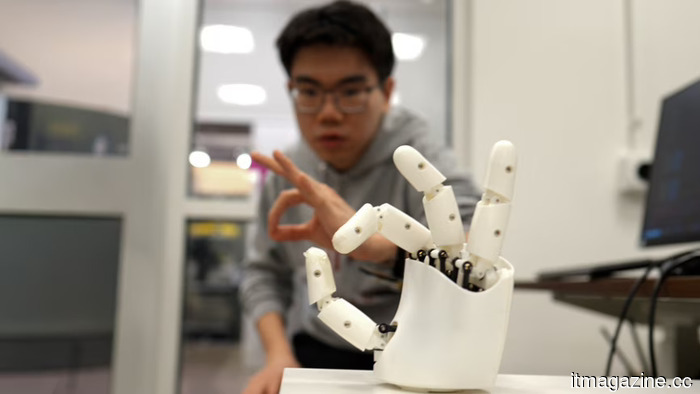 The ultrasound wristband developed by MIT monitors the movements of each finger and enables real-time control of a robotic hand.
MIT engineers developed a wristband that uses ultrasound to monitor 22 degrees of hand movement with a latency of 120ms, allowing for real-time control of robotic hands and sign language.
The ultrasound wristband developed by MIT monitors the movements of each finger and enables real-time control of a robotic hand.
MIT engineers developed a wristband that uses ultrasound to monitor 22 degrees of hand movement with a latency of 120ms, allowing for real-time control of robotic hands and sign language.
Vinted's CEO states that the US is a
Vinted's CEO Adam Jay states that secondhand shopping is "here to stay," as the Lithuanian marketplace valued at €8 billion expands into the US following a reported revenue of €1.1 billion for 2025.