
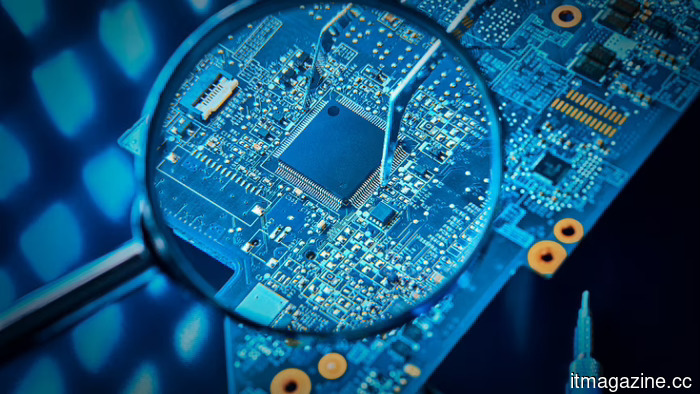
TSMC does not dismiss the possibility of increasing prices due to rising chip manufacturing costs caused by inflation.
**Summary**: TSMC's CFO announced that inflation is increasing costs and did not dismiss the possibility of price hikes, while the CEO indicated that shortages of AI chips could persist for years. Taiwan Semiconductor Manufacturing Company, the leading chip manufacturer globally, informed the BBC that rising inflation is affecting its costs and that price increases may be necessary. CFO Wendell Huang remarked that while the company wouldn’t enact drastic price jumps, costs have indeed risen. He emphasized that TSMC's value reflects its technological leadership and production capabilities.
These statements followed TSMC’s annual shareholder meeting in Hsinchu, where chairman and CEO CC Wei expressed a desire to increase prices, similar to competitors in the memory chip sector. Wei noted that the AI chip shortage will continue for many years and that TSMC is unable to fulfill customer demand despite operating its facilities at maximum capacity. Huang reassured the BBC that they are doing everything possible to address the situation.
Although TSMC is publicly committed to maintaining price stability, it has started to raise prices for its advanced chips. TrendForce reported in May that the company is considering a 15% price increase for 3nm wafers in the latter half of 2026, with an additional 5 to 10% rise expected in 2027. Previous reports indicated that prices for sub-3nm chips could increase by 3 to 10% throughout 2026, with rises planned until 2029.
TSMC manufactures the most advanced chips for companies like Nvidia, AMD, and Apple, holding over 90% of the market for the latest manufacturing processes. Any price hikes would affect the cost of AI infrastructure and, over time, the prices consumers pay for electronic devices. The firm recorded $35.9 billion in revenue for the first quarter of 2026, which is a 41% year-over-year increase, with advanced technologies at 7nm and below making up 74% of wafer revenue.
This demand surge is fueled by significant AI infrastructure investments, with Nvidia alone committing over $40 billion in equity funding in 2026, while the overall capital expenditure of major companies is expected to surpass $690 billion this year. This spending directly impacts TSMC's order books, but the company's costs are climbing as it expands manufacturing in the U.S., Germany, and Japan, alongside its operations in Taiwan.
Huang refuted the notion that TSMC’s global expansion is primarily driven by political pressures from the U.S. or China. He stated, “We expand outside Taiwan to meet customer demand. The customers want us there; it’s not government-requested.” TSMC has allocated $165 billion to its facilities in Arizona, which will include six fabrication plants, two advanced packaging sites, and a research and development center.
When asked about the production locations for the most advanced chips, Huang confirmed that cutting-edge manufacturing will remain in Taiwan. He stated that moving the complete manufacturing ecosystem to the U.S. would require “five to 10 years, or longer,” a timeline that goes against U.S. industrial policy goals. The first fab in Arizona produces 4nm chips, with 2nm production anticipated only by the end of the decade.
The geopolitical context cannot be overlooked; at a recent summit in Beijing, Chinese President Xi Jinping warned that mismanagement concerning Taiwan could endanger U.S.-China relations, while former President Trump referred to a $14 billion arms package for Taiwan as a “negotiating chip.” Taiwan is responsible for a significant portion of the world's advanced semiconductors, making TSMC's facilities in Hsinchu critically important on a global scale.
Huang also dismissed the idea that the AI boom is just a bubble. “We have strong confidence in this AI megatrend,” he stated, pointing to discussions with their major buyers in the hyperscaler sector. He mentioned that these companies are financially robust, meaning they are likely to keep investing. Whether this confidence will allow them to absorb increased chip prices without passing costs onto final consumers remains to be seen.
Other articles
 Both Apple and Google aim to track the web on your behalf.
In close succession, Google and Apple revealed features that monitor web pages and notify users when changes occur. Searching is evolving into a continuous process rather than a one-off inquiry.
Both Apple and Google aim to track the web on your behalf.
In close succession, Google and Apple revealed features that monitor web pages and notify users when changes occur. Searching is evolving into a continuous process rather than a one-off inquiry.
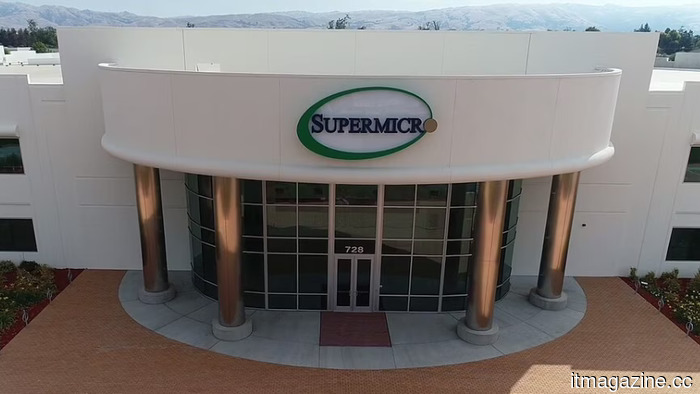 Supermicro intends to secure $7 billion to meet $39 billion in orders for AI servers.
Super Micro Computer intends to generate $7 billion via equity offerings to purchase components for $39 billion in AI server orders from over 20 clients.
Supermicro intends to secure $7 billion to meet $39 billion in orders for AI servers.
Super Micro Computer intends to generate $7 billion via equity offerings to purchase components for $39 billion in AI server orders from over 20 clients.
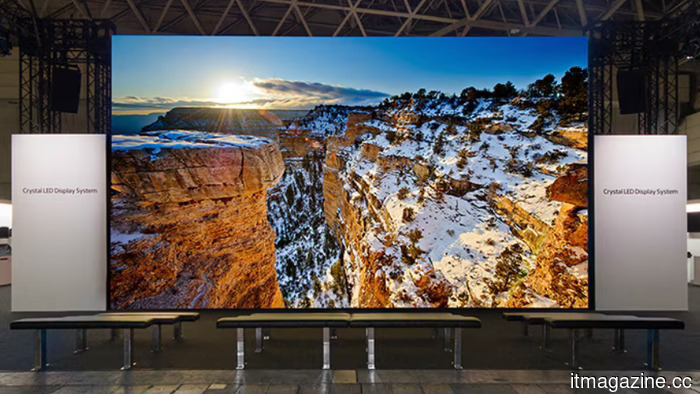 Sony's 135-inch Crystal LED UNIFY is a display designed for boardrooms that can be set up in just one hour.
Sony introduced the Crystal LED UNIFY, a 135-inch dvLED screen designed for boardrooms that can be installed by two individuals within an hour. It is scheduled for release in early 2027.
Sony's 135-inch Crystal LED UNIFY is a display designed for boardrooms that can be set up in just one hour.
Sony introduced the Crystal LED UNIFY, a 135-inch dvLED screen designed for boardrooms that can be installed by two individuals within an hour. It is scheduled for release in early 2027.
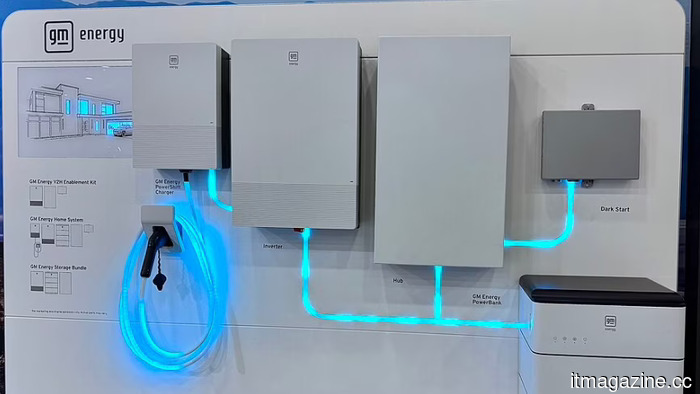 From automobiles to data centers, GM expands into energy storage through three new battery agreements.
GM collaborated with Peak Energy on sodium-ion batteries and extended its agreement with Redwood Materials to provide energy storage solutions for data centers and the grid.
From automobiles to data centers, GM expands into energy storage through three new battery agreements.
GM collaborated with Peak Energy on sodium-ion batteries and extended its agreement with Redwood Materials to provide energy storage solutions for data centers and the grid.
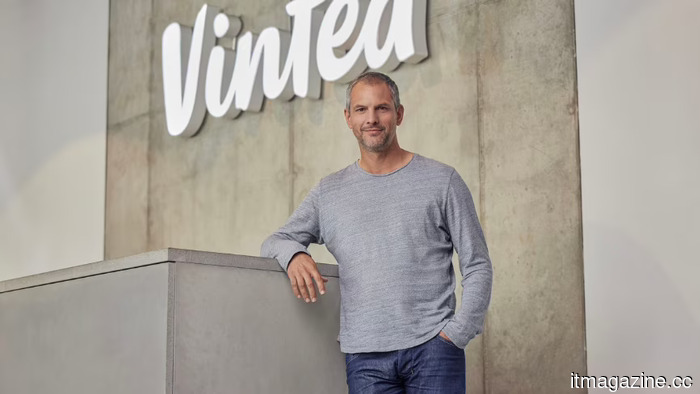 The CEO of Vinted states that the US is a...
Vinted CEO Adam Jay asserts that secondhand shopping is "here to stay" as the €8 billion Lithuanian marketplace expands into the US, following a reported revenue of €1.1 billion in 2025.
The CEO of Vinted states that the US is a...
Vinted CEO Adam Jay asserts that secondhand shopping is "here to stay" as the €8 billion Lithuanian marketplace expands into the US, following a reported revenue of €1.1 billion in 2025.
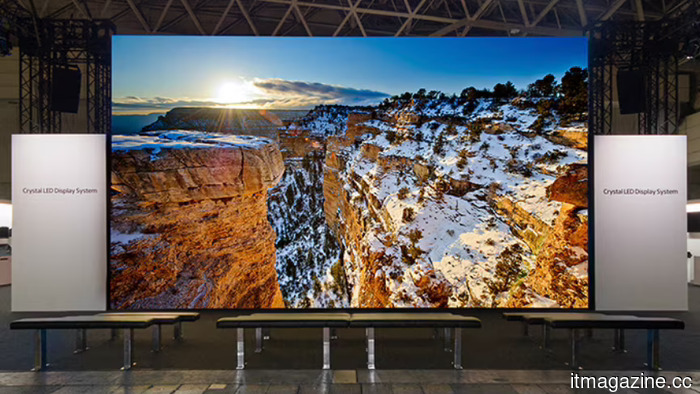 Sony's 135-inch Crystal LED UNIFY is a boardroom screen that can be set up in just one hour.
Sony introduced the Crystal LED UNIFY, a 135-inch dvLED display designed for boardrooms that can be set up by two individuals in one hour. It is scheduled for release in early 2027.
Sony's 135-inch Crystal LED UNIFY is a boardroom screen that can be set up in just one hour.
Sony introduced the Crystal LED UNIFY, a 135-inch dvLED display designed for boardrooms that can be set up by two individuals in one hour. It is scheduled for release in early 2027.
TSMC does not dismiss the possibility of increasing prices due to rising chip manufacturing costs caused by inflation.
The CFO of TSMC informed the BBC that rising inflation is increasing expenses, and while the company may consider price increases, it has dismissed the possibility of abrupt "fourfold, fivefold" jumps.