
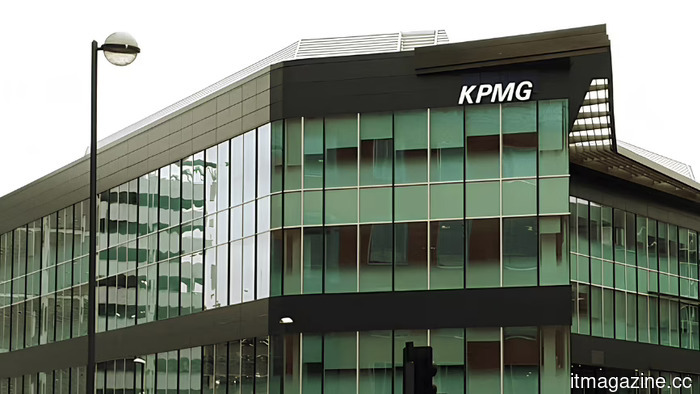
KPMG accessed a whistleblower's computer secretly.
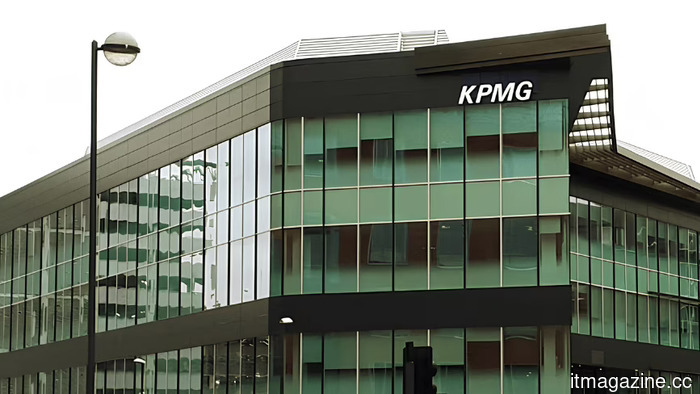
KPMG secretly accessed a whistleblower’s work computer multiple times to retrieve documents relating to their claims of data misuse, subsequently sharing this information with senior partners and the firm’s former chief executive, according to the Australian Financial Review. While the global accounting firm had the legal authority to access an employee’s laptop, the timing is particularly notable since it occurred during a sensitive dispute regarding the whistleblower’s legal protections.
This covert extraction, allegedly conducted by IT personnel at the direction of the firm's general counsel over approximately two years, contrasts sharply with management’s assertion that they lacked sufficient information to conduct an investigation. “There appears to be a culture of misusing legal professional privilege to conceal misconduct in large partnerships,” stated Senator Deborah O’Neill, who presented the allegations in parliament. “The ongoing cover-up is severely damaging to them.”
The underlying scandal is part of one of Australia’s most significant corporate-governance issues. A former KPMG audit employee claimed that partners frequently shared clients’ confidential information within the firm to secure lucrative audit contracts, including using board papers from Lendlease, an audit client, to seek work from Westpac, Dexus, and Macquarie. The allegations, discussed in parliament by Senator O’Neill, have been denied by KPMG, which initially labelled them "unsubstantiated" but later acknowledged that its treatment of the whistleblower and its internal investigation “fell short” and lacked “the necessary rigor.”
The consequences have been severe. KPMG Australia's chief executive Andrew Yates and head of audit have resigned, the corporate regulator ASIC is officially investigating partners, the firm has lost its long-standing audit contract with Lendlease, and governments are reviewing over A$650 million in contracts. A parliamentary inquiry on June 19 will involve a dozen current and former partners. “If a company like KPMG can act this way with Lendlease, they can do it to anyone,” O’Neill asserted to the ABC.
For those outside the Australian accounting sphere, the focus on the laptop exemplifies a broader issue. Employers can monitor employees in ways many do not realize, ranging from keystroke tracking to webcam monitoring, blurring the line between legitimate oversight and intrusive surveillance. TNW has reported on the extent of workplace monitoring and the caution firms should exercise regarding it.
The KPMG situation raises a critical question: what occurs when an employer utilizes their legal access against an individual attempting to bring such practices to light? This irony is particularly striking for a firm that heavily invests in technology, having recently introduced Anthropic’s Claude to all 276,000 of its employees. The same technologies that enhance workplace efficiency also render employees more observable to their employers, while the guidelines governing how employers can use that visibility are predominantly established by the employers themselves.
Australia’s assistant treasurer has indicated that the government will consider new legislation to better safeguard whistleblowers. The lingering question, well beyond the KPMG case, is whether "we were legally allowed to" remains a sufficient justification when the monitoring device is present on every desk.
Other articles
 India suspended Starlink approvals due to concerns about Iran, just days prior to SpaceX's record IPO.
Indian security agencies halted the launch of Starlink after terminals were found in Iran without a license. This comes at an inconvenient time for SpaceX's $75 billion IPO.
India suspended Starlink approvals due to concerns about Iran, just days prior to SpaceX's record IPO.
Indian security agencies halted the launch of Starlink after terminals were found in Iran without a license. This comes at an inconvenient time for SpaceX's $75 billion IPO.
 A German court has ruled that Google is responsible for its AI Overviews.
A court in Munich determined that Google's AI Overviews are considered its own statements, which makes the company responsible for any false information. If this ruling stands, it could have implications for all AI answer engines.
A German court has ruled that Google is responsible for its AI Overviews.
A court in Munich determined that Google's AI Overviews are considered its own statements, which makes the company responsible for any false information. If this ruling stands, it could have implications for all AI answer engines.
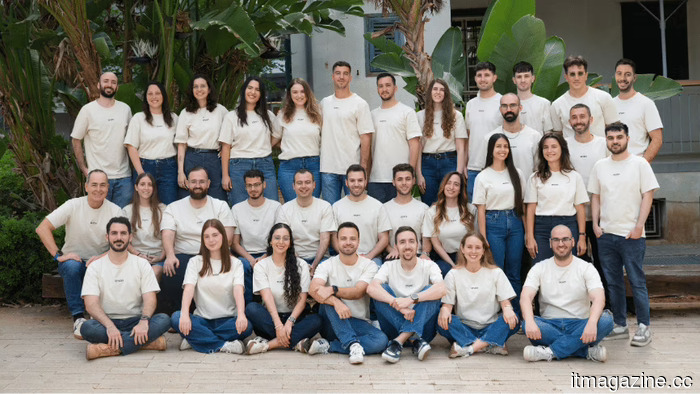 Aryon Security secures $29 million to avert cloud breaches.
Aryon Security secured $29 million in funding, supported by CrowdStrike's George Kurtz, Datadog, and Shlomo Kramer, to prevent cloud breaches before they occur.
Aryon Security secures $29 million to avert cloud breaches.
Aryon Security secured $29 million in funding, supported by CrowdStrike's George Kurtz, Datadog, and Shlomo Kramer, to prevent cloud breaches before they occur.
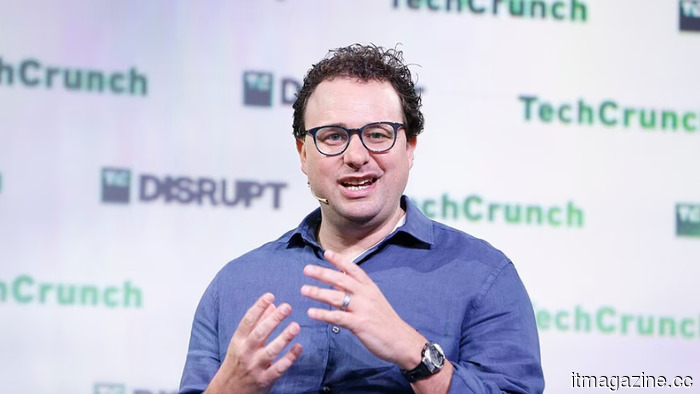 The CEO of Anthropic is uncertain whether Claude targeted a school in Iran.
Dario Amodei mentioned that he is unsure about the role Claude had in an attack that resulted in the deaths of 120 children at an Iranian school. The AI is integrated into the Pentagon's targeting system.
The CEO of Anthropic is uncertain whether Claude targeted a school in Iran.
Dario Amodei mentioned that he is unsure about the role Claude had in an attack that resulted in the deaths of 120 children at an Iranian school. The AI is integrated into the Pentagon's targeting system.
 Trump Media abandons Truth Social spinoff but retains TAE merger.
Trump Media has pulled back from its intention to convert Truth Social into a SPAC managed by Trump associates. The $6 billion merger with TAE Technologies aims for a completion by the fourth quarter of 2026.
Trump Media abandons Truth Social spinoff but retains TAE merger.
Trump Media has pulled back from its intention to convert Truth Social into a SPAC managed by Trump associates. The $6 billion merger with TAE Technologies aims for a completion by the fourth quarter of 2026.
 KPMG discreetly gained access to a whistleblower's computer.
KPMG covertly accessed a whistleblower's work computer multiple times and shared the documents with its senior partners and CEO. While this action was legal, it raises concerns.
KPMG discreetly gained access to a whistleblower's computer.
KPMG covertly accessed a whistleblower's work computer multiple times and shared the documents with its senior partners and CEO. While this action was legal, it raises concerns.
KPMG accessed a whistleblower's computer secretly.
KPMG covertly accessed a whistleblower's work computer multiple times and distributed the files to senior partners and its CEO. Although it was within the law, that is the issue at hand.