
A German court has ruled that Google is responsible for its AI Overviews.
A German court has determined that Google is directly responsible for the inaccurate assertions made by its AI Overviews, classifying the AI-generated summaries as the company's own speech instead of typical search results. This ruling is one of the initial legal tests examining who holds accountability when a generative AI system provides incorrect information, and the conclusion is straightforward: it is the entity that created the system.
The Regional Court of Munich issued a provisional injunction prohibiting Google from repeating incorrect claims about two publishers based in Munich, which its AI Overviews mistakenly associated with scams, subscription traps, and "dubious business practices." The court found that the AI had fabricated links that were not present in any of the referenced sources, confusing the publishers with genuinely unscrupulous companies. The publishers sent a cease-and-desist letter, to which Google did not respond sufficiently.
The key issue lies in a legal reclassification. Historically, German search engines have enjoyed limited liability because they simply direct users to third-party websites. However, the court concluded that AI Overviews operate differently as they create "independent, new, and substantive statements" in Google's own language, resulting in Google having exclusive influence over them and owning the generated content. The court referred to the false claims as "the defendant’s own statements."
The court also dismissed Google’s main defense, which argued that users could verify the linked sources and should not take AI at face value. It asserted that the opportunity to refute a statement through further investigation does not exempt the publisher from liability. This perspective aligns with press law, where misleading headlines are actionable even if no one reads the complete article. Research has indicated that only about 1 percent of users click on a source provided by an AI Overview. Google could not rely on protections offered by the Digital Services Act, either.
These qualifications are significant. This is a temporary injunction from a regional court and not a conclusive ruling or binding precedent; Germany follows a civil-law system, and Google has the option to appeal. A different German case recently dismissed a surgeon's similar claim yet still acknowledged that Google could be liable.
Google, which the court mandated to pay 80 percent of the costs, has not issued a statement.
The implications extend beyond these two publishers. An analysis by the New York Times revealed that Google's AI Overviews, powered by Gemini 3, are accurate approximately 91 percent of the time, but over half of even those correct responses lacked support from the cited sources. Given the volume at which Google operates, the incorrect answers collectively amount to millions of inaccuracies.
If this reasoning holds up through the appeals process, it could apply to all AI answer engines, including ChatGPT and Perplexity, with the court noting that its rationale might have international implications. This ruling also comes at a time of increasing pressure from European authorities on Google, which is already facing a substantial EU fine and directives to open up its Android platform to competing AI technologies under new regulations. For an industry that has relied on the notion that "AI can make mistakes," this aspect is particularly concerning.
Other articles
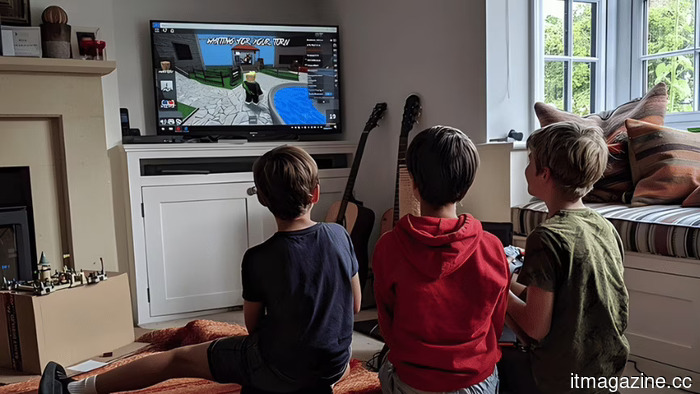 Russia lifts the ban on Roblox following complaints from 63,000 children.
Russia has reestablished access to Roblox after having banned the gaming platform in December. This change came after receiving 63,000 complaints from children, with half expressing a desire to leave Russia.
Russia lifts the ban on Roblox following complaints from 63,000 children.
Russia has reestablished access to Roblox after having banned the gaming platform in December. This change came after receiving 63,000 complaints from children, with half expressing a desire to leave Russia.
 Aryon Security secures $29 million to safeguard against cloud breaches.
Aryon Security secured $29 million in funding, supported by CrowdStrike's George Kurtz, Datadog, and Shlomo Kramer, with the aim of preventing cloud breaches before they occur.
Aryon Security secures $29 million to safeguard against cloud breaches.
Aryon Security secured $29 million in funding, supported by CrowdStrike's George Kurtz, Datadog, and Shlomo Kramer, with the aim of preventing cloud breaches before they occur.
 Aryon Security secures $29 million to avert cloud breaches.
Aryon Security secured $29 million in funding, supported by CrowdStrike's George Kurtz, Datadog, and Shlomo Kramer, to prevent cloud breaches before they occur.
Aryon Security secures $29 million to avert cloud breaches.
Aryon Security secured $29 million in funding, supported by CrowdStrike's George Kurtz, Datadog, and Shlomo Kramer, to prevent cloud breaches before they occur.
 KPMG accessed a whistleblower's computer secretly.
KPMG covertly accessed a whistleblower's work computer multiple times and distributed the files to senior partners and its CEO. Although it was within the law, that is the issue at hand.
KPMG accessed a whistleblower's computer secretly.
KPMG covertly accessed a whistleblower's work computer multiple times and distributed the files to senior partners and its CEO. Although it was within the law, that is the issue at hand.
 India halted Starlink's approvals due to concerns regarding Iran, just days before SpaceX’s historic IPO.
Indian security authorities halted the launch of Starlink after terminals were spotted in Iran without authorization. This development comes at an inconvenient time for SpaceX's $75 billion IPO.
India halted Starlink's approvals due to concerns regarding Iran, just days before SpaceX’s historic IPO.
Indian security authorities halted the launch of Starlink after terminals were spotted in Iran without authorization. This development comes at an inconvenient time for SpaceX's $75 billion IPO.
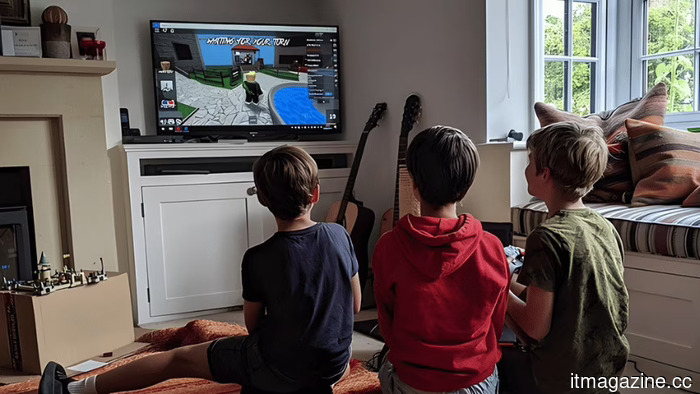 Russia lifts the ban on Roblox following complaints from 63,000 children.
Russia has reinstated access to Roblox following a ban imposed in December. This change came after the receipt of 63,000 complaint letters from children, with half expressing a desire to leave the country.
Russia lifts the ban on Roblox following complaints from 63,000 children.
Russia has reinstated access to Roblox following a ban imposed in December. This change came after the receipt of 63,000 complaint letters from children, with half expressing a desire to leave the country.
A German court has ruled that Google is responsible for its AI Overviews.
A court in Munich determined that Google's AI Overviews are considered its own statements, which makes the company responsible for any false information. If this ruling stands, it could have implications for all AI answer engines.