
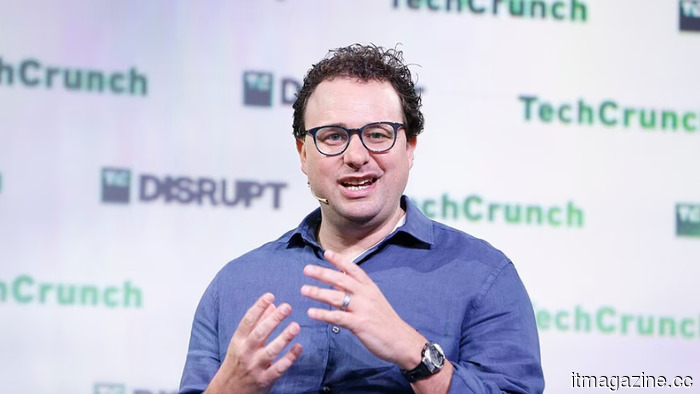
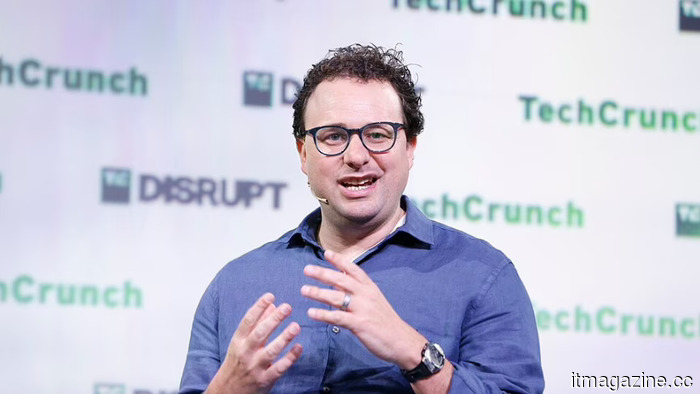
The CEO of Anthropic is uncertain whether Claude targeted a school in Iran.
Dario Amodei, CEO of Anthropic, stated that he is unaware of the extent to which his company's AI model, Claude, was involved in a missile strike that resulted in the deaths of approximately 120 children at an elementary school in Minab, Iran, on February 28. In an interview on Bloomberg's The Circuit with Emily Chang, he characterized the incident as “a really terrible thing to happen” but claimed that the use case remained within Anthropic’s guidelines. “We don’t have access to, we don’t know exactly how these models were used,” Amodei commented. “The principle we have established, which was followed here, is that a human makes the final decision.”
Role of Claude in the targeting process
US Central Command is utilizing an AI-assisted targeting platform named Maven Smart System, developed by Palantir as part of a $1.3 billion contract with the Pentagon. This system employs Claude and other AI technologies to identify targets, assess their strategic relevance, and assist in matching weapons to targets. Within the first 24 hours of operations against Iran, CENTCOM targeted 1,000 locations and reportedly struck about 13,000 by April 6, only slightly over a month after operations commenced. The emphasis here is on the scale and speed; Maven aims to reduce the time from target identification to execution.
Details of the Minab school attack
Amnesty International reported that on the first day of US operations in Iran, the Shajareh Tayyebeh Elementary School in Minab was struck, resulting in at least 120 child fatalities and over 150 total deaths. Investigations by Amnesty, Human Rights Watch, and various media organizations suggested that a US-made Tomahawk missile was likely involved. Although the Pentagon has not officially accepted responsibility for the attack, it is currently investigating the situation. Defence Secretary Pete Hegseth promised a “thorough probe” in March, which the Washington Post interpreted as a silent acknowledgment of US accountability.
The knowledge gap
Amodei's remark about his lack of knowledge regarding how Claude was employed during the strike highlights a broader issue. AI companies are supplying increasingly powerful tools to the military but have limited insight into how they are used in actual combat situations. Hamza Chaudhry from the Future of Life Institute cautioned that the speed of AI targeting processes might become so rapid that human decision-making ends up being merely a “rubber stamp.” He noted that the increased intensity of combat could lead to a significantly higher loss of life.
Concerns from the creator of Maven
Jack Shanahan, a retired Air Force lieutenant general who initiated Project Maven, shared similar apprehensions during a Stanford University workshop last week. He warned that incorporating Claude into the Maven Smart System could lead to “unexpected impacts” and weaken the importance of human judgement. “If you make more decisions rather than the right decisions, you may have a very flawed decision-making process,” Shanahan stated. “You may have a thousand targets, but are they the right targets?”
Anthropic's standoff with the Pentagon
Earlier this year, Amodei provoked a conflict with the Trump administration by refusing to permit Claude's use in fully autonomous weaponry or extensive domestic surveillance. In response, the Pentagon classified Anthropic as a supply-chain risk, leading to a lawsuit from the company that is still ongoing. A federal judge in California blocked the Pentagon's attempt to cut ties with Anthropic, ruling that it infringed upon the company’s constitutional rights. However, a different appeals court in Washington denied Anthropic's request for a temporary hold on the blacklisting during the legal proceedings.
The contradictions
Amodei stated that the “principle” of human decision-making was “obeyed” in the Minab strike, yet he also acknowledged his ignorance regarding Claude’s specific involvement. These two assertions are challenging to reconcile: if the model's application is unknown, it is impossible to ascertain whether the principle was indeed followed. The claim that a human makes the final decision does not alleviate concerns that AI-driven targeting might produce so many targets so rapidly that human review becomes routine instead of substantive. The figures from CENTCOM, reporting 13,000 targets in five weeks, underscore this worry. Anthropic’s stance is also inherently contradictory. It has set clear boundaries against autonomous weapons and mass surveillance, litigated against the government's blacklisting actions, yet its AI is integrated into the targeting system resulting in the strike on 13,000 targets, including a deadly attack on a school. While it is unclear if Claude contributed to the specific strike, it is an integral part of the system that enabled it.
Other articles
 Within Automat's guide for expanding AI startups on AWS.
AWS Premier Partner Automat-it discusses how AI startups can prevent escalating GPU expenses, unstable deployments, and operational debt by considering cloud architecture as a strategic benefit from the outset.
Within Automat's guide for expanding AI startups on AWS.
AWS Premier Partner Automat-it discusses how AI startups can prevent escalating GPU expenses, unstable deployments, and operational debt by considering cloud architecture as a strategic benefit from the outset.
 India suspended Starlink approvals due to concerns about Iran, just days prior to SpaceX's record IPO.
Indian security agencies halted the launch of Starlink after terminals were found in Iran without a license. This comes at an inconvenient time for SpaceX's $75 billion IPO.
India suspended Starlink approvals due to concerns about Iran, just days prior to SpaceX's record IPO.
Indian security agencies halted the launch of Starlink after terminals were found in Iran without a license. This comes at an inconvenient time for SpaceX's $75 billion IPO.
 India halted Starlink's approvals due to concerns regarding Iran, just days before SpaceX’s historic IPO.
Indian security authorities halted the launch of Starlink after terminals were spotted in Iran without authorization. This development comes at an inconvenient time for SpaceX's $75 billion IPO.
India halted Starlink's approvals due to concerns regarding Iran, just days before SpaceX’s historic IPO.
Indian security authorities halted the launch of Starlink after terminals were spotted in Iran without authorization. This development comes at an inconvenient time for SpaceX's $75 billion IPO.
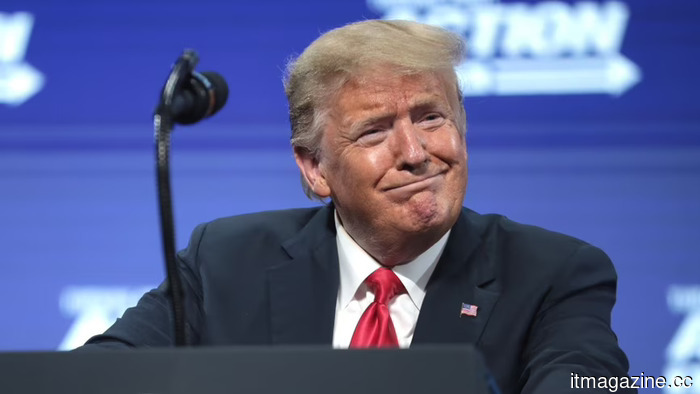 Trump Media abandons Truth Social spinoff but retains TAE merger.
Trump Media has pulled back from its intention to convert Truth Social into a SPAC managed by Trump associates. The $6 billion merger with TAE Technologies aims for a completion by the fourth quarter of 2026.
Trump Media abandons Truth Social spinoff but retains TAE merger.
Trump Media has pulled back from its intention to convert Truth Social into a SPAC managed by Trump associates. The $6 billion merger with TAE Technologies aims for a completion by the fourth quarter of 2026.
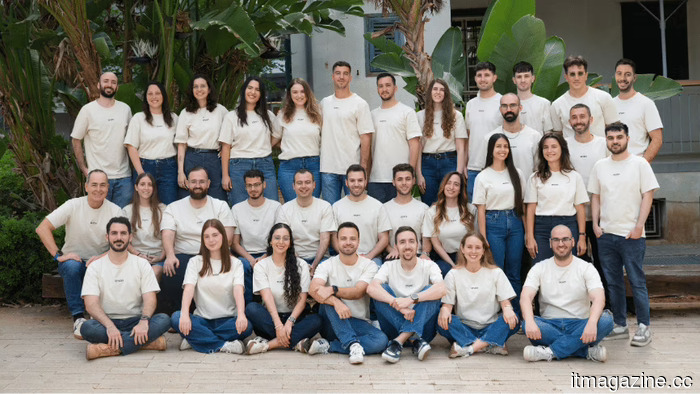 Aryon Security secures $29 million to avert cloud breaches.
Aryon Security secured $29 million in funding, supported by CrowdStrike's George Kurtz, Datadog, and Shlomo Kramer, to prevent cloud breaches before they occur.
Aryon Security secures $29 million to avert cloud breaches.
Aryon Security secured $29 million in funding, supported by CrowdStrike's George Kurtz, Datadog, and Shlomo Kramer, to prevent cloud breaches before they occur.
 The CEO of Anthropic is unsure whether Claude targeted a school in Iran.
Dario Amodei mentioned that he is uncertain about the involvement of Claude in a strike that resulted in the deaths of 120 children at an Iranian school. The AI is integrated into the Pentagon's targeting system.
The CEO of Anthropic is unsure whether Claude targeted a school in Iran.
Dario Amodei mentioned that he is uncertain about the involvement of Claude in a strike that resulted in the deaths of 120 children at an Iranian school. The AI is integrated into the Pentagon's targeting system.
The CEO of Anthropic is uncertain whether Claude targeted a school in Iran.
Dario Amodei mentioned that he is unsure about the role Claude had in an attack that resulted in the deaths of 120 children at an Iranian school. The AI is integrated into the Pentagon's targeting system.