
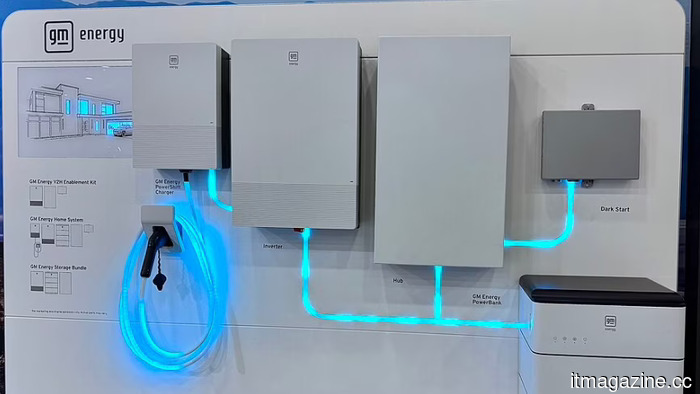
From automobiles to data centers, GM expands into energy storage through three new battery agreements.
TL;DR: General Motors has teamed up with Peak Energy to develop sodium-ion batteries and is enhancing its grid storage efforts through partnerships with Redwood Materials and LG Energy Solution.
General Motors is venturing into energy storage solutions for data centers and the electrical grid, revealing its collaboration with Peak Energy for sodium-ion battery development, securing a lithium iron phosphate supply agreement with LG Energy Solution, and deepening its relationship with Redwood Materials. These initiatives underline GM’s clear intent to diversify its $900 million investment in battery technology beyond its vehicle offerings.
The partnership with Peak Energy is the most ambitious aspect of this effort. GM will collaborate with Peak Energy at its Battery Cell Development Center in Warren, Michigan, aiming for trial production of sodium-ion battery cells by 2028. These sodium-ion cells utilize sodium, iron, and manganese instead of lithium, cobalt, and nickel, making them more cost-effective and reducing reliance on supply chains dominated by China.
No automaker outside of China has engaged in sodium-ion development at this level, positioning GM as the first Western car manufacturer to advance beyond theoretical research into actual manufacturing trials. Peak Energy, a startup from the Bay Area funded with $100 million, currently creates sodium-ion cells at a pilot plant in Escondido, California, and is constructing a larger facility capable of producing 10 GWh of cells annually.
GM's investment grants it access to Peak Energy's technology, while Peak Energy benefits from GM's manufacturing expertise. This symbiotic exchange is critical, as sodium-ion technology has faced challenges in transitioning from laboratory to factory outside of China.
Sodium-ion batteries are currently unsuitable for electric vehicles due to their energy density, which is around 120 to 160 watt-hours per kilogram, considerably lower than the 250 to 300 Wh/kg offered by lithium-ion batteries in modern EVs. Thus, they are too heavy for vehicles but ideal for stationary storage applications, where weight is less of a concern and cost per kilowatt-hour is more important.
The agreement with LG Energy Solution provides a temporary solution until sodium-ion cells are ready. GM will produce lithium iron phosphate (LFP) battery cells at its development center, which LG will then incorporate into energy storage systems intended for data centers and utilities facing increasing electricity demands. LFP chemistry has already proven effective in stationary storage, and GM has been manufacturing these cells as part of its larger goal to diversify beyond the nickel-manganese-cobalt-aluminum chemistry used in its EV batteries.
The final component of this strategy involves Redwood Materials. GM is acquiring a 7.2 MWh battery energy storage system from Redwood, which is transitioning from battery recycling to grid-scale energy infrastructure. This system will be set up at GM’s Milford Proving Ground in Michigan to provide backup power and manage peak demand.
Redwood's storage systems utilize second-life EV batteries—cells that no longer meet automotive standards but still have sufficient capacity for stationary applications. The company already operates a 12 MW, 63 MWh microgrid at a Crusoe data center in Sparks, Nevada, marking the largest deployment of second-life batteries in North America.
GM is positioning this energy storage initiative as a means to monetize its battery manufacturing capabilities, which have so far only supported its vehicle sales. The Battery Cell Development Center, which began operations in 2024, was designed for developing and testing battery chemistries for GM’s EVs. Adding stationary storage as a secondary revenue source helps to distribute the costs of investment across a broader market, especially as the sales growth of EVs has slowed compared to earlier expectations.
However, this strategy carries risks. GM lacks a history in energy storage and will be competing with established companies like Tesla Energy, Fluence, and BYD’s energy storage division, all of which have extensive deployment experience and customer relationships. Moreover, sodium-ion technology remains untested at a commercial scale outside China, where companies like CATL and BYD have shipped sodium-ion cells but have yet to fully demonstrate the cycle life and degradation characteristics that utility customers need over long project lifetimes.
What GM does possess is a strong manufacturing foundation and significant purchasing power. The company has allocated $900 million for battery chemistry research and development since 2022, maintains one of North America's few dedicated battery cell development facilities, and has established connections with suppliers in both the automotive and energy sectors. The success of its energy storage business will hinge on effective execution and whether sodium-ion cells can achieve financial and performance benchmarks as the Milford system and LG partnership produce their initial real-world results.
Other articles
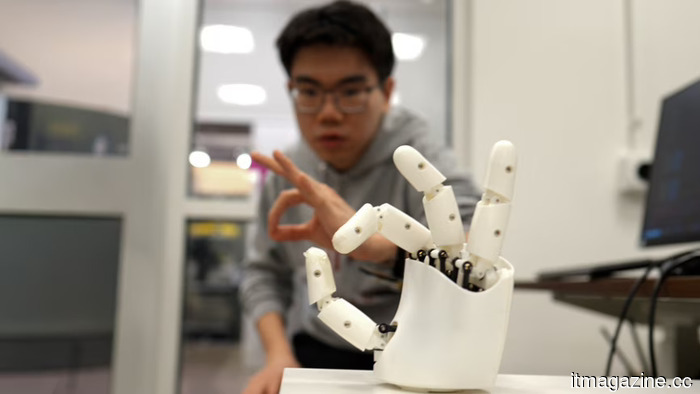 The ultrasound wristband developed by MIT monitors the movements of each finger and enables real-time control of a robotic hand.
MIT engineers developed a wristband that uses ultrasound to monitor 22 degrees of hand movement with a latency of 120ms, allowing for real-time control of robotic hands and sign language.
The ultrasound wristband developed by MIT monitors the movements of each finger and enables real-time control of a robotic hand.
MIT engineers developed a wristband that uses ultrasound to monitor 22 degrees of hand movement with a latency of 120ms, allowing for real-time control of robotic hands and sign language.
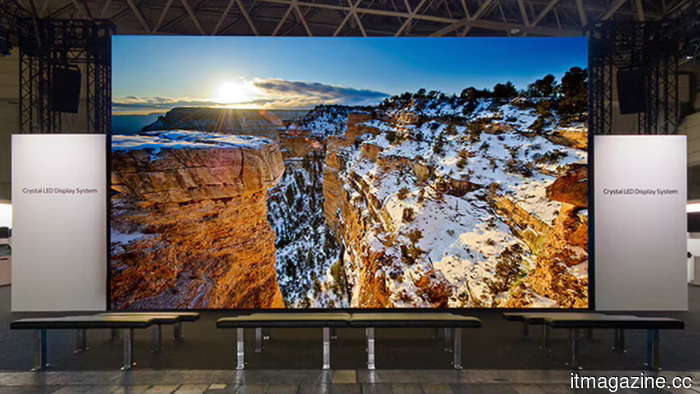 Sony's 135-inch Crystal LED UNIFY is a boardroom display that can be set up in just an hour.
Sony introduced the Crystal LED UNIFY, a 135-inch dvLED screen designed for boardrooms that can be set up by two individuals within an hour. It is scheduled to ship in early 2027.
Sony's 135-inch Crystal LED UNIFY is a boardroom display that can be set up in just an hour.
Sony introduced the Crystal LED UNIFY, a 135-inch dvLED screen designed for boardrooms that can be set up by two individuals within an hour. It is scheduled to ship in early 2027.
 Meta removed the facial recognition code from its smart glasses app a day after WIRED discovered it.
Meta has eliminated the NameTag facial recognition code from its AI application after WIRED discovered biometric software present on 50 million devices, which Meta claimed "does not exist."
Meta removed the facial recognition code from its smart glasses app a day after WIRED discovered it.
Meta has eliminated the NameTag facial recognition code from its AI application after WIRED discovered biometric software present on 50 million devices, which Meta claimed "does not exist."
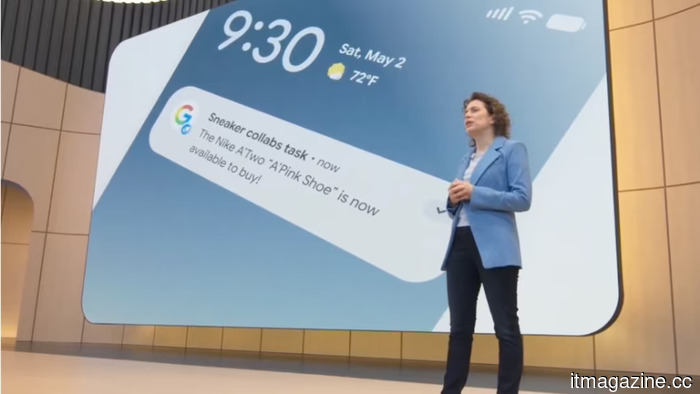 Both Apple and Google aim to track the web on your behalf.
In close succession, Google and Apple revealed features that monitor web pages and notify users when changes occur. Searching is evolving into a continuous process rather than a one-off inquiry.
Both Apple and Google aim to track the web on your behalf.
In close succession, Google and Apple revealed features that monitor web pages and notify users when changes occur. Searching is evolving into a continuous process rather than a one-off inquiry.
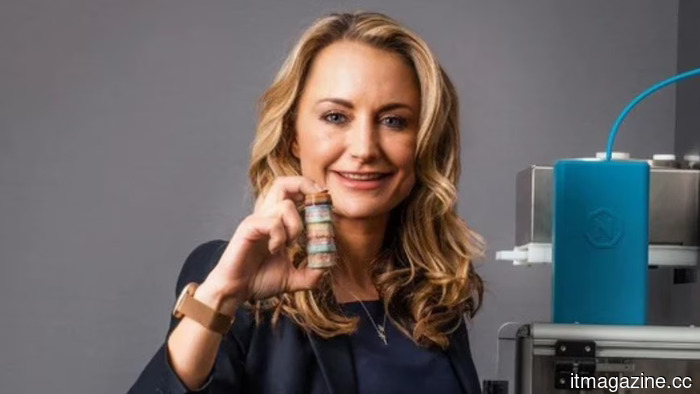 Rem3dy Health secures £14M at an £84M valuation to expand the global reach of its 3D-printed personalized vitamins.
Birmingham's Rem3dy Health secured £14M in funding from Suntory, Apollo Hospitals, and Estrella Galicia to grow its 3D-printed personalized nutrition brand, Nourished.
Rem3dy Health secures £14M at an £84M valuation to expand the global reach of its 3D-printed personalized vitamins.
Birmingham's Rem3dy Health secured £14M in funding from Suntory, Apollo Hospitals, and Estrella Galicia to grow its 3D-printed personalized nutrition brand, Nourished.
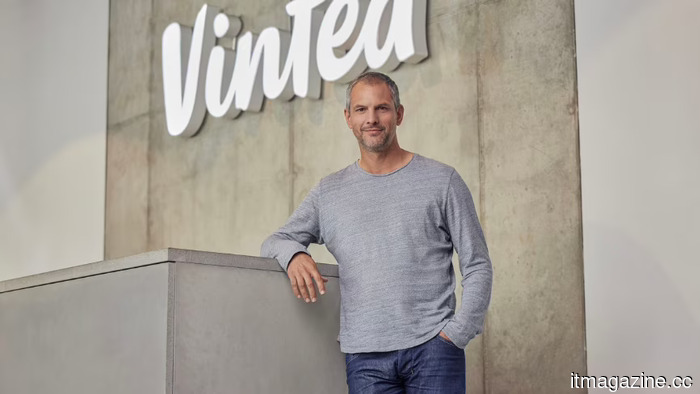 The CEO of Vinted states that the US is a
Vinted's CEO Adam Jay states that secondhand shopping is "here to stay," as the €8 billion Lithuanian marketplace expands into the US following a reported revenue of €1.1 billion in 2025.
The CEO of Vinted states that the US is a
Vinted's CEO Adam Jay states that secondhand shopping is "here to stay," as the €8 billion Lithuanian marketplace expands into the US following a reported revenue of €1.1 billion in 2025.
From automobiles to data centers, GM expands into energy storage through three new battery agreements.
GM collaborated with Peak Energy on sodium-ion batteries and extended its agreement with Redwood Materials to provide energy storage solutions for data centers and the grid.