
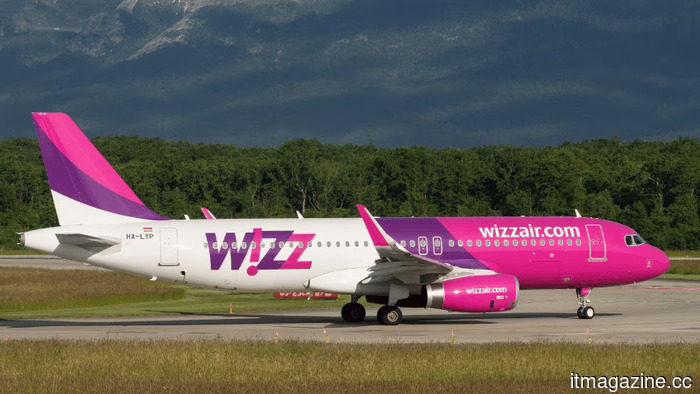
Wizz Air plans to implement Starlink Wi-Fi on its aircraft starting in 2027.
Affordable flights and high-speed Wi-Fi have seldom been found together, and the budget airlines in Europe have had a valid reason: the financial calculations have not been favorable. Wizz Air is hoping to change that.
On Monday, the Hungarian ultra-low-cost airline announced it will introduce Starlink, Elon Musk’s satellite internet service, to its fleet starting in 2027, making it the first budget airline in Europe to adopt this technology. The plan is to equip its entire Airbus A320-family fleet of more than 200 aircraft, including new additions, with this service. However, it did not reveal the financial specifics.
This lack of disclosure is significant, as the financial implications have deterred competitors. Ryanair and EasyJet have both raised concerns about the expenses associated with implementing Starlink on low-cost aircraft.
Michael O’Leary of Ryanair has estimated that the service could cost his airline up to $250 million annually due to the added weight and drag from the rooftop antenna, which increases fuel consumption. EasyJet mentioned in January that the financials were “not right yet.” By being the first to act, Wizz Air is making a gamble that its major rivals have avoided.
The attraction lies in speed.
Conventional in-flight Wi-Fi, reliant on older satellites or ground towers, has long been slow, inconsistent, and expensive. Starlink’s low-Earth-orbit network offers low-latency connectivity that is fast enough for streaming, and Wizz Air claims that passengers will be able to download a three-hour HD movie in about three minutes.
It remains unclear whether passengers will be charged for this service, as the airline has not indicated if it will be free, paid, or linked to a loyalty program. In contrast, United Airlines is equipping over 1,000 planes with Starlink and providing it for free to members.
Wizz's chief commercial officer, Ian Malin, stated only that “ultra-low-cost travel has always aimed to make opportunities accessible to more people.”
Wizz Air is the latest airline to partner with Starlink, which has also signed contracts with American, Southwest, United, and Alaska in the United States, as well as long-haul carriers like Singapore Airlines and Emirates. The timing is notable: SpaceX, the parent company of Starlink, is set to go public this week in one of the largest initial public offerings in history, and a steady stream of airline partnerships enhances the narrative.
With over 7,000 satellites in orbit, Starlink leads a market that competitors are eager to enter, including Amazon’s Project Kuiper and Europe’s struggling satellite initiatives.
For Europe, there's an uncomfortable underlying message.
A European airline connecting its fleet to a US-managed network operated by Musk emerges at a time when the continent is concerned about its reliance on American technology, spanning chips to AI. However, no European system exists that provides similar capabilities, and Wizz Air, which will report its full-year results on Thursday, clearly believes the connectivity is worth the political and financial implications.
For passengers, the proposition is straightforward: from 2027 onwards, a Wizz Air flight could offer internet that is genuinely usable.
Whether it will be available for free or as an additional charge is still unspecified, and given that the airline charges for nearly everything, it seems unlikely that it will be free.
Other articles
 Amazon's agreement with Corning indicates that fiber is the new limitation for AI.
Amazon is investing billions in Corning for optical fiber to connect its AI data centers in the US, marking the glassmaker's third major AI deal of 2026, following agreements with Meta and Nvidia.
Amazon's agreement with Corning indicates that fiber is the new limitation for AI.
Amazon is investing billions in Corning for optical fiber to connect its AI data centers in the US, marking the glassmaker's third major AI deal of 2026, following agreements with Meta and Nvidia.
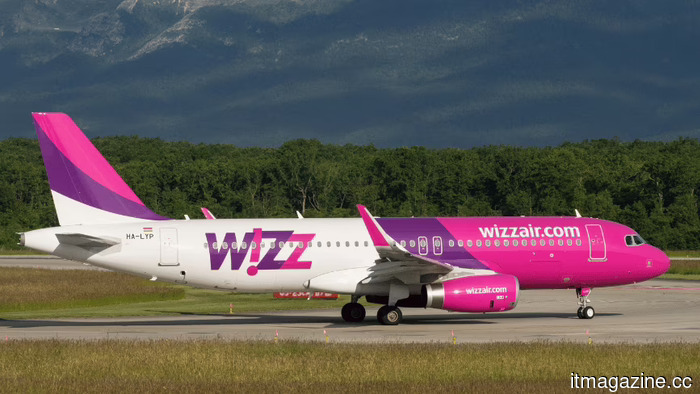 Wizz Air will install Starlink Wi-Fi on its aircraft starting in 2027.
Wizz Air is set to become the first European low-cost airline to provide Starlink in-flight internet starting in 2027, taking a financial risk that competitors Ryanair and EasyJet have so far steered clear of.
Wizz Air will install Starlink Wi-Fi on its aircraft starting in 2027.
Wizz Air is set to become the first European low-cost airline to provide Starlink in-flight internet starting in 2027, taking a financial risk that competitors Ryanair and EasyJet have so far steered clear of.
 Have you ever been curious about the data your iPhone applications are collecting? This app reveals everything in detail.
Loupe reveals the concealed fingerprinting signals that any iPhone application can access, including language settings, battery information, installed applications, and persistent identifiers.
Have you ever been curious about the data your iPhone applications are collecting? This app reveals everything in detail.
Loupe reveals the concealed fingerprinting signals that any iPhone application can access, including language settings, battery information, installed applications, and persistent identifiers.
 Google and Nvidia are considering Intel as a secondary option to TSMC for AI chip production.
Google has placed an order for over 3 million TPUs from Intel for 2028, while Nvidia is evaluating its 18A manufacturing process, reflecting a rare show of trust in the struggling US semiconductor industry as TSMC faces challenges.
Google and Nvidia are considering Intel as a secondary option to TSMC for AI chip production.
Google has placed an order for over 3 million TPUs from Intel for 2028, while Nvidia is evaluating its 18A manufacturing process, reflecting a rare show of trust in the struggling US semiconductor industry as TSMC faces challenges.
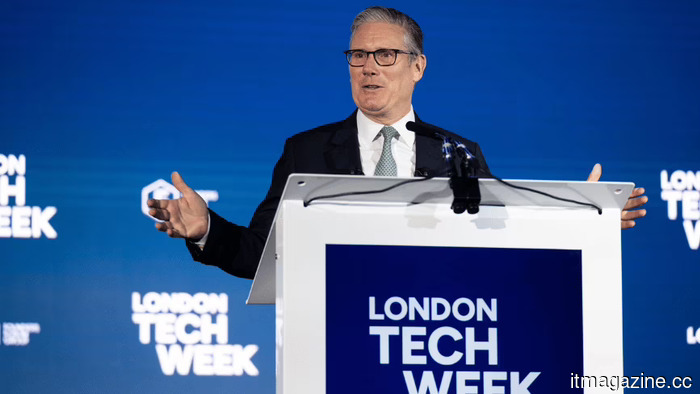 AMD, Nebius, and Starmer invest billions in UK AI at LTW.
London Tech Week 2026 - AMD commits £2bn and Nebius £1.7bn towards UK AI, complementing Starmer’s £400m computing initiative as Britain aims to become Europe's AI center.
AMD, Nebius, and Starmer invest billions in UK AI at LTW.
London Tech Week 2026 - AMD commits £2bn and Nebius £1.7bn towards UK AI, complementing Starmer’s £400m computing initiative as Britain aims to become Europe's AI center.
 Stepful secures $55 million to educate healthcare professionals using AI.
Stepful secured $55 million in a Series C funding round led by Oak HC/FT to expand its AI 'school-as-a-service' for hospitals, following the training of over 32,000 healthcare professionals.
Stepful secures $55 million to educate healthcare professionals using AI.
Stepful secured $55 million in a Series C funding round led by Oak HC/FT to expand its AI 'school-as-a-service' for hospitals, following the training of over 32,000 healthcare professionals.
Wizz Air plans to implement Starlink Wi-Fi on its aircraft starting in 2027.
Wizz Air will become the first budget airline in Europe to provide Starlink in-flight internet starting in 2027, taking a financial risk that rivals Ryanair and EasyJet have thus far chosen to steer clear of.