
Google and Nvidia are considering Intel as a secondary option to TSMC for AI chip production.
For years, the surge in artificial intelligence has primarily revolved around a few factory floors in Taiwan. This reliance is beginning to appear risky enough that even Nvidia and Google are looking for alternatives, with an unexpected contender being Intel.
Google has placed a substantial order with Intel for the production of over three million of its proprietary tensor processing units set for 2028, while Nvidia is exploring Intel’s advanced packaging and its state-of-the-art 18A process for future chips, according to a report from The Information on Monday, which cited four individuals familiar with the discussions. Following this news, Intel's stock rose approximately 12 percent.
The driving force behind this shift is scarcity.
TSMC, the Taiwanese powerhouse responsible for manufacturing nearly all leading-edge AI chips, is struggling to meet demand, particularly in its advanced-packaging lines that merge chips and memory. For companies designing the world's most in-demand semiconductors, depending on a single supplier in one country has become a strategic risk.
The two strategies exhibit different levels of commitment.
Google's approach involves a firm commitment: an order for over three million TPUs in 2028, following months of testing Intel’s packaging, as part of an expansion that Morgan Stanley estimates will exceed six million TPUs across 2027 and 2028.
In contrast, Nvidia has not made a decisive commitment. They are currently conducting preliminary tests, including multiproject wafer runs on the 18A process, and assessing whether Intel can develop a processor that integrates four graphics chips into one—a design linked to its Feynman GPU architecture expected in 2028.
For Intel, even such cautious interest is a significant milestone.
As a former leader in American chip manufacturing, Intel has spent years attempting to establish its contract-manufacturing segment as a formidable competitor to TSMC, facing limited success and considerable losses. The company has been vying for Apple to become a foundry client, and both the US government and Nvidia have invested in Intel.
What the turnaround has been lacking is actual orders, rather than mere goodwill.
The immediate opportunity lies in packaging rather than the most advanced chip production, where Intel remains behind. Reports suggest SK Hynix is testing its high-bandwidth memory for compatibility with Intel’s packaging as well. An outstanding question that has previously hindered Intel is whether the 18A process can compete with TSMC in terms of yield, which is the proportion of chips that are usable.
This situation also highlights how far Google has progressed in gaining control of its silicon. Its tensor processing units are now produced in the millions, and it has been diversifying its orders across various partners to lessen its reliance on both Nvidia and TSMC. Including Intel is another strategy to mitigate risk.
None of this challenges TSMC’s dominant position in cutting-edge manufacturing, which remains significantly ahead. However, it indicates that the most influential buyers in the AI sector no longer prefer to have all their resources tied to one Taiwanese supplier, and suggests that Intel, previously dismissed by many, may still have a role in meeting their supply needs.
For a company that has long sought a customer to affirm its comeback, Google has now stepped into that role.
Other articles
 What if Pokémon Go existed in real life? This application allows you to document every animal you encounter in the real world.
A newly launched iOS app named Gotcha transforms your iPhone into a personal Pokédex. Just aim your phone at any animal, capture it, and gather a variety of creatures, ranging from everyday animals to rare discoveries.
What if Pokémon Go existed in real life? This application allows you to document every animal you encounter in the real world.
A newly launched iOS app named Gotcha transforms your iPhone into a personal Pokédex. Just aim your phone at any animal, capture it, and gather a variety of creatures, ranging from everyday animals to rare discoveries.
 Meta takes NSO to court again regarding WhatsApp spyware.
Meta is seeking to hold NSO Group in contempt, asserting that the creator of Pegasus continued to target WhatsApp in violation of a permanent injunction and that it thwarted new phishing attempts.
Meta takes NSO to court again regarding WhatsApp spyware.
Meta is seeking to hold NSO Group in contempt, asserting that the creator of Pegasus continued to target WhatsApp in violation of a permanent injunction and that it thwarted new phishing attempts.
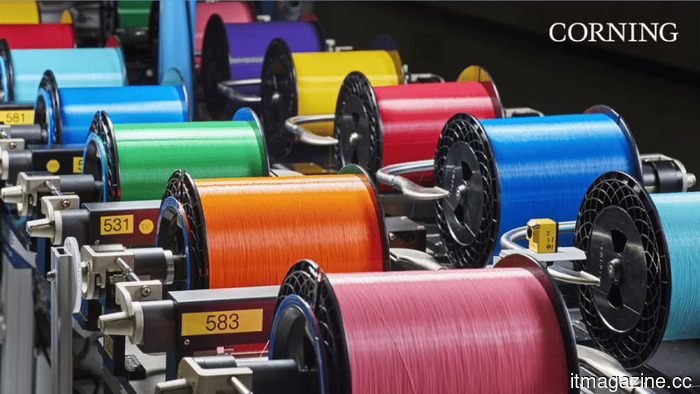 Amazon's agreement with Corning indicates that fiber is the new limitation for AI.
Amazon is investing billions in Corning for optical fiber to connect its AI data centers in the US, marking the glassmaker's third major AI deal of 2026, following agreements with Meta and Nvidia.
Amazon's agreement with Corning indicates that fiber is the new limitation for AI.
Amazon is investing billions in Corning for optical fiber to connect its AI data centers in the US, marking the glassmaker's third major AI deal of 2026, following agreements with Meta and Nvidia.
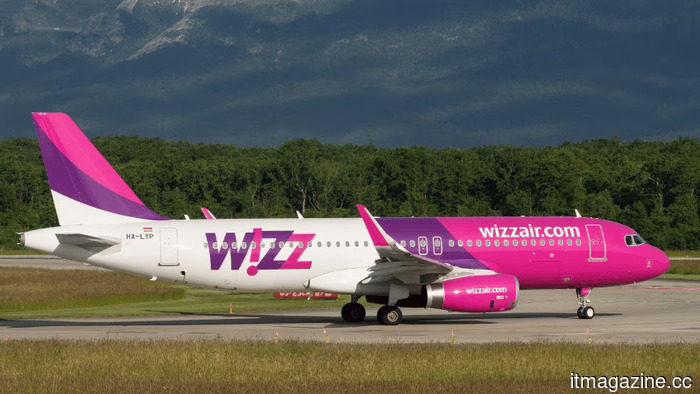 Wizz Air plans to implement Starlink Wi-Fi on its aircraft starting in 2027.
Wizz Air will become the first budget airline in Europe to provide Starlink in-flight internet starting in 2027, taking a financial risk that rivals Ryanair and EasyJet have thus far chosen to steer clear of.
Wizz Air plans to implement Starlink Wi-Fi on its aircraft starting in 2027.
Wizz Air will become the first budget airline in Europe to provide Starlink in-flight internet starting in 2027, taking a financial risk that rivals Ryanair and EasyJet have thus far chosen to steer clear of.
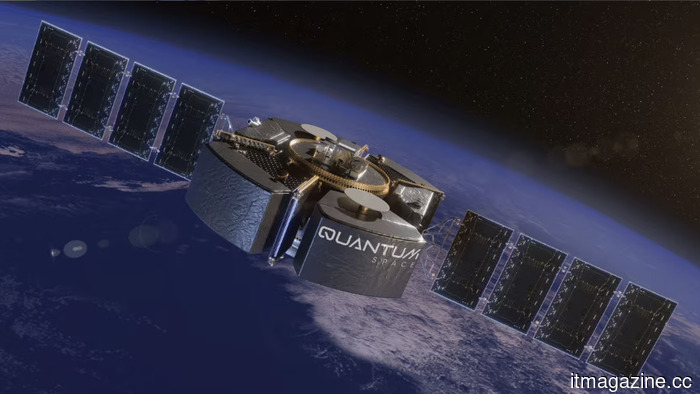 Former NASA chief takes Quantum Space public with a valuation of $1.2 billion.
Quantum Space, founded by Jim Bridenstine, is going public through a $1.2 billion SPAC merger aimed at developing maneuverable spacecraft for the upcoming space race, with plans to list on Nasdaq under the ticker QSPC.
Former NASA chief takes Quantum Space public with a valuation of $1.2 billion.
Quantum Space, founded by Jim Bridenstine, is going public through a $1.2 billion SPAC merger aimed at developing maneuverable spacecraft for the upcoming space race, with plans to list on Nasdaq under the ticker QSPC.
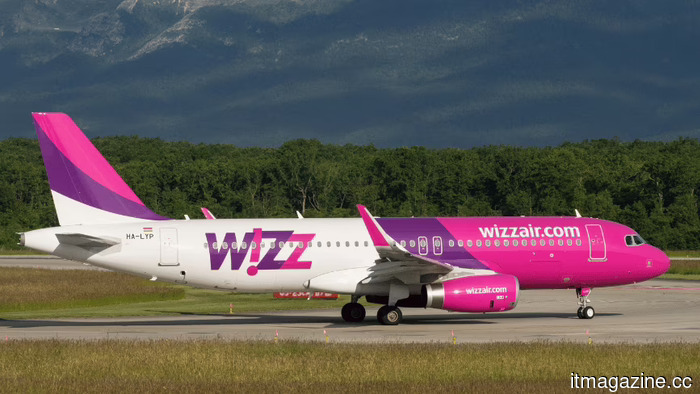 Wizz Air will install Starlink Wi-Fi on its aircraft starting in 2027.
Wizz Air is set to become the first European low-cost airline to provide Starlink in-flight internet starting in 2027, taking a financial risk that competitors Ryanair and EasyJet have so far steered clear of.
Wizz Air will install Starlink Wi-Fi on its aircraft starting in 2027.
Wizz Air is set to become the first European low-cost airline to provide Starlink in-flight internet starting in 2027, taking a financial risk that competitors Ryanair and EasyJet have so far steered clear of.
Google and Nvidia are considering Intel as a secondary option to TSMC for AI chip production.
Google has placed an order for over 3 million TPUs from Intel for 2028, while Nvidia is evaluating its 18A manufacturing process, reflecting a rare show of trust in the struggling US semiconductor industry as TSMC faces challenges.