
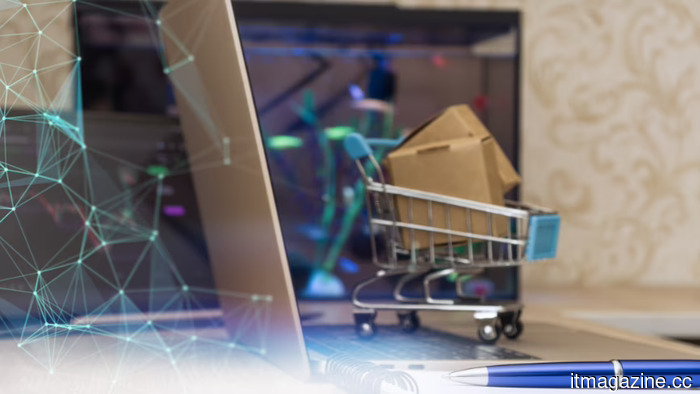
Artificial intelligence is determining which online stores you encounter, while disregarding the majority of them.
A concise review of a study conducted by AI commerce firm Recomaze analyzed 9,720 ecommerce stores, processing 58,320 product inquiries through Google Gemini. It was found that 60% of the stores received no recommendations, while any recommendations were spread among over 50,000 brands.
Consumers are increasingly turning to AI assistants for purchase advice, rather than just for simple questions like spelling or meal ideas. However, recent findings indicate that most online retailers are not included in the responses provided.
In this research, Recomaze executed six purchase-intent queries on each of the 9,720 ecommerce sites, totaling 58,320 tests. In 60% of the instances, no store was recommended at all. When a store was mentioned, it only occurred 14% of the time, with the AI typically directing shoppers to competitors or providing no store suggestions.
As major companies like Amazon and Google integrate AI assistants more into the shopping process, the inquiry "what should I buy" has become increasingly concrete. The new standard is to be among the few recommended names rather than merely appearing on a search results page. The study posits that most product catalogs cater to human shoppers and search engines like Google, rather than an AI that needs to comprehend and recommend products effectively.
An interesting finding from the study is the broad distribution of recommendations when a store is mentioned. Instead of favoring a few large retailers, the recommendations varied across 50,287 brands. The top ten brands barely made up around 4% of all suggestions, with the leading 100 accounting for about 11%. Etsy, the most-mentioned store, only accounted for 1.3% of the total tests. For instance, a query for cocktail capsules led to the focused brand Bartesian being recommended over larger retailers like Walmart and Target. This suggests that AI product discovery operates effectively on a long-tail principle, allowing smaller stores potential visibility.
Product category had the most significant influence on whether a store was recognized at all. Visual categories posed the greatest challenges; approximately 74% of stores in home and living and about 67% in apparel were not identified. In contrast, around 52% of food and beverage stores were invisible. Text-based AI struggles with assessing visual appeal for clothing or home goods, often reverting to prominent generic retailers while products with clear descriptions are easier to match.
The study acknowledges its limitations, noting it is based on a single assessment per store and only utilized Google Gemini, omitting other platforms like ChatGPT or Perplexity. The queries were algorithmically created to match store categories, leaving 42% of the stores uncategorized. They were selected from BuiltWith, with queries framed to reflect what shoppers may ask when they know what they want but not where to purchase it, instead of brand-specific queries that are easier to dominate.
“The shop window used to be Google. Now it is whatever the AI decides to recommend, and most brands have no idea whether they are included in the answer,” stated Delian Coroamă, founder and CEO of Recomaze. “The stores that get recommended are not necessarily the largest; rather, they are the ones whose product information can be effectively read and trusted by the engine.”
Recomaze, which has a vested interest in the findings, provides tools that monitor a store’s visibility across platforms like ChatGPT, Gemini, and Perplexity, as well as enhancing catalog data for better recommendations from these engines. However, the central discovery cannot be easily dismissed: a new intermediary now exists between consumers and stores, dictating which brands are mentioned, and so far, many remain unheard.
Other articles
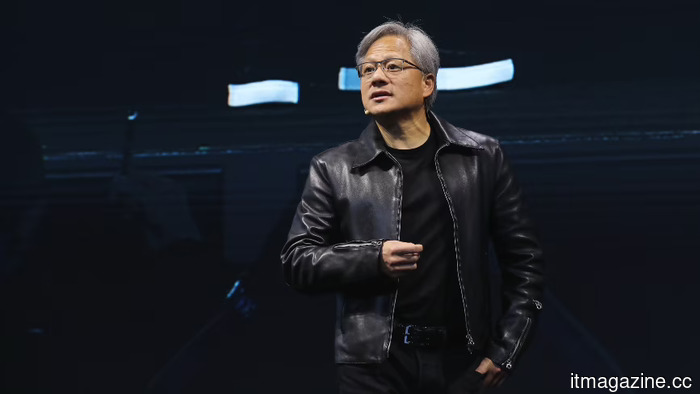 Nvidia and Hyundai are intensifying their focus on robotics with regards to Atlas.
Following discussions in Seoul, Nvidia and Hyundai are strengthening their partnership in physical-AI, centered around Boston Dynamics' Atlas humanoid and a $5.9 billion Korean "AI Valley."
Nvidia and Hyundai are intensifying their focus on robotics with regards to Atlas.
Following discussions in Seoul, Nvidia and Hyundai are strengthening their partnership in physical-AI, centered around Boston Dynamics' Atlas humanoid and a $5.9 billion Korean "AI Valley."
 Oriole launches its first entirely photonic AI network, asserting an 81% reduction.
UK-based startup Oriole Networks is implementing the initial large-scale pure photonic AI network in collaboration with AMD, asserting an 81% reduction in power usage and less than 1% idle time for GPUs in the ARIA lab in the UK.
Oriole launches its first entirely photonic AI network, asserting an 81% reduction.
UK-based startup Oriole Networks is implementing the initial large-scale pure photonic AI network in collaboration with AMD, asserting an 81% reduction in power usage and less than 1% idle time for GPUs in the ARIA lab in the UK.
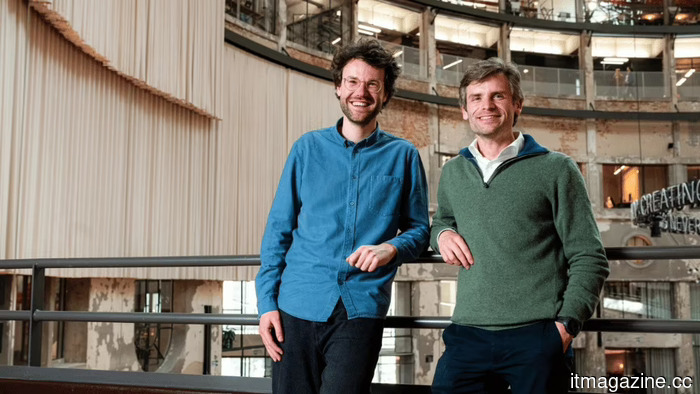 Companion.energy secures €7.8M for immediate enterprise energy solutions.
Ghent's Companion.energy has secured €7.8 million in funding, spearheaded by Realyze Ventures and Pi Labs, to automate real-time energy management for businesses and to expand into Germany and Spain.
Companion.energy secures €7.8M for immediate enterprise energy solutions.
Ghent's Companion.energy has secured €7.8 million in funding, spearheaded by Realyze Ventures and Pi Labs, to automate real-time energy management for businesses and to expand into Germany and Spain.
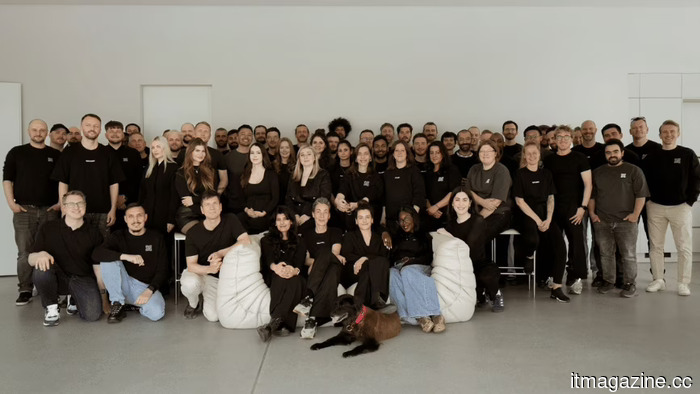 GALVANY secures €10M to address issues in Germany's heat-pump sector.
Berlin's GALVANY secured €10 million from SET Ventures and AENU to expand its heat-pump platform in Germany, following a sevenfold increase in revenue to €20.1 million.
GALVANY secures €10M to address issues in Germany's heat-pump sector.
Berlin's GALVANY secured €10 million from SET Ventures and AENU to expand its heat-pump platform in Germany, following a sevenfold increase in revenue to €20.1 million.
 Cosine unites UK giants to create a sovereign AI model.
During London Tech Week, Britain's Cosine secured partnerships with BT, HSBC, BAE, and others to develop Lumen Sovereign, a UK frontier AI model utilizing the Isambard-AI supercomputer for training.
Cosine unites UK giants to create a sovereign AI model.
During London Tech Week, Britain's Cosine secured partnerships with BT, HSBC, BAE, and others to develop Lumen Sovereign, a UK frontier AI model utilizing the Isambard-AI supercomputer for training.
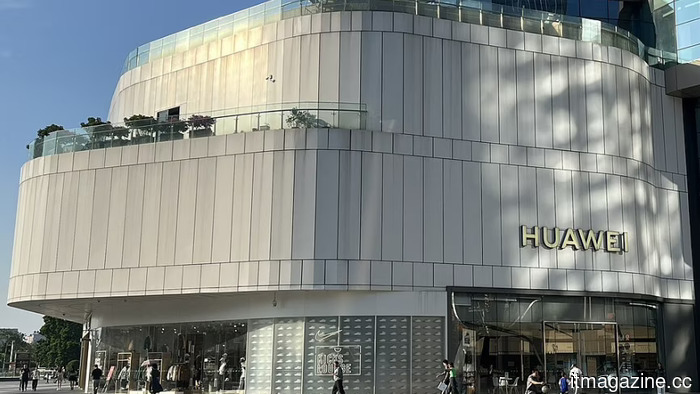 The US is encouraging NATO allies to allocate defense funds for replacing Huawei.
A US official advised allies to allocate NATO defense budgets to remove Huawei equipment from their networks, but the proposal did not gain traction as Europe remains divided on the issue of a ban.
The US is encouraging NATO allies to allocate defense funds for replacing Huawei.
A US official advised allies to allocate NATO defense budgets to remove Huawei equipment from their networks, but the proposal did not gain traction as Europe remains divided on the issue of a ban.
Artificial intelligence is determining which online stores you encounter, while disregarding the majority of them.
Research involving 9,720 ecommerce stores revealed that Google Gemini made no recommendations for 60% of them. The successful stores were not necessarily the largest brands, but rather those whose product data could be effectively interpreted by AI.