

Mira Murati reappears with a caution regarding AI governance and introduces a new product.
**TL;DR** Mira Murati, former CTO of OpenAI, made her first significant public appearance in 18 months to discuss Thinking Machines Lab’s “interaction models” and the lack of structural governance in the AI industry. She also touched on researcher departures and reflected on the firing of Altman in 2023.
After helping launch ChatGPT, DALL-E, and Codex, Mira Murati had remained notably silent. On Thursday, she reemerged during a discussion with Bloomberg’s Emily Chang in San Francisco, marking her first major media engagement in about 18 months—a strategic return to a fast-evolving conversation.
The timing was intentional. Over the past year and a half, Thinking Machines has secured $2 billion in funding, acquired a gigawatt of Nvidia Vera Rubin computing power, released one product, and experienced a concerning number of researcher departures. The AI environment Murati left when she exited OpenAI in September 2024 is markedly different from the one she returned to on Thursday.
**The Product: Interaction Models**
During her appearance, Murati introduced Thinking Machines’ “interaction models,” which represent a fundamentally new type of AI interface. Unlike the typical prompt-and-response format found in most AI tools, these models are designed to handle continuous audio, text, and video streams every 200 milliseconds.
The advantage of these models is their ability to capture the nuances of human communication, such as interruptions, mid-thought corrections, and pauses. Referring to this capability as “full duplex,” the company claims its TML-Interaction-Small model can respond in 0.40 seconds, mirroring the speed of natural conversation. This aligns with Thinking Machines’ belief that effective AI necessitates more human collaboration, not less.
Murati was careful to say this is just a preliminary step. She avoided providing specific release dates and positioned this work alongside Tinker, the company’s API for fine-tuning open-source models, which launched in October 2025 and is currently their only available product.
**The Departures**
Chang questioned Murati about a growing concern for the company: a series of notable departures. Co-founder and CTO Barret Zoph, along with co-founder Luke Metz and founding team member Sam Schoenholz, all returned to OpenAI in January. Additionally, five founding members shifted to Meta, reportedly attracted by lucrative compensation packages worth hundreds of millions.
Murati played down these exits, indicating that building a cutting-edge AI lab from the ground up accelerates the typical organizational changes. While she acknowledged that the attractive nine-figure salaries in the AI talent market catch attention, she suggested that compensation is seldom the sole factor.
“When I wake up in the morning, I am not thinking about how to eliminate the competition,” she said, eliciting laughter from the audience. This comment was light-hearted, yet the competitive landscape is intense. OpenAI’s presence is ubiquitous, Anthropic has raised $30 billion and received investment interest at an $800 billion valuation, and Elon Musk’s xAI has integrated with SpaceX ahead of a historic IPO. In such an environment, remaining silent carries risks.
**The Altman Firing, Revisited**
Chang inquired about the event that first thrust Murati into the public spotlight: the tumultuous five days in November 2023 when OpenAI’s board dismissed Sam Altman, and Murati briefly took on the role of interim CEO. This incident became known internally at OpenAI as “the blip.”
Murati stated that she felt certain about her decisions during that time, believing that protecting the mission and the team guided her choices, even as things appeared chaotic from outside. She remarked that the company would have “imploded” without her involvement during that tumultuous period. However, she acknowledged that clarity of intention does not equate to understanding the consequences, admitting she should have advocated for more information, a smoother transition plan, and increased transparency.
When asked about her current trust in Altman, she sidestepped the question. Instead, she expressed concerns about the concentration of critical decisions in too few hands, not only at OpenAI but throughout the industry. Her worry lies more with the lack of structural defenses than with the character of individual leaders, noting that good people can make poor decisions, and well-meaning organizations can drift off course.
**The Harder Question**
Regarding the broader future of AI, Murati countered both dystopian and utopian narratives, asserting that neither path is predetermined. She emphasized that the current period is pivotal in shaping future outcomes.
Repeatedly, she linked her governance concerns to her product philosophy, warning that if humans relinquish control too soon, the future could become very different—and not necessarily for the better. This perspective aligns with her company’s stance on the importance of human-AI collaboration. However, whether this approach can sustain itself amid a market that prioritizes speed, scale, and vast capital investment over caution remains a question Murati
Other articles
 Scams related to the FIFA World Cup 2026 are currently ongoing, including counterfeit websites and malware.
More than 4,300 counterfeit FIFA websites, banking malware in streaming applications, and compromised login credentials are currently aimed at World Cup 2026 supporters, with both the FBI and researchers alerting to the possibility of billions in potential losses.
Scams related to the FIFA World Cup 2026 are currently ongoing, including counterfeit websites and malware.
More than 4,300 counterfeit FIFA websites, banking malware in streaming applications, and compromised login credentials are currently aimed at World Cup 2026 supporters, with both the FBI and researchers alerting to the possibility of billions in potential losses.
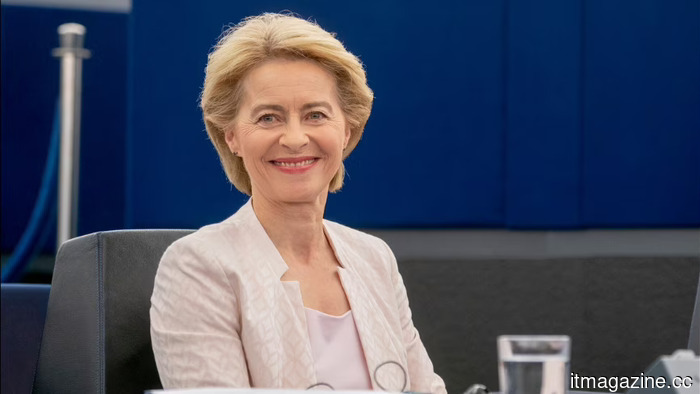 Die Ernennung von Von der Leyens KI-Beauftragtem wird wegen möglicher Interessenkonflikte kritisiert.
The EU designated Siemens chairman Jim Hagemann Snabe as an AI envoy shortly after the company contributed to the modification of the AI Act. Detractors argue that this grants policy power to industry lobbyists.
Die Ernennung von Von der Leyens KI-Beauftragtem wird wegen möglicher Interessenkonflikte kritisiert.
The EU designated Siemens chairman Jim Hagemann Snabe as an AI envoy shortly after the company contributed to the modification of the AI Act. Detractors argue that this grants policy power to industry lobbyists.
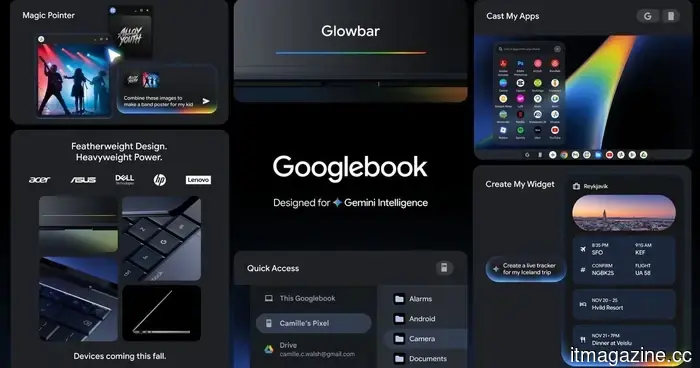 You might not be looking for it, but a flood of Google Books is on its way from leading brands.
Googlebook may launch with as many as eight devices this fall, offering customers a variety of options that include Intel, Snapdragon, and MediaTek hardware. However, important information regarding pricing, specifications, and availability is still unverified.
You might not be looking for it, but a flood of Google Books is on its way from leading brands.
Googlebook may launch with as many as eight devices this fall, offering customers a variety of options that include Intel, Snapdragon, and MediaTek hardware. However, important information regarding pricing, specifications, and availability is still unverified.
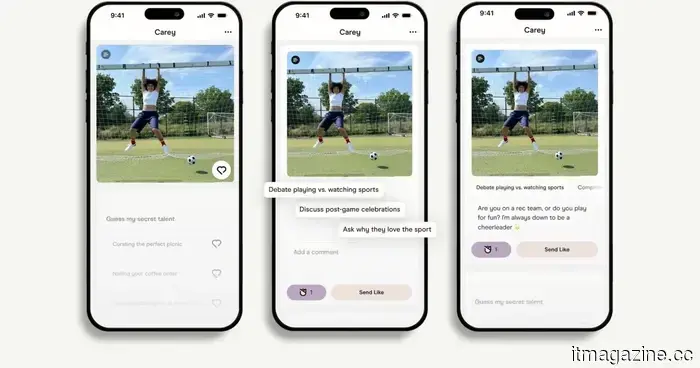 Hinge is integrating AI into the dating scene, and its CEO believes that Generation Z requires chatbots to facilitate conversations.
According to Hinge CEO Jackie Jantos, Gen Z interacts in person for over two hours a day less compared to their peers two decades ago, as reported by the BBC. To address this, the app is implementing AI-driven profile coaching and conversation prompts, but researchers argue that dating apps have already exaggerated the potential of technology in combating loneliness.
Hinge is integrating AI into the dating scene, and its CEO believes that Generation Z requires chatbots to facilitate conversations.
According to Hinge CEO Jackie Jantos, Gen Z interacts in person for over two hours a day less compared to their peers two decades ago, as reported by the BBC. To address this, the app is implementing AI-driven profile coaching and conversation prompts, but researchers argue that dating apps have already exaggerated the potential of technology in combating loneliness.
 Russia prepares a compact version of Starlink and continues to shift its 2027 deadline.
Russia's Bureau 1440 intends to launch commercial satellite internet in 2027 using its Rassvet constellation, which is a purposely smaller alternative to Starlink.
Russia prepares a compact version of Starlink and continues to shift its 2027 deadline.
Russia's Bureau 1440 intends to launch commercial satellite internet in 2027 using its Rassvet constellation, which is a purposely smaller alternative to Starlink.
 Scams related to the FIFA World Cup 2026 are currently active, including fraudulent websites and malware.
More than 4,300 counterfeit FIFA websites, banking malware within streaming applications, and compromised login credentials are currently aiming at fans of World Cup 2026, with the FBI and experts alerting about potential losses in the billions.
Scams related to the FIFA World Cup 2026 are currently active, including fraudulent websites and malware.
More than 4,300 counterfeit FIFA websites, banking malware within streaming applications, and compromised login credentials are currently aiming at fans of World Cup 2026, with the FBI and experts alerting about potential losses in the billions.
Mira Murati reappears with a caution regarding AI governance and introduces a new product.
The former CTO of OpenAI shares insights on Thinking Machines' interaction models, discusses the firing of Altman, and contends that artificial intelligence lacks sufficient structural safeguards in her first public appearance in a year and a half.