
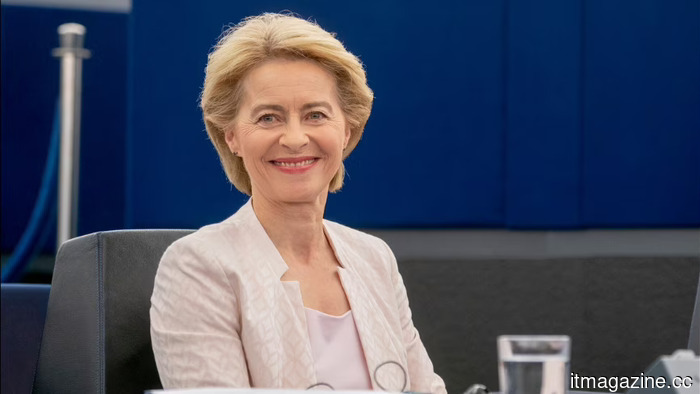
Die Ernennung von Von der Leyens KI-Beauftragtem wird wegen möglicher Interessenkonflikte kritisiert.
The European Commission has designated Jim Hagemann Snabe, who is the chairman of Siemens' supervisory board, as its special envoy for industrial artificial intelligence. In this role, he will provide guidance to Commission President Ursula von der Leyen and tech sovereignty chief Henna Virkkunen on enhancing AI adoption throughout European industries.
The appointment was met with immediate backlash. It follows closely after Siemens was among the companies that advocated strongly for the reduction of the EU’s AI Act, regarded as the most ambitious regulatory framework for AI globally. Critics argue that this appointment essentially hands advisory control over AI policy to the industry that has successfully diminished its strength.
Who is Jim Hagemann Snabe?
Snabe, aged 60, is a Danish executive who co-led SAP as co-CEO from 2010 to 2014 before transitioning to the supervisory board. He became chairman of Siemens’ supervisory board in 2018. Beyond these roles, he has held positions on the advisory board of Google Cloud, on the board of the U.S. enterprise AI company C3.ai, and served as a member of the board of trustees for the World Economic Forum.
The Commission states it conducted a comprehensive conflict-of-interest review before his appointment. During his term, which lasts until 31 March 2027, Snabe will step back from his roles with Google Cloud and C3.ai. This position is unpaid.
The rollback of the AI Act
The appointment's timing adds a politically charged element. On 7 May, the Council of the EU and the European Parliament reached an agreement to simplify the AI Act through the so-called Digital Omnibus, delaying high-risk AI obligations by 16 months, moving the deadline from August 2026 to December 2027.
More importantly for Siemens, the agreement established an exemption for industrial AI. AI systems utilized on factory floors and incorporated into machinery will now be governed by separate machinery regulations instead of the AI Act, unless a malfunction poses a direct threat to health or safety. Germany, where Siemens is based, spearheaded this push for exemption. Chancellor Friedrich Merz advocated for loosening regulations on industrial AI at the Hannover Messe trade fair in April, supported by Siemens executives.
Virkkunen, who was instrumental in facilitating this simplification within the College of Commissioners, framed the agreement as evidence that Europe can uphold a rules-based method while ensuring that regulations are practical for industries. Snabe's appointment is seen as a continuation of this trend, signaling that industrial competitiveness is now prioritized over regulatory caution.
The criticism
“My first reaction was just: Wow,” said Kim van Sparrentak, the Dutch Green lawmaker who led the Parliament’s efforts on the AI Act. “They fought hard against AI rules for themselves, they lobby against technological sovereignty, and now they will decide how we are going to integrate AI.”
Concerns extend beyond Siemens. Snabe's positions on the boards of Google Cloud and C3.ai place him at the intersection of three key groups affected by EU AI policy: European industry, U.S. Big Tech, and the enterprise AI software market. Suspending board positions does not equate to cutting ties, and critics argue that an unpaid advisory role lacking formal accountability is a prime example of the revolving-door governance that is often difficult to scrutinize.
The Commission has not revealed the specific terms of Snabe’s conflict-of-interest assessment. While it claims that an assessment was conducted, it has not disclosed the methodology or findings, making independent evaluation difficult.
What the role entails
Snabe’s task is to offer advice on how Europe can enhance industrial AI adoption, a matter that the Commission has prioritized since the passage of the AI Act revealed a tension within European tech policy: the intention to regulate AI alongside fears of lagging behind the U.S. and China in its implementation.
The announcement of his appointment coincided with the Commission’s broader technology sovereignty framework, which includes the Cloud and AI Development Act, Chips Act 2.0, and new restrictions on U.S. cloud providers managing sensitive European government data. Snabe’s position is situated within this context, ideally bridging the gap between Brussels’ regulatory aspirations and the practicalities of implementing AI in European factories.
The question remains whether a Siemens chairman is the appropriate individual to facilitate that bridge or merely a manifestation of the existing gap that Brussels will be contemplating for the entirety of his term.
Other articles
 Spirit AI surpasses Nvidia on the RoboArena robotics benchmark.
Chinese startup Spirit AI has taken the lead on the RoboArena leaderboard co-developed by Nvidia, achieving a score of 1,924, compared to Nvidia's 1,881, as physical AI emerges as the next frontier in technology.
Spirit AI surpasses Nvidia on the RoboArena robotics benchmark.
Chinese startup Spirit AI has taken the lead on the RoboArena leaderboard co-developed by Nvidia, achieving a score of 1,924, compared to Nvidia's 1,881, as physical AI emerges as the next frontier in technology.
 AI token prices dropped by 98%, while expenses for enterprises tripled.
Uber, Microsoft, and Priceline are reacting swiftly as AI token legislation has surged. The Linux Foundation is establishing a Tokenomics Foundation aimed at instilling financial discipline in AI expenditures.
AI token prices dropped by 98%, while expenses for enterprises tripled.
Uber, Microsoft, and Priceline are reacting swiftly as AI token legislation has surged. The Linux Foundation is establishing a Tokenomics Foundation aimed at instilling financial discipline in AI expenditures.
 Japan may face the danger of becoming an 'AI colony', cautions its digital minister.
Digital Minister Hisashi Matsumoto cautioned that Japan might turn into an ‘AI colony’ if it lags behind, justifying a bill aimed at relaxing data-use consent regulations.
Japan may face the danger of becoming an 'AI colony', cautions its digital minister.
Digital Minister Hisashi Matsumoto cautioned that Japan might turn into an ‘AI colony’ if it lags behind, justifying a bill aimed at relaxing data-use consent regulations.
 Die Ernennung von von der Leyen zum KI-Beauftragten stößt auf Kritik wegen Interessenkonflikten.
The EU designated Siemens chairman Jim Hagemann Snabe as an AI envoy just weeks after the company assisted in rolling back the AI Act. Detractors argue that this gives policy power to industry lobbyists.
Die Ernennung von von der Leyen zum KI-Beauftragten stößt auf Kritik wegen Interessenkonflikten.
The EU designated Siemens chairman Jim Hagemann Snabe as an AI envoy just weeks after the company assisted in rolling back the AI Act. Detractors argue that this gives policy power to industry lobbyists.
 Claude completes 80% of its coding and requests a pause on AI development.
Claude currently writes 80% of the production code for Anthropic. The company's latest paper outlines a strategy for recursive self-improvement and advocates for a global pause mechanism.
Claude completes 80% of its coding and requests a pause on AI development.
Claude currently writes 80% of the production code for Anthropic. The company's latest paper outlines a strategy for recursive self-improvement and advocates for a global pause mechanism.
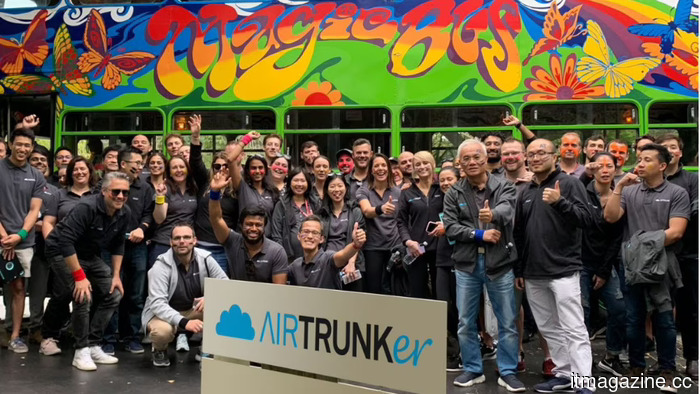 AirTrunk aims to invest $30 billion in a 5GW data center initiative in India by 2030.
AirTrunk, supported by Blackstone, intends to invest $30 billion in India by 2030 to create 5GW of data center capacity, shortly after entering the market via its acquisition of Lumina CloudInfra.
AirTrunk aims to invest $30 billion in a 5GW data center initiative in India by 2030.
AirTrunk, supported by Blackstone, intends to invest $30 billion in India by 2030 to create 5GW of data center capacity, shortly after entering the market via its acquisition of Lumina CloudInfra.
Die Ernennung von Von der Leyens KI-Beauftragtem wird wegen möglicher Interessenkonflikte kritisiert.
The EU designated Siemens chairman Jim Hagemann Snabe as an AI envoy shortly after the company contributed to the modification of the AI Act. Detractors argue that this grants policy power to industry lobbyists.