

Russia prepares a compact version of Starlink and continues to shift its 2027 deadline.
Russia plans to launch a commercial version of its domestic alternative to Starlink next year, based on sources familiar with the initiative cited by Reuters. This marks a significant milestone in a project that has been anticipated for nearly a decade. The satellite constellation is known as Rassvet, operated by the private aerospace company Bureau 1440, and its goals are intentionally more modest than the American network it seeks to compete with.
The scale of the project highlights the comparison. SpaceX has deployed thousands of Starlink satellites into low Earth orbit, while Bureau 1440 aims to commence commercial operations in 2027 with a constellation comprising several hundred satellites. Reports suggest that initial operational phases will involve approximately 288 to 292 satellites, with a longer-term goal of around 900 satellites by the mid-2030s.
For years, Moscow has framed its objective as being conceptually similar to Starlink rather than a direct equivalent, a claim supported by the smaller scale of their plans. The hardware development has progressed further than the mere rhetoric indicates. In March, the company successfully launched 16 operational satellites on the 23rd, following earlier experimental launches in 2023 and 2024 under the Rassvet-1 and Rassvet-2 testing programs.
Bureau 1440 has stated that the satellites will feature 5G non-terrestrial network communications, laser inter-satellite links, an enhanced power system, and plasma thrusters, which are standard components of a modern broadband constellation. Dmitry Bakanov, head of the Roscosmos space agency, told Reuters last September that several test satellites already in orbit had been evaluated, leading to modifications in the production models.
Performance targets have also been announced. Bureau 1440 has promoted subscriber speeds ranging from 50 megabits per second to one gigabit per second, with plans to cover over 70 countries. However, these figures are claims rather than proven performance, a key distinction that separates a theoretical constellation from one capable of handling paying customers, and only the commercial launch will verify these claims.
Funding has been secured, at least on paper. The Russian government has allocated 102.8 billion roubles (approximately $1.26 billion) for Rassvet, while Bureau 1440 has committed an additional 329 billion roubles (around $4 billion) of its own by 2030. The company estimates potential demand of 1.5 to 2 million subscribers within Russia and as many as 12 million globally, with coverage extending to over 70 countries.
The 2027 timeline warrants a caveat. An earlier deadline was postponed due to reported production delays, a common issue in satellite constellation programs everywhere, not just in Russia. Constructing satellites is one challenge; producing them quickly and in sufficient quantities for a functional network is another, more complex issue. The 16 operational satellites currently in orbit are a starting point, as the figure must exceed 250 before it can begin serving paying customers.
There exists a strategic layer beneath the commercial aspect. A sovereign broadband network that does not rely on a foreign operator is appealing for any government that has observed Starlink's influence during the conflict in Ukraine. Whether Rassvet will meet its schedule and achieve the throughput Bureau 1440 claims will be a key question for 2027. For the moment, the constellation remains primarily a plan with a proposed launch timeline.
Other articles
 AI token prices have dropped by 98%, while expenses for enterprises have surged threefold.
Uber, Microsoft, and Priceline are rushing to respond as AI token legislation escalates. The Linux Foundation is establishing a Tokenomics Foundation to enforce financial discipline in AI expenditures.
AI token prices have dropped by 98%, while expenses for enterprises have surged threefold.
Uber, Microsoft, and Priceline are rushing to respond as AI token legislation escalates. The Linux Foundation is establishing a Tokenomics Foundation to enforce financial discipline in AI expenditures.
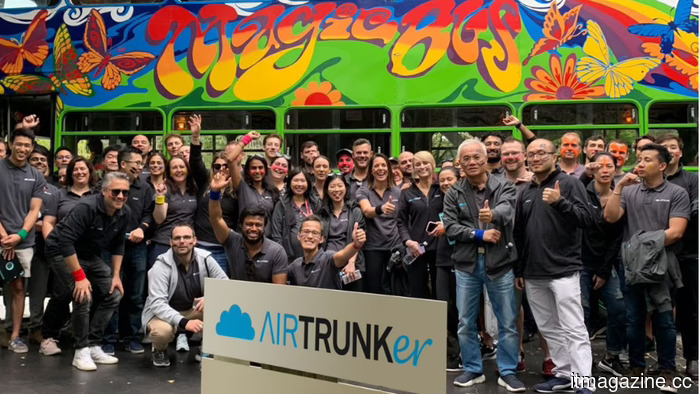 AirTrunk aims to invest $30 billion in a 5GW data center initiative in India by 2030.
AirTrunk, supported by Blackstone, intends to invest $30 billion in India by 2030 to establish 5GW of data center capacity, shortly after its entry into the market via the acquisition of Lumina CloudInfra.
AirTrunk aims to invest $30 billion in a 5GW data center initiative in India by 2030.
AirTrunk, supported by Blackstone, intends to invest $30 billion in India by 2030 to establish 5GW of data center capacity, shortly after its entry into the market via the acquisition of Lumina CloudInfra.
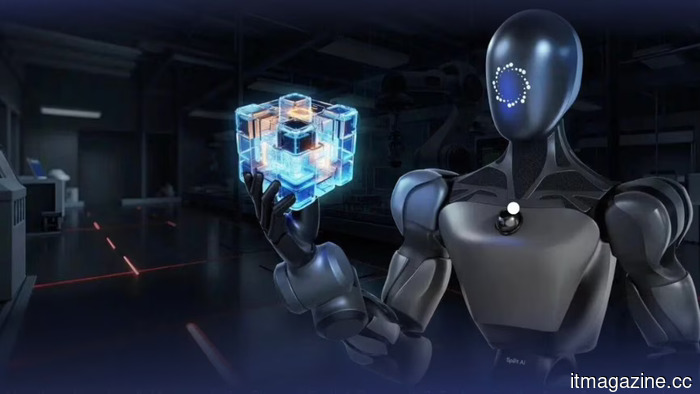 Spirit AI surpasses Nvidia in the RoboArena robotics benchmark.
Chinese startup Spirit AI has taken the lead on the RoboArena leaderboard co-developed by Nvidia, achieving a score of 1,924 compared to Nvidia's 1,881, marking the rise of physical AI as the new frontier in technology.
Spirit AI surpasses Nvidia in the RoboArena robotics benchmark.
Chinese startup Spirit AI has taken the lead on the RoboArena leaderboard co-developed by Nvidia, achieving a score of 1,924 compared to Nvidia's 1,881, marking the rise of physical AI as the new frontier in technology.
 AI token values plummeted by 98%, while costs for enterprises surged threefold.
Uber, Microsoft, and Priceline are racing to respond as AI token legislation has intensified. The Linux Foundation is establishing a Tokenomics Foundation to instill financial discipline in AI expenditures.
AI token values plummeted by 98%, while costs for enterprises surged threefold.
Uber, Microsoft, and Priceline are racing to respond as AI token legislation has intensified. The Linux Foundation is establishing a Tokenomics Foundation to instill financial discipline in AI expenditures.
 Claude generates 80% of its code and advocates for an AI pause.
Claude currently generates 80% of Anthropic's production code. The organization's recent paper outlines a strategy for recursive self-improvement and advocates for the implementation of a global pause mechanism.
Claude generates 80% of its code and advocates for an AI pause.
Claude currently generates 80% of Anthropic's production code. The organization's recent paper outlines a strategy for recursive self-improvement and advocates for the implementation of a global pause mechanism.
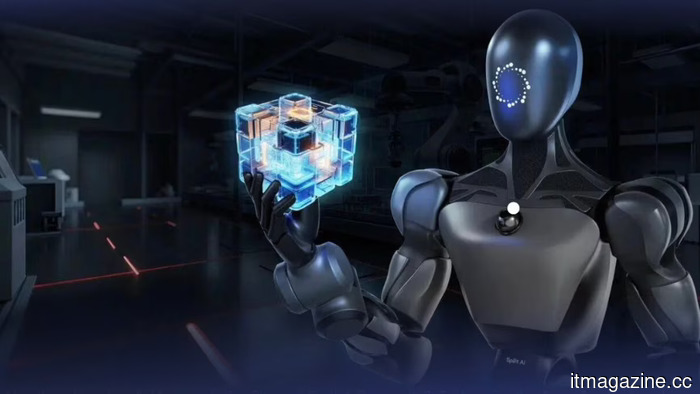 Spirit AI surpasses Nvidia on the RoboArena robotics benchmark.
Chinese startup Spirit AI has taken the lead on the RoboArena leaderboard co-developed by Nvidia, achieving a score of 1,924, compared to Nvidia's 1,881, as physical AI emerges as the next frontier in technology.
Spirit AI surpasses Nvidia on the RoboArena robotics benchmark.
Chinese startup Spirit AI has taken the lead on the RoboArena leaderboard co-developed by Nvidia, achieving a score of 1,924, compared to Nvidia's 1,881, as physical AI emerges as the next frontier in technology.
Russia prepares a compact version of Starlink and continues to shift its 2027 deadline.
Russia's Bureau 1440 intends to launch commercial satellite internet in 2027 using its Rassvet constellation, which is a purposely smaller alternative to Starlink.