

Within the mindset of a viral indie hacker
When 29-year-old Samuel Rizzon is asked about his profession, he succinctly responds with the word: “developer.” Although this is true, it is an understated label for someone whose contributions extend well beyond mere coding.
At an age when many engineers are still honing in on a specific field, Rizzon has created products that are utilized by large corporations, online educational platforms, and the open-source community—three areas that often require different skill sets. His journey exemplifies versatility, showcasing an engineer who refuses to be defined by only one role.
From a bedroom application to a billion documents
With a passion for technology and software development from a young age, Rizzon launched his first project at 19: a Bible quiz app he released on the Play Store and App Store in 2015. Garnering 22,000 downloads, the response motivated him to pursue creating products that people would actually use. Shortly after, he joined TOTVS, Brazil’s largest tech firm, where he spent five years establishing the groundwork of his career.
This foundation centered around one specific product. It originated as a proof of concept for a client seeking a method to sign documents digitally. Rizzon developed it from the ground up, and the prototype quickly evolved into a standalone electronic signature platform rivaling DocuSign. Today, it manages over a billion documents for more than a million clients.
The development process was largely his own endeavor. Before AI coding assistants came into existence, Rizzon designed the entire stack himself, which included an Angular front end, a C# back end, a Chrome extension, and a desktop application that reverse-engineered the A1 and A3 devices Brazilians use for document authentication. As the product progressed, a team was formed around him, eventually reaching about 10 engineers, designers, and product staff, with Rizzon at the forefront of transforming the prototype into a complete product line.
Afterward, he spent a year working at the consultancy CI&T before taking on a remote position as a full-stack engineer for a New York startup, where he gained his first direct exposure to the U.S. tech industry.
Acquiring experience as a founder
Simultaneously, Rizzon embarked on creating his own company. Operating from his room in Brazil, he did so without investors, a team, or a support network. What he possessed was perseverance, which proved effective: he built the business from the ground up, securing 30 paying customers across Brazil, the United States, and Ireland, with 8,000 users for its web app.
Handling sales, client communications, support, and marketing himself—the aspects of business most engineers typically overlook—he even launched a YouTube channel during this time, which accumulated 3,000 subscribers.
He doesn’t romanticize the challenges he faced, particularly regarding the struggle of operating from Brazil, far removed from any substantial startup ecosystem. “I had nothing, really nothing,” he reflects. “It was just me in my room. Creating something and trying to sell it and reach customers. It was a very specific and challenging niche.” This isolation compelled him to function independently, fostering the entrepreneurial instincts that would later emerge in the viral consumer projects that established his reputation.
A one-click solution that attracted 150,000 users
Amid the COVID-19 pandemic in 2020, with work and school largely shifting to virtual platforms, Rizzon developed a Chrome extension that allowed users to mute all participants in a Google Meet with a single click—solving a problem he frequently encountered. The solution was straightforward, but it turned out many others shared the same frustration.
This became apparent quickly. Within a year, the extension garnered 150,000 users, predominantly via word of mouth. Its primary users were teachers conducting online classes of 15 to 30 students, who struggled to silence their classes without muting each child individually. “It was a hassle for me, so I fixed it with an extension,” Rizzon explains. “It ended up being very useful for a lot of teachers.”
The traction piqued the interest of the founder of MP3.com, who reached out to Rizzon with an acquisition offer. He sold the extension, marking his first exit and an early indication of his instinct for delivering consumer products that would define his future endeavors. Since then, he has remained connected to the open-source community, co-founding and developing core components for Zard UI, a shadcn-style component library for Angular that has amassed over 1,000 stars on GitHub.
The city he designed to go viral
After consistently releasing project after project, the one that finally gained significant traction was GitCity. The concept originated from a post on X regarding city rendering, and Rizzon had a working version ready within a day. He didn't write the code by hand; instead, he created the entire codebase using Claude Code, resulting in a pixel-art 3D city that
Other articles
 Apple is said to have significantly reduced its Vision timeline for smart glasses, making Meta's leadership even more crucial.
Apple's Vision range has been reduced from seven products to two, and the individual responsible for that decision is the same one set to become CEO on September 1.
Apple is said to have significantly reduced its Vision timeline for smart glasses, making Meta's leadership even more crucial.
Apple's Vision range has been reduced from seven products to two, and the individual responsible for that decision is the same one set to become CEO on September 1.
 The excitement surrounding AI will begin to diminish. The decisions made next will determine who the winners are.
Joe Hipsky contends that the AI market is experiencing a correction rather than a collapse, and that the companies that will endure are those that transitioned from AI-first narratives to human-centered, outcome-oriented systems.
The excitement surrounding AI will begin to diminish. The decisions made next will determine who the winners are.
Joe Hipsky contends that the AI market is experiencing a correction rather than a collapse, and that the companies that will endure are those that transitioned from AI-first narratives to human-centered, outcome-oriented systems.
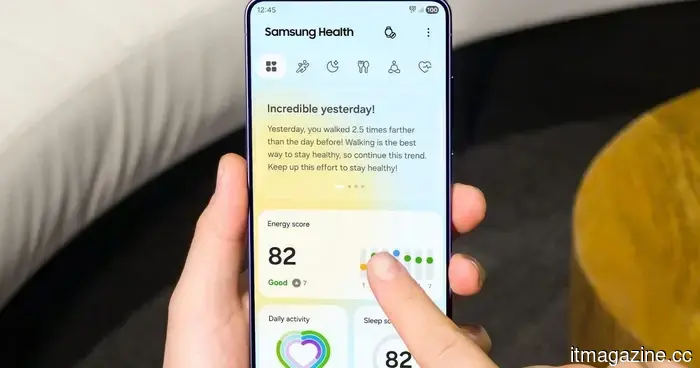 The most significant update for Samsung Health will transform your Galaxy Watch into a personal health coach.
Samsung Health is undergoing a significant update that will transform your Galaxy Watch into an active health coach, simplifying complex biometric data into clear, actionable advice that you can utilize.
The most significant update for Samsung Health will transform your Galaxy Watch into a personal health coach.
Samsung Health is undergoing a significant update that will transform your Galaxy Watch into an active health coach, simplifying complex biometric data into clear, actionable advice that you can utilize.
 China is progressing past super-apps to adopt AI agents that handle everything on your behalf.
Alibaba’s Qwen and Tencent’s WeChat are driving China’s app economy towards AI agents capable of ordering food, booking travel, shopping, making payments, and navigating services all from a chat prompt.
China is progressing past super-apps to adopt AI agents that handle everything on your behalf.
Alibaba’s Qwen and Tencent’s WeChat are driving China’s app economy towards AI agents capable of ordering food, booking travel, shopping, making payments, and navigating services all from a chat prompt.
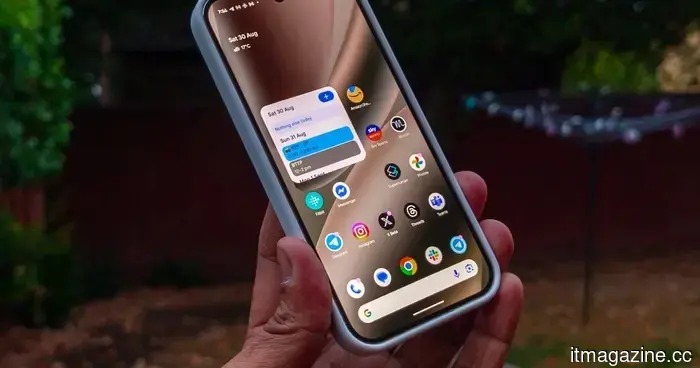 Leaked wallpapers for the Pixel 11 suggest the possible color choices that may be available.
Leaked wallpapers for the Pixel 11 series indicate a shift towards a more subdued color palette for Google's upcoming smartphones, featuring gentle greens, beiges, and pinks in place of the brighter hues seen in previous years.
Leaked wallpapers for the Pixel 11 suggest the possible color choices that may be available.
Leaked wallpapers for the Pixel 11 series indicate a shift towards a more subdued color palette for Google's upcoming smartphones, featuring gentle greens, beiges, and pinks in place of the brighter hues seen in previous years.
Within the mindset of a viral indie hacker
Samuel Rizzon transitioned from creating a billion-document signature platform in Brazil to developing GitCity into a viral success, featuring 80,000 buildings and 180,000 visitors, by integrating distribution as a key component of the product.