
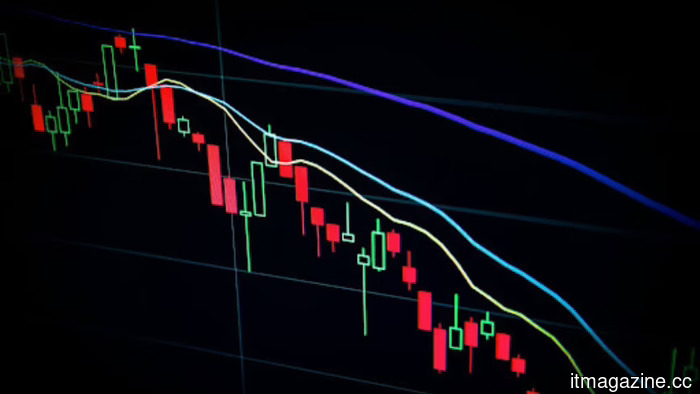
The excitement surrounding AI will begin to diminish. The decisions made next will determine who the winners are.
Artificial Intelligence is now transitioning into the later stages of its hype cycle—not into a collapse, but rather a correction. Over the past two years, AI has captured the attention of venture capitalists, leading to an unprecedented influx of capital in the sector, with a rapid increase in startups as funding centers around AI-based ventures.
What initially began as a period of growth is now showing early signs of market saturation. The high expectations that have been built into the market are starting to outstrip the returns being produced. The excitement surrounding AI is beginning to wane.
This pattern is typical for every significant innovation cycle. From railroads to the internet, transformative technologies tend to follow a similar trajectory: enthusiasm surges, expectations inflate, and ultimately, a reset occurs where economic realities take precedence. AI is experiencing a similar path.
However, this time, the speed of the cycle is remarkable. Entire market phases are compressing into a significantly shorter time frame. Adoption, investment, and saturation are occurring at the same time.
As this progresses, companies that are built more on narrative than on sustainable value creation will face challenges. Funding will become scarcer, valuations will adjust, and not all of today’s prominent companies will make it through this transition. This period serves as the real test for AI.
For most businesses, opting out is not feasible. Even if hype temporarily boosts the market, the underlying technology is already transforming workflows, decision-making processes, and value generation. The companies that successfully navigate this cycle will be those that act with clear intent.
This begins with a critical change in perspective. Over the last two years, the prevailing narrative has been “AI-first”—to integrate AI into everything, to automate processes, and to replace human roles wherever feasible. However, this viewpoint is misplaced.
The future will not be centered on AI; rather, it will prioritize humans, with AI serving as a tool to facilitate outcomes instead of being the core principle guiding systems and workflows.
As this shift takes hold, both customers and businesses will start to inquire about the actual benefits of their investments. They will question the measurable returns and consider how these changes enhance their business, not just their workflows. Recent analyses indicate that up to 95% of Generative AI projects have yielded no financial returns, underscoring a widening gap between adoption and tangible business impact.
This dynamic will put significant pressure on much of the current AI ecosystem. A large portion of investment has focused on scaling capabilities instead of demonstrating value, with infrastructure built to capitalize on funding trends rather than to ensure consistent business outcomes. This model will struggle during a correction.
Instead, a shift towards outcome-driven systems will emerge, assessing AI based on its performance rather than its mere existence.
Simultaneously, the labor market is experiencing its own adjustments. Recent layoffs at major tech companies have increasingly been attributed to efficiency changes driven by AI, as well as broader restructuring and cost-cutting efforts. However, this narrative is incomplete; what we are witnessing is a rebalancing, not just displacement. Many companies that are downsizing are also rehiring. Job roles are being redefined instead of eliminated, and skills are being reassigned rather than discarded. Expertise continues to be valuable, but is being used in new ways.
In many aspects, this marks a long-overdue resizing of teams. For years, large organizations have retained talent beyond what was immediately necessary, partially to keep competitors from accessing these resources. This has led to an artificially swollen talent pool. Now, with the pressures of AI and market corrections, companies must reconsider what optimal team configurations genuinely look like.
Interestingly, this trend is not as pronounced in smaller companies, which have never enjoyed the benefit of excess. Efficiency has always been a prerequisite rather than an afterthought. What we are observing now is a convergence towards that reality.
The broader implications are clear: AI is reshaping where and how organizations generate value. This leads us back to the key question of this moment: What occurs after the hype cycle reaches its lowest point?
History provides a consistent answer: the noise diminishes, weaker participants exit, and foundational principles reestablish themselves. From this, a smaller group of companies will emerge, stronger, more disciplined, and more focused on genuine value creation, and those will be the winners.
Their success won't come from being the first to adopt AI, but from knowing how to integrate it in ways that enhance human abilities rather than replace them. Their victory does not stem from chasing fleeting trends but from building lasting value amidst changing conditions.
The irony of this phase is that, while the market may be cooling, the significance of AI is not decreasing; rather, it is becoming increasingly important. We are transitioning from a phase of experimentation to one of expectation.
From possibilities to proven results. The organizations that recognize this shift early will shape the next market phase. True transformation occurs after the correction, when only strategies that demonstrate effectiveness endure.
Other articles
 The excitement surrounding AI will begin to diminish. What comes next will determine who the eventual winners are.
Joe Hipsky contends that the AI market is undergoing a correction rather than a collapse, and that the companies that will thrive are those that have transitioned from AI-first narratives to human-first, outcome-oriented systems.
The excitement surrounding AI will begin to diminish. What comes next will determine who the eventual winners are.
Joe Hipsky contends that the AI market is undergoing a correction rather than a collapse, and that the companies that will thrive are those that have transitioned from AI-first narratives to human-first, outcome-oriented systems.
 Google Photos on Android now offers a dedicated space for your personalized stickers.
Google Photos on Android is introducing a dedicated Stickers folder within the Collections tab, which will automatically save all custom stickers you create. This update aligns the Android app's features with those of iOS, which received this folder back in January.
Google Photos on Android now offers a dedicated space for your personalized stickers.
Google Photos on Android is introducing a dedicated Stickers folder within the Collections tab, which will automatically save all custom stickers you create. This update aligns the Android app's features with those of iOS, which received this folder back in January.
 Synthesia collaborates with Cinder to enhance moderation prior to the rendering of a frame.
Synthesia is enhancing its trust and safety measures with Cinder, which includes an AI agent that reviews each script prior to the avatars producing video.
Synthesia collaborates with Cinder to enhance moderation prior to the rendering of a frame.
Synthesia is enhancing its trust and safety measures with Cinder, which includes an AI agent that reviews each script prior to the avatars producing video.
 Google aims to eliminate your costly voice transcription subscription.
Google AI Edge Eloquent is a complimentary dictation application for Mac that converts your speech into text and refines it on your device, without the need for a subscription, cloud services, or privacy issues.
Google aims to eliminate your costly voice transcription subscription.
Google AI Edge Eloquent is a complimentary dictation application for Mac that converts your speech into text and refines it on your device, without the need for a subscription, cloud services, or privacy issues.
 The most significant update for Samsung Health will transform your Galaxy Watch into a personal health coach.
Samsung Health is undergoing a significant update that will transform your Galaxy Watch into an active health coach, simplifying complex biometric data into clear, actionable advice that you can utilize.
The most significant update for Samsung Health will transform your Galaxy Watch into a personal health coach.
Samsung Health is undergoing a significant update that will transform your Galaxy Watch into an active health coach, simplifying complex biometric data into clear, actionable advice that you can utilize.
 Leaked Pixel 11 wallpapers suggest the color choices you will probably have available.
Leaked wallpapers for the Pixel 11 series indicate a shift towards a more subtle color palette for Google's upcoming smartphone range, featuring gentle greens, beiges, and pinks instead of the brighter shades seen in recent years.
Leaked Pixel 11 wallpapers suggest the color choices you will probably have available.
Leaked wallpapers for the Pixel 11 series indicate a shift towards a more subtle color palette for Google's upcoming smartphone range, featuring gentle greens, beiges, and pinks instead of the brighter shades seen in recent years.
The excitement surrounding AI will begin to diminish. The decisions made next will determine who the winners are.
Joe Hipsky contends that the AI market is experiencing a correction rather than a collapse, and that the companies that will endure are those that transitioned from AI-first narratives to human-centered, outcome-oriented systems.