

China is progressing past super-apps to adopt AI agents that handle everything on your behalf.
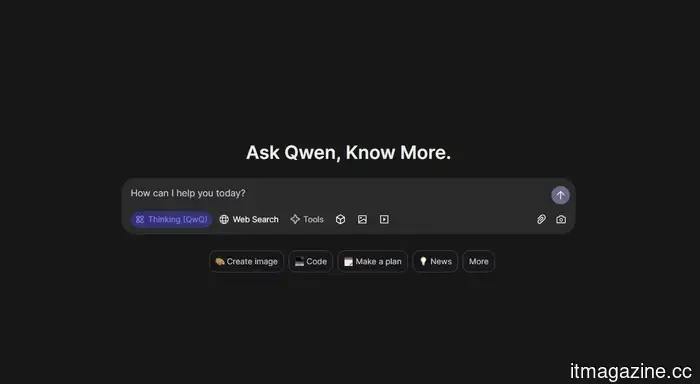
Alibaba aims for Qwen to take care of daily app tasks that users typically accomplish by navigating menus, such as ordering fried chicken or arranging flights.
China's super-app concept has accustomed users to manage a significant portion of their digital activities within a single extensive mobile platform. WeChat serves as the prime example, integrating messaging, payments, shopping, food ordering, ride-hailing, travel reservations, content, and mini-programs into a seamless daily experience.
Now, Alibaba is steering Qwen towards a new function. The assistant is opening up to third-party brand AI agents, with early testers including KFC, Luckin Coffee, Mixue, and China Eastern Airlines, while Tencent is developing its own agent within WeChat.
The potential decline of traditional apps
Initial examples of Qwen exhibit how many minor actions can be consolidated into a single request. A straightforward food order may require locating the nearest outlet, selecting pickup, verifying coupons, estimating wait times, and submitting the request through the restaurant's system.
Alibaba envisions Qwen overseeing these processes. Brands could create agents that interact via conversation and, in some cases, propose actions before the user starts exploring the app.
For instance, Luckin Coffee might encourage customers to place orders in advance during busy times, while China Eastern Airlines could present trip suggestions tailored to a user’s preferences. The appeal lies in practicality, offering fewer menus, fewer app transitions, and fewer steps to checkout.
What WeChat could automate first
WeChat provides Tencent with a natural launching point, as people already use it as a central hub for their daily activities in China. It consolidates messaging, payments, shopping, services, content, commerce, and mini-programs into one platform.
An agent within WeChat could streamline familiar tasks into a single request. Users could request a taxi, book a flight, make a payment, check a service, or receive assistance navigating a mini-program, making the chat the starting point for these interactions.
This would alter the established habits within WeChat. Users wouldn’t need to remember the location of each service if the agent can navigate the appropriate paths and complete the tasks.
What’s next for mobile devices
Alibaba has already integrated Qwen more closely with shopping via Taobao, allowing the assistant to filter products, compare selections, and finalize purchases through the chatbot interface. This expands Qwen's reach in commerce beyond just food and travel.
However, there's a risk concerning trust. An agent that places the wrong order, overlooks a discount, or schedules an incorrect trip would be frustrating compared to manually navigating the app.
Tencent's forthcoming rollout presents the next challenge. Reports indicate that a WeChat prototype is currently being tested, with compliance measures expected prior to a public release. If it succeeds within the app that users already rely on for chats, payments, services, and mini-programs, China’s super-app era will not disappear; it will become more efficient and guided by user instructions.
Other articles
 EU Parliament protects MEPs from Huawei corruption investigation.
The European Parliament decided to uphold the immunity of four MEPs who are under suspicion of accepting bribes from Huawei, thereby hindering the investigation by Belgian prosecutors.
EU Parliament protects MEPs from Huawei corruption investigation.
The European Parliament decided to uphold the immunity of four MEPs who are under suspicion of accepting bribes from Huawei, thereby hindering the investigation by Belgian prosecutors.
 Within the mindset of a viral indie hacker
Samuel Rizzon transitioned from creating a billion-document signature platform in Brazil to developing GitCity into a viral success, featuring 80,000 buildings and 180,000 visitors, by integrating distribution as a key component of the product.
Within the mindset of a viral indie hacker
Samuel Rizzon transitioned from creating a billion-document signature platform in Brazil to developing GitCity into a viral success, featuring 80,000 buildings and 180,000 visitors, by integrating distribution as a key component of the product.
 EU technology sovereignty initiative limits US cloud services and introduces Chips Act 2.0.
Europe's tech sovereignty initiative limits access for US cloud providers concerning government data and initiates Chips Act 2.0 to promote advanced semiconductor manufacturing.
EU technology sovereignty initiative limits US cloud services and introduces Chips Act 2.0.
Europe's tech sovereignty initiative limits access for US cloud providers concerning government data and initiates Chips Act 2.0 to promote advanced semiconductor manufacturing.
 EU Parliament protects MEPs from Huawei corruption investigation.
The European Parliament voted to uphold the immunity of four MEPs accused of receiving bribes from Huawei, thereby hindering the investigation by Belgian prosecutors.
EU Parliament protects MEPs from Huawei corruption investigation.
The European Parliament voted to uphold the immunity of four MEPs accused of receiving bribes from Huawei, thereby hindering the investigation by Belgian prosecutors.
 EU Parliament protects MEPs from Huawei corruption investigation.
The European Parliament voted to uphold the immunity of four MEPs suspected of receiving bribes from Huawei, thereby hindering the investigation by Belgian prosecutors.
EU Parliament protects MEPs from Huawei corruption investigation.
The European Parliament voted to uphold the immunity of four MEPs suspected of receiving bribes from Huawei, thereby hindering the investigation by Belgian prosecutors.
China is progressing past super-apps to adopt AI agents that handle everything on your behalf.
Alibaba’s Qwen and Tencent’s WeChat are driving China’s app economy towards AI agents capable of ordering food, booking travel, shopping, making payments, and navigating services all from a chat prompt.