
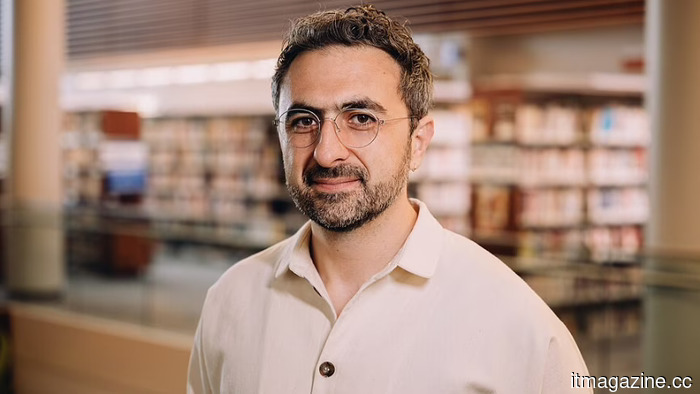
The head of Microsoft AI aims to cut down on spending related to Anthropic.
Mustafa Suleyman has pointed out that Microsoft’s primary competitor in AI is not OpenAI, but rather Anthropic. “Anthropic is extremely costly, and many are actively seeking alternatives,” the leader of Microsoft's internal model initiative shared in an interview with Bloomberg.
This statement goes beyond mere competitive strategy; it signals a clear objective. “We invest substantial amounts in Anthropic, so our aim is to decrease and eventually eliminate that expense,” Suleyman stated.
To substantiate this, Microsoft unveiled seven new internal AI models at its annual Build conference for developers, including MAI-Thinking-1, a reasoning model that claims to match Anthropic’s Claude Opus 4.6 on a popular coding benchmark while offering a lower price.
The pricing argument
Suleyman’s comments come at a time when AI spending in enterprises has become a significant concern. Uber exhausted its entire AI coding budget for 2026 in just four months and set a monthly limit of $1,500 per employee per tool. Similarly, Walmart has restricted access to its internal AI assistant after usage surpassed expectations.
For Microsoft, which uses vast amounts of AI tokens across Copilot and its engineering teams, the cost issue is critical. “A large number of people in our organization are spending millions of dollars” on AI tokens, Suleyman mentioned. Developing cheaper internal alternatives is not solely a competitive tactic against external companies; it also aims to safeguard Microsoft’s own profit margins.
After refining its models for consulting firm McKinsey, Microsoft asserts it achieved 10 times greater cost efficiency compared to OpenAI’s GPT 5-5, according to Suleyman. The company has also been in talks with Adobe regarding the potential use of its in-house models, as reported by Bloomberg.
From contractual restrictions to independent development
Until late 2025, Microsoft was under contractual obligations that prevented it from pursuing frontier AI development independently due to its partnership with OpenAI. A renegotiated agreement has now allowed the company to create competing models while keeping licensing rights to everything OpenAI develops until 2032.
That timeline is now in motion. Suleyman’s MAI Superintelligence team, which was established in November 2025, has delivered its first public models within six months. For a company with little history in developing frontier models, this rapid pace is ambitious, though significant gaps still exist.
Suleyman acknowledged this reality. “We’ve closed a massive gap in six months,” he told Benzinga, while recognizing that Anthropic has launched two more advanced models since Opus 4.6, giving it a lead of several months.
The focus on Anthropic over OpenAI
The strategic reasoning is noteworthy. Microsoft retains discounted access to OpenAI’s models through 2032, but lacks a similar agreement with Anthropic. This makes Anthropic the more costly dependency, one that Suleyman aims to address by developing internal alternatives.
There is also competitive reasoning to consider. Anthropic’s Claude models have become the preferred choice for enterprise AI coding tools, and the company is gearing up for an IPO that could value it at over $1 trillion. If Microsoft can deliver similar performance at a lower cost, integrated with Azure, which its enterprise customers already utilize, it diminishes the argument for purchasing Anthropic independently.
Whether Microsoft’s models can truly match the latest generation from Anthropic, rather than a previous version, remains uncertain. Matching Opus 4.6 on a benchmark is a solid start, but Anthropic has already advanced beyond it. In a market where leading technologies evolve every few months, the challenges of catching up and maintaining that position are distinctly different.
Other articles
 Former DeepMind founders secure $20 million for Airspeed's AI sales representatives.
Airspeed has secured $20 million in a Series A funding round led by DN Capital to develop agentic AI capable of autonomously carrying out go-to-market tasks, rather than merely providing insights.
Former DeepMind founders secure $20 million for Airspeed's AI sales representatives.
Airspeed has secured $20 million in a Series A funding round led by DN Capital to develop agentic AI capable of autonomously carrying out go-to-market tasks, rather than merely providing insights.
 EU Parliament protects MEPs from Huawei corruption investigation.
The European Parliament decided to uphold the immunity of four MEPs who are under suspicion of accepting bribes from Huawei, thereby hindering the investigation by Belgian prosecutors.
EU Parliament protects MEPs from Huawei corruption investigation.
The European Parliament decided to uphold the immunity of four MEPs who are under suspicion of accepting bribes from Huawei, thereby hindering the investigation by Belgian prosecutors.
 China is progressing past super-apps to adopt AI agents that handle everything on your behalf.
Alibaba’s Qwen and Tencent’s WeChat are driving China’s app economy towards AI agents capable of ordering food, booking travel, shopping, making payments, and navigating services all from a chat prompt.
China is progressing past super-apps to adopt AI agents that handle everything on your behalf.
Alibaba’s Qwen and Tencent’s WeChat are driving China’s app economy towards AI agents capable of ordering food, booking travel, shopping, making payments, and navigating services all from a chat prompt.
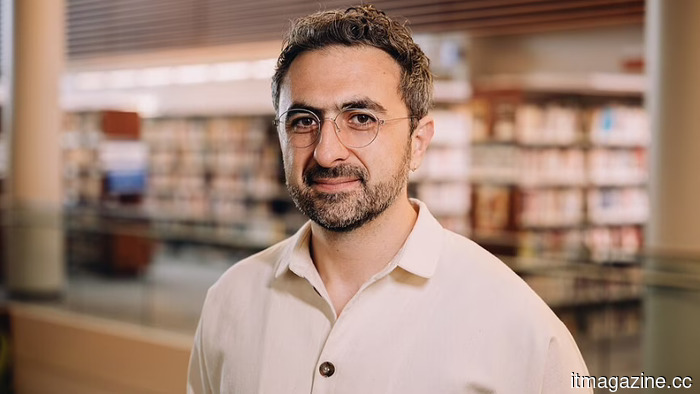 The head of Microsoft AI intends to cut back on spending related to Anthropic.
Mustafa Suleyman referred to Anthropic as "very costly" and presented seven proprietary Microsoft AI models at Build in an effort to compete on pricing.
The head of Microsoft AI intends to cut back on spending related to Anthropic.
Mustafa Suleyman referred to Anthropic as "very costly" and presented seven proprietary Microsoft AI models at Build in an effort to compete on pricing.
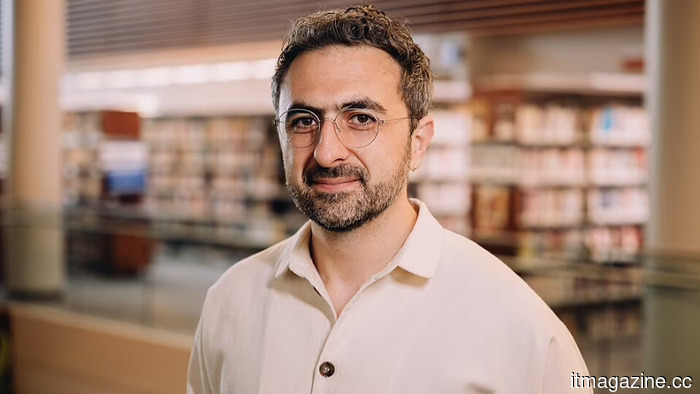 The head of Microsoft AI aims to cut expenses related to Anthropic.
Mustafa Suleyman labeled Anthropic as "very costly" and introduced seven proprietary Microsoft AI models during Build to compete in terms of pricing.
The head of Microsoft AI aims to cut expenses related to Anthropic.
Mustafa Suleyman labeled Anthropic as "very costly" and introduced seven proprietary Microsoft AI models during Build to compete in terms of pricing.
 EU Parliament protects MEPs from Huawei corruption investigation.
The European Parliament voted to uphold the immunity of four MEPs accused of receiving bribes from Huawei, thereby hindering the investigation by Belgian prosecutors.
EU Parliament protects MEPs from Huawei corruption investigation.
The European Parliament voted to uphold the immunity of four MEPs accused of receiving bribes from Huawei, thereby hindering the investigation by Belgian prosecutors.
The head of Microsoft AI aims to cut down on spending related to Anthropic.
Mustafa Suleyman referred to Anthropic as "highly expensive" and introduced seven Microsoft AI models developed in-house at Build to compete based on pricing.