
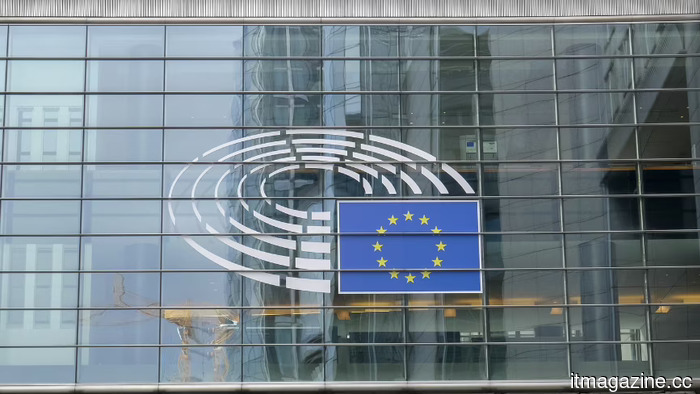
EU Parliament protects MEPs from Huawei corruption investigation.
**TL;DR** The European Parliament voted to uphold the immunity of four MEPs accused of accepting bribes from Huawei lobbyists, obstructing Belgian prosecutors from interrogating them. This decision exacerbates the conflict between the legislature and judiciary regarding the Huawei corruption investigation.
More than a year after Belgian officials requested the European Parliament lift the immunity of four lawmakers suspected of receiving bribes from Huawei lobbyists, the Parliament has chosen to maintain those protections, according to Politico. This ruling protects the implicated MEPs from being questioned by Belgian investigators, who cannot compel testimony or collect crucial evidence without Parliament’s approval as per EU regulations. For the prosecution team handling one of Brussels’ most significant corruption investigations since the Qatargate scandal, this decision is a significant hurdle.
**The Investigation**
In March 2025, Belgian law enforcement conducted searches of various Huawei lobbyists’ residences and offices, alongside parliamentary assistants implicated in bribing MEPs with cash and gifts for political favors. Four individuals have been charged with bribery and involvement in a criminal organization, while a fifth has been charged with money laundering.
The most serious accusation involves associates of Valerio Ottati, a former Huawei lobbyist and the primary suspect in the inquiry, who allegedly paid MEPs to endorse a letter supporting Huawei’s interests, particularly concerning the implementation of its 5G technology throughout the EU. The arrest warrant suggests that €15,000 could have been offered to the author of the letter, with each co-signer receiving €1,500.
Belgian authorities later requested that the Parliament lift the immunity of four MEPs: Italians Salvatore De Meo and Fulvio Martusciello, Bulgarians Nikola Minchev from the center-right EPP, and Maltese Socialist Daniel Attard. A fifth MEP, Giusi Princi from Italy, was removed from the inquiry the next day due to a clerical error.
**Reasons for Parliament's Decision**
The Parliament’s Legal Affairs Committee, known as JURI, had been delaying the immunity requests for several months, scrutinizing the evidence and seeking more detailed justifications from the prosecutors. Committee members argued they needed to assess whether the requests were politically driven, a prerogative given to them by the rules.
Belgian federal prosecutor Ann Fransen countered this, warning that demanding extensive evidence could jeopardize ongoing investigations and alert those involved. Under EU law, prosecutors must submit immunity requests as soon as reliable suspicions arise, as they cannot interrogate MEPs or obtain vital evidence until the Parliament grants permission. The dilemma is that the Parliament seeks proof before allowing access to it.
Martusciello, the most outspoken of the accused, informed the committee that €6,700 in bank transfers from a suspected intermediary were merely repayments for money he had lent to a former aide. He described the request to waive immunity as “a severe limitation of our activities” and urged colleagues to reject it.
**A Trend of Self-Protection**
This vote reflects a wider pattern of institutional friction regarding Huawei’s influence in European policymaking. While the Commission has been attempting throughout 2026 to transform its recommendations against Chinese telecom suppliers into enforceable law, member states like Germany and Spain have resisted, claiming that an EU-wide ban could provoke retaliation from Beijing.
The corruption investigation exists at the crossroads of these geopolitical pressures. If the allegations are proven true, Huawei was not just lobbying for market access but paying for it and targeting the very lawmakers responsible for determining whether its equipment should be used in European networks.
The irony is striking. After the Qatargate scandal in 2022, during which cash-filled suitcases and alleged bribes from Qatar and Morocco caused significant embarrassment, the Parliament promised full cooperation with Belgian investigators. Three years later, when prosecutors returned with a new case, they found their efforts obstructed.
**What Happens Next**
With their immunity upheld, the four MEPs cannot be forced to respond to inquiries from Belgian investigators. Although the investigation continues, its most promising avenue of inquiry, direct testimony from the accused, is effectively stymied while they remain in office.
Beijing has labeled the EU’s cybersecurity measures as “discriminatory” and threatened retaliation against European firms in the Chinese market. Huawei has expressed disappointment that the Parliament's immunity proceedings are ongoing, preventing authorities from questioning the implicated MEPs.
This is an extraordinary statement; a company under investigation is lamenting the Parliament's refusal to allow questioning of its members. When both the accused and the accuser acknowledge that the process is flawed, it raises the question of whom it ultimately serves.
Other articles
 EU technology sovereignty initiative limits US cloud services and introduces Chips Act 2.0.
Europe's tech sovereignty initiative limits access for US cloud providers concerning government data and initiates Chips Act 2.0 to promote advanced semiconductor manufacturing.
EU technology sovereignty initiative limits US cloud services and introduces Chips Act 2.0.
Europe's tech sovereignty initiative limits access for US cloud providers concerning government data and initiates Chips Act 2.0 to promote advanced semiconductor manufacturing.
 EU Parliament protects MEPs from Huawei corruption investigation.
The European Parliament decided to uphold the immunity of four MEPs who are under suspicion of accepting bribes from Huawei, thereby hindering the investigation by Belgian prosecutors.
EU Parliament protects MEPs from Huawei corruption investigation.
The European Parliament decided to uphold the immunity of four MEPs who are under suspicion of accepting bribes from Huawei, thereby hindering the investigation by Belgian prosecutors.
 EU Parliament protects MEPs from Huawei corruption investigation.
The European Parliament voted to preserve the immunity of four MEPs accused of receiving bribes from Huawei, hindering the investigation by Belgian prosecutors.
EU Parliament protects MEPs from Huawei corruption investigation.
The European Parliament voted to preserve the immunity of four MEPs accused of receiving bribes from Huawei, hindering the investigation by Belgian prosecutors.
 The head of Microsoft AI aims to cut expenses related to Anthropic.
Mustafa Suleyman labeled Anthropic as "very costly" and introduced seven proprietary Microsoft AI models during Build to compete in terms of pricing.
The head of Microsoft AI aims to cut expenses related to Anthropic.
Mustafa Suleyman labeled Anthropic as "very costly" and introduced seven proprietary Microsoft AI models during Build to compete in terms of pricing.
EU Parliament protects MEPs from Huawei corruption investigation.
The European Parliament voted to uphold the immunity of four MEPs accused of receiving bribes from Huawei, thereby hindering the investigation by Belgian prosecutors.