
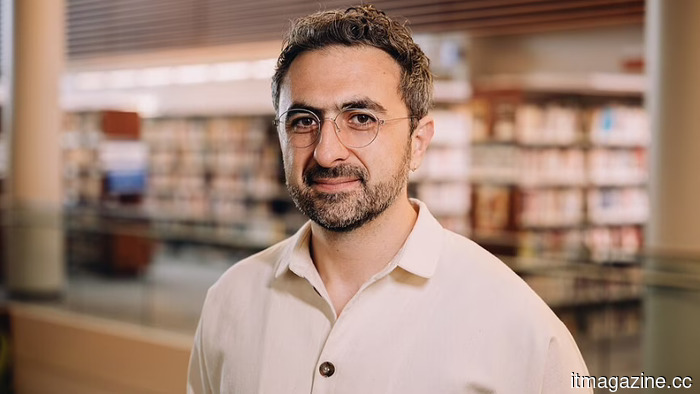
The head of Microsoft AI intends to cut back on spending related to Anthropic.
Mustafa Suleyman has pinpointed Microsoft's main AI competitor, which he claims is not OpenAI. In an interview with Bloomberg, the head of Microsoft's internal modeling efforts remarked, “Anthropic is very costly, and I believe there is a pressing need for alternatives.”
This remark signifies more than just competitive strategy; it's a clear intent. “We invest a significant amount of money in Anthropic, so our objective is to decrease and ultimately eliminate that expenditure,” Suleyman stated.
In support of this, Microsoft unveiled seven new internal AI models at its annual Build conference for developers this week, including MAI-Thinking-1, a reasoning model that the company states performs comparably to Anthropic’s Claude Opus 4.6 on a widely utilized coding benchmark but at a lower cost.
The pricing argument
Suleyman's comments come at a time when enterprise AI expenditures are becoming increasingly problematic. Uber exhausted its entire AI coding budget for 2026 within just four months and implemented a $1,500 monthly limit per employee for each tool. Similarly, Walmart has restricted access to its internal AI assistant after usage exceeded forecasts.
For Microsoft, which consumes a vast amount of AI tokens across Copilot and its engineering teams, the cost issue is critical. “Many members of our organization are spending millions of dollars” on AI tokens, Suleyman noted. Developing more economical in-house options is not merely a strategy against external vendors; it's also a means to safeguard Microsoft's profit margins.
After enhancing its models for consulting firm McKinsey, Microsoft claims it was able to achieve ten times the cost efficiency compared to OpenAI’s GPT 5-5, according to Suleyman. The firm has also been in discussions with Adobe regarding the application of its internal models, as reported by Bloomberg.
From contractual constraints to independent development
Until late 2025, Microsoft was restricted from independently engaging in frontier AI development due to its partnership with OpenAI. A revised agreement allowed the company to create competing models while keeping licensing rights to everything OpenAI produces until 2032.
That timeline is now in motion. Suleyman's MAI Superintelligence team, which was established in November 2025, has released its initial public models within six months. For a company with little experience in frontier model development, this pace is aggressive, although a significant gap still exists.
Suleyman was frank about this: “We’ve narrowed a major gap in six months,” he told Benzinga, while conceding that Anthropic has launched two more advanced models since Opus 4.6, providing it a several-month head start.
Why focus on Anthropic instead of OpenAI
The strategic reasoning is quite telling. Microsoft has discounted access to OpenAI’s models through 2032, but it does not have a similar agreement with Anthropic. This makes Anthropic the more expensive dependency, one Suleyman can more directly address by developing in-house alternatives.
There's also a competitive rationale. Anthropic’s Claude models have established themselves as the standard choice for enterprise AI coding tools, and the company is gearing up for an IPO that could value it over $1 trillion. If Microsoft can deliver comparable performance at a lower price, bundled with the Azure infrastructure already utilized by its enterprise clients, it diminishes the justification for purchasing from Anthropic separately.
However, whether Microsoft’s models can genuinely rival Anthropic’s latest generation rather than an earlier one remains an open question. Matching Opus 4.6 on a benchmark is a solid foundation, yet Anthropic has already advanced beyond that, and in a rapidly evolving market, keeping pace and remaining relevant presents a distinct challenge.
Other articles
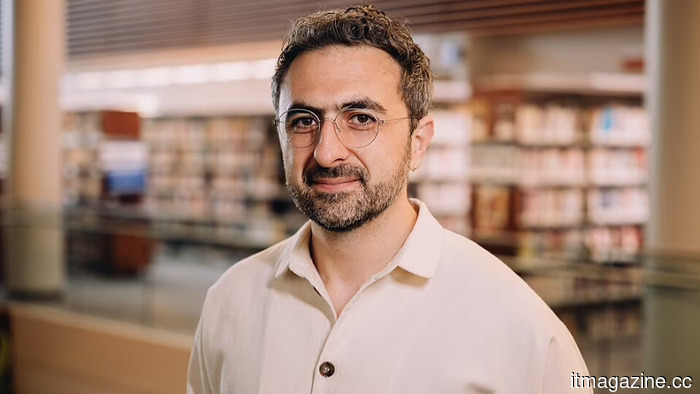 The head of Microsoft AI aims to cut expenses related to Anthropic.
Mustafa Suleyman labeled Anthropic as "very costly" and introduced seven proprietary Microsoft AI models during Build to compete in terms of pricing.
The head of Microsoft's AI division aims to cut back on spending related to Anthropic.
Mustafa Suleyman referred to Anthropic as "very costly" and presented seven Microsoft AI models developed internally at Build to compete on pricing.
The head of Microsoft AI aims to cut expenses related to Anthropic.
Mustafa Suleyman labeled Anthropic as "very costly" and introduced seven proprietary Microsoft AI models during Build to compete in terms of pricing.
The head of Microsoft's AI division aims to cut back on spending related to Anthropic.
Mustafa Suleyman referred to Anthropic as "very costly" and presented seven Microsoft AI models developed internally at Build to compete on pricing.
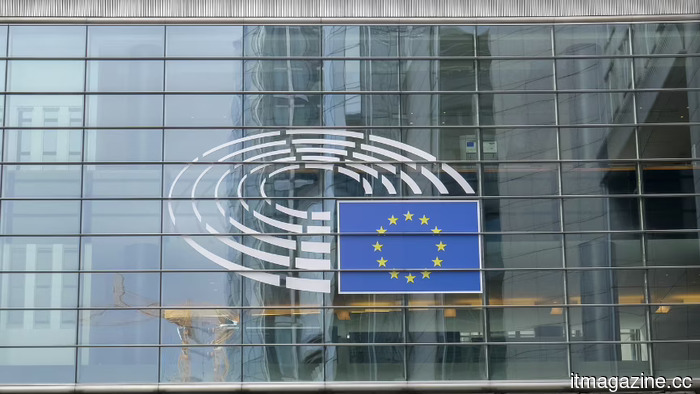 EU Parliament protects MEPs from Huawei corruption investigation.
The European Parliament voted to preserve the immunity of four MEPs accused of receiving bribes from Huawei, hindering the investigation by Belgian prosecutors.
EU Parliament protects MEPs from Huawei corruption investigation.
The European Parliament voted to preserve the immunity of four MEPs accused of receiving bribes from Huawei, hindering the investigation by Belgian prosecutors.
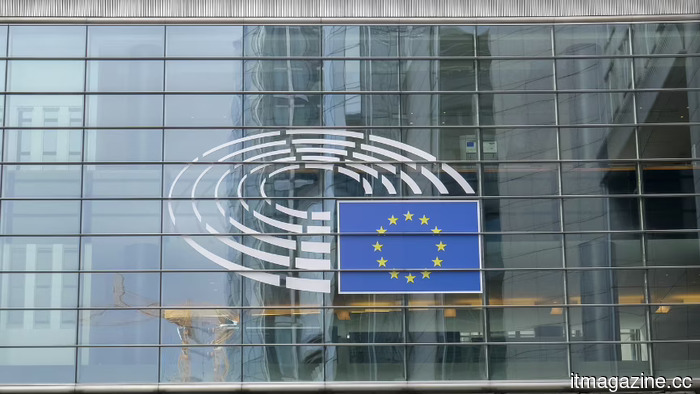 EU Parliament protects MEPs from Huawei corruption investigation.
The European Parliament voted to uphold the immunity of four MEPs suspected of receiving bribes from Huawei, thereby hindering the investigation by Belgian prosecutors.
EU Parliament protects MEPs from Huawei corruption investigation.
The European Parliament voted to uphold the immunity of four MEPs suspected of receiving bribes from Huawei, thereby hindering the investigation by Belgian prosecutors.
 Former DeepMind founders secure $20 million for Airspeed's AI sales representatives.
Airspeed has secured $20 million in a Series A funding round led by DN Capital to develop agentic AI capable of autonomously carrying out go-to-market tasks, rather than merely providing insights.
Former DeepMind founders secure $20 million for Airspeed's AI sales representatives.
Airspeed has secured $20 million in a Series A funding round led by DN Capital to develop agentic AI capable of autonomously carrying out go-to-market tasks, rather than merely providing insights.
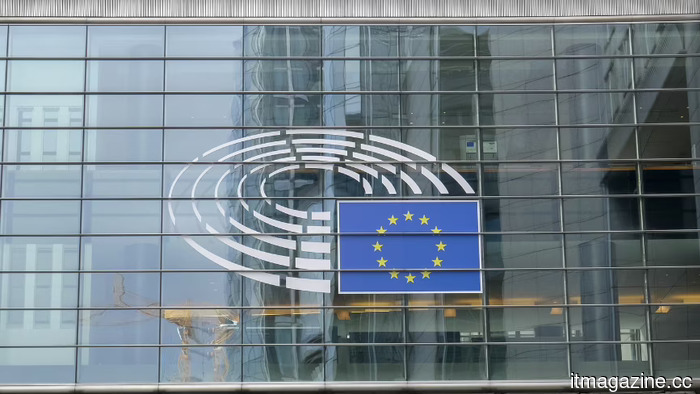 EU Parliament protects MEPs from Huawei corruption investigation.
The European Parliament voted to uphold the immunity of four MEPs accused of receiving bribes from Huawei, thereby hindering the investigation by Belgian prosecutors.
EU Parliament protects MEPs from Huawei corruption investigation.
The European Parliament voted to uphold the immunity of four MEPs accused of receiving bribes from Huawei, thereby hindering the investigation by Belgian prosecutors.
The head of Microsoft AI intends to cut back on spending related to Anthropic.
Mustafa Suleyman referred to Anthropic as "very costly" and presented seven proprietary Microsoft AI models at Build in an effort to compete on pricing.