
Megaport secures A$827 million to develop a distributed AI cloud and target the inference market.
For a decade, Megaport operated as a company connecting users to cloud services offered by others. On Wednesday, it unveiled its intention to transform into a cloud provider itself. The Australian networking enterprise secured four new contracts in AI infrastructure with a total value of A$458.9 million (approximately $329 million) and initiated a fully underwritten entitlement offer aimed at raising A$827.3 million (around $594 million), as stated in its filing. This funding will support their shift from being a connectivity provider to a computing service.
The contracts take precedence. Each of the four agreements is with American technology firms engaged in AI applications, expected to commence in the first half of 2027, and necessitate nearly A$369.5 million in capital expenditure, primarily for high-performance Nvidia GPUs, along with network and storage costs. This represents a significant investment for a company of Megaport’s scale and clarifies why the raise amount is substantial in relation to its operations.
The real value of this capital lies in the strategic vision encapsulated in the contracts. Megaport intends to construct a globally distributed AI inference cloud, supported by an on-demand GPU pool backed by around A$350 million in financing, and made available to enterprise clients through both contractual and consumption-based pricing.
The GPU pool is set to be implemented across the company’s current network of more than 1,100 data centers in 31 countries, with deployment expected within the next six to nine months.
The focus is geographical. Presently, much of the GPU capacity is concentrated in a few vast data centers optimized for training the largest models. Megaport is honing in on another aspect of AI workloads: inference, which entails executing a trained model to respond to inquiries, benefiting from proximity to the user.
Their argument is that a distributed system of smaller GPU pools, spread throughout the data centers they already connect, better serves inference than centralized mega-facilities, fitting into the space between hyperscaler clouds and single-site GPU specialists.
This strategy aligns with the emerging direction of AI infrastructure. As models transition from research demonstrations to practical applications, the financial dynamics shift from training to servicing, with the latter rewarding proximity and distribution.
Megaport already possesses the network that interlinks the locations housing these computing resources, which is a genuine structural advantage if this theory holds true.
The financial details of the raise have been somewhat misunderstood in initial reports, which is worth clearing up. The overall value of the four contracts is A$458.9 million; the capital raise totals A$827.3 million; and the investment in the GPU pool is approximately A$350 million. Some headlines conflated these figures into one total, but they are separate: contract earnings, the funding needed for them, and the specific compute investment involved.
Additionally, Megaport refined its 2026 revenue forecast to between A$307 million and A$315 million and anticipates a combined pro forma annual recurring revenue of A$662.9 million once the computing division is integrated. Trading of its shares was paused while the capital raise was arranged, a common procedure for deals of this magnitude on the ASX.
The inherent risk lies in the situation any company faces when heavily investing in Nvidia GPUs based on contracts that won't begin until 2027: AI infrastructure demand and pricing may differ significantly when the hardware is installed and operational.
Megaport is allocating capital now based on future revenues, in a rapidly evolving market where 18 months is a considerable duration. The contracts provide a safety net, but it’s the ambition for the inference cloud that must develop, and that is the true gamble behind the A$827 million investment.
Other articles
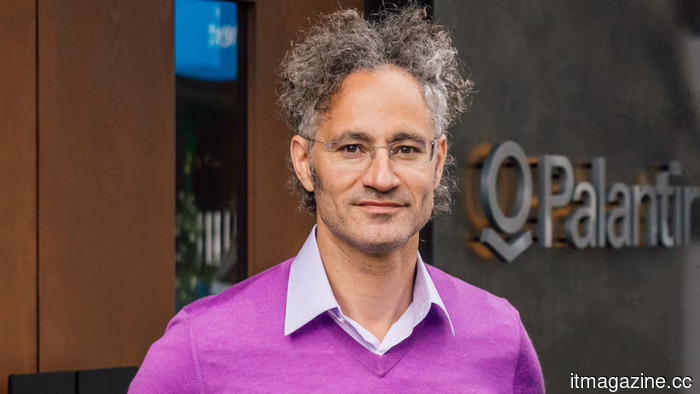 UK committee calls for a termination clause in Palantir's £330M NHS data agreement.
UK MPs have described Palantir’s £330 million ($445 million) NHS contract as an unacceptable reliance and have urged the government to invoke a break clause.
UK committee calls for a termination clause in Palantir's £330M NHS data agreement.
UK MPs have described Palantir’s £330 million ($445 million) NHS contract as an unacceptable reliance and have urged the government to invoke a break clause.
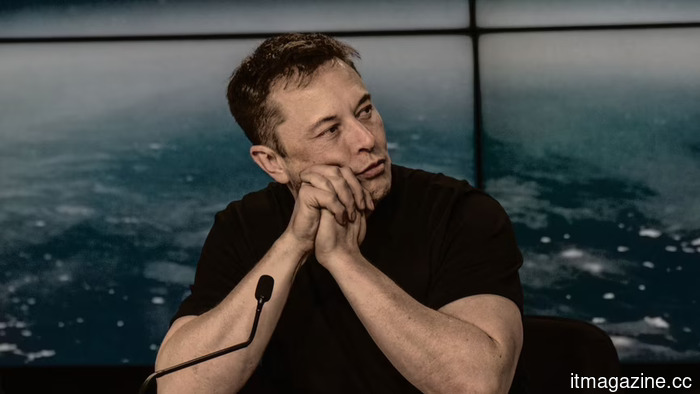 Allies of Musk support a private-sector DOGE as former employees initiate Special.
Two ex-DOGE employees established Special, a company focused on acquiring businesses to reduce expenses through AI, supported by a16z and Musk associates like Steve Davis.
Allies of Musk support a private-sector DOGE as former employees initiate Special.
Two ex-DOGE employees established Special, a company focused on acquiring businesses to reduce expenses through AI, supported by a16z and Musk associates like Steve Davis.
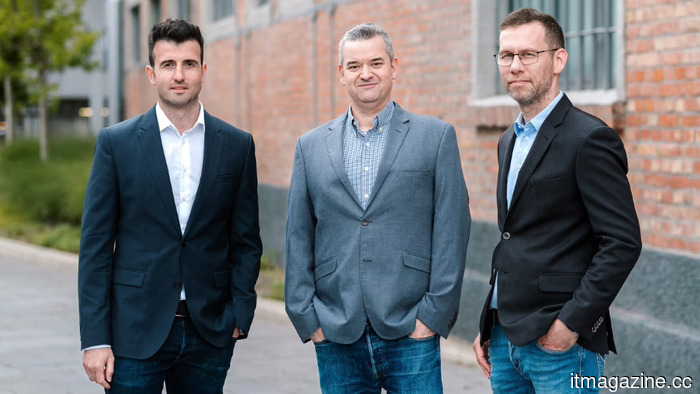 Kodesage secures $6.6 million to bring enterprise legacy software into the AI age, ensuring it remains within the organization.
Kodesage secured $6.6 million in seed funding, led by VentureFriends, to update outdated enterprise software using on-premise AI that remains within the customer's environment.
Kodesage secures $6.6 million to bring enterprise legacy software into the AI age, ensuring it remains within the organization.
Kodesage secured $6.6 million in seed funding, led by VentureFriends, to update outdated enterprise software using on-premise AI that remains within the customer's environment.
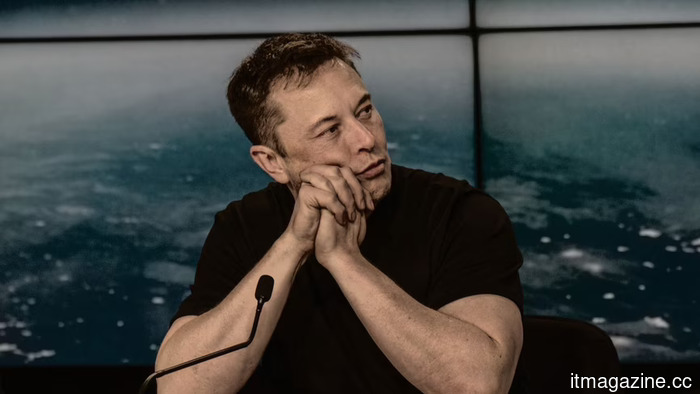 Allies of Musk support a private-sector version of DOGE as former staff members initiate a Special.
Two ex-DOGE employees have founded Special, a company that acquires businesses to reduce expenses through AI, supported by a16z and associates of Musk, such as Steve Davis.
Allies of Musk support a private-sector version of DOGE as former staff members initiate a Special.
Two ex-DOGE employees have founded Special, a company that acquires businesses to reduce expenses through AI, supported by a16z and associates of Musk, such as Steve Davis.
 The UK regulator has established new regulations for Google search, which include an option to opt-out of AI training.
The UK's CMA has established new conduct rules for Google search, allowing publishers to opt out of AI training and requiring fair ranking and selection screens.
The UK regulator has established new regulations for Google search, which include an option to opt-out of AI training.
The UK's CMA has established new conduct rules for Google search, allowing publishers to opt out of AI training and requiring fair ranking and selection screens.
Megaport secures A$827 million to develop a distributed AI cloud and target the inference market.
Australia's Megaport has obtained four contracts for AI infrastructure valued at A$458.9 million and is seeking to raise A$827.3 million to develop a globally distributed AI inference cloud.