
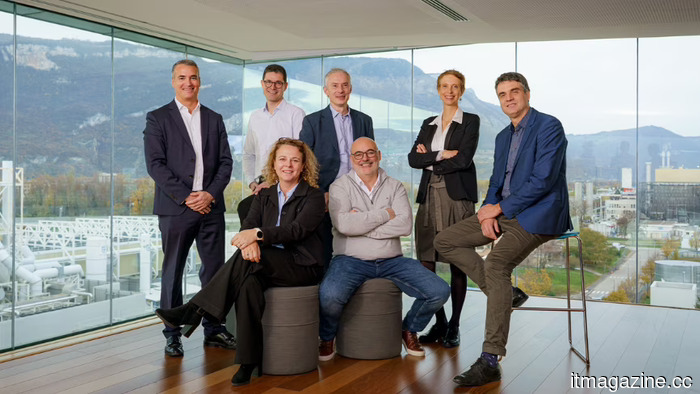
France's Quobly secures €115M to develop a quantum computer on a silicon chip.
Many quantum-computing startups seek to create a completely new industry requiring exotic materials, custom fabrication, and nonexistent supply chains. In contrast, Quobly is making a more understated bet. The Grenoble-based company believes that the development of a practical quantum machine can leverage the existing silicon chip industry, and on Wednesday, it secured €115M (approximately $133M) to demonstrate this approach.
The Series A funding round is primarily led by France’s state-supported Bpifrance, along with chip manufacturer STMicroelectronics and SEALSQ, and includes investments from the European Innovation Council Fund, Blast, Air Liquide’s venture arm ALIAD, and existing investor Innovacom. This funding marks a significant increase from the €21M raised last year for the development of a 100-qubit chip and is focused explicitly on industrialization rather than pure research.
The list of investors encapsulates the project’s core strategy. STMicroelectronics is among Europe’s largest chip producers, and Quobly’s model relies on such partnerships. Instead of creating a new method for producing qubits, Quobly integrates them into silicon using established fabrication processes that already manufacture conventional processors at scale.
If successful, quantum chips could benefit from the reduced costs and manufacturing efficiencies developed over decades in the silicon industry. This prospect is appealing, which explains the diverse range of strategic and government-backed funding supporting Quobly. Bpifrance contributes the state’s long-term vision and its substantial quantum ambitions, while STMicroelectronics adds manufacturing capabilities, and SEALSQ brings a stake in the European sovereign infrastructure agenda now integral to the continent’s technological strategy.
Quantum computing has become part of the strategic-autonomy framework that fuels Europe’s initiatives in semiconductors, artificial intelligence, and defense. Quobly intends to launch its first commercial machine, named Alloy, in the cloud by late 2026. The initial system, Alloy Pioneer, targets early adopters in high-performance computing and research, with remote access available in 2026 before integration into high-performance computing infrastructure in 2027. This phased approach demonstrates a commitment to integrating with existing supercomputing frameworks rather than pursuing a standalone quantum solution.
However, there are caveats that apply to the entire field. Silicon-based, or spin-qubit, quantum computing is just one of several competing technologies, which include superconducting circuits, trapped ions, photonics, and neutral atoms. As of now, no architecture has showcased a definitive, fault-tolerant advantage on a large scale.
Quobly’s argument is that manufacturability will prove more significant than sheer qubit counts in the long term, but this remains a speculative bet on the future, not a guaranteed result. A 100-qubit chip is a notable achievement but does not equate to a functioning fault-tolerant computer.
What the current funding round confirms is that European investors are prepared to support long-term ventures. The €115M raised is one of the larger amounts for quantum initiatives in Europe, and the combination of public and strategic funding indicates a desire to retain the technology and its associated manufacturing within Europe.
In broader terms, Europe has observed the dominance of the AI-compute wave in America and is keen to avoid a similar fate with quantum technology. Whether silicon will prove to be the optimal substrate remains a question that the coming years will address. What is clear from Wednesday's developments is that Quobly now possesses the financial resources to explore this potential, along with a chipmaker on board for collaboration. The first cloud machine is expected to roll out by year’s end, after which the performance of the qubits must be validated.
Otros artículos
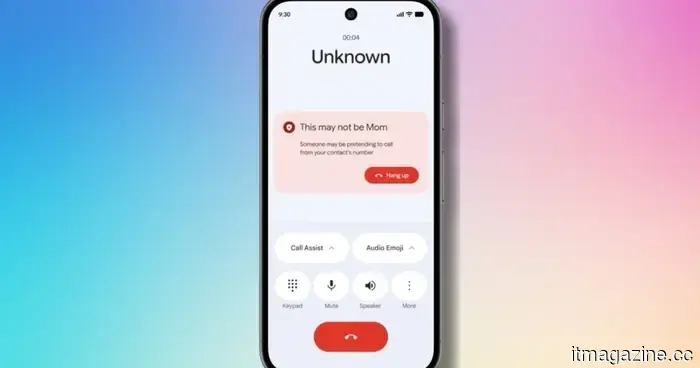 Android will now alert you if someone is employing AI to mimic your contact's voice during a call.
Android can now identify when someone is faking a contact's number and using AI to replicate their voice.
Android will now alert you if someone is employing AI to mimic your contact's voice during a call.
Android can now identify when someone is faking a contact's number and using AI to replicate their voice.
 DeepSeek secures its initial external funding: a $7 billion round valuing the company at up to $59 billion.
China's DeepSeek aims to secure around $7 billion in its initial funding round, with investors including Tencent and CATL, and a valuation reaching as high as $59 billion.
DeepSeek secures its initial external funding: a $7 billion round valuing the company at up to $59 billion.
China's DeepSeek aims to secure around $7 billion in its initial funding round, with investors including Tencent and CATL, and a valuation reaching as high as $59 billion.
 DeepSeek secures its initial external funding: a $7 billion round valuing the company at up to $59 billion.
China's DeepSeek plans to raise approximately $7 billion in its initial funding round, with supporters including Tencent and CATL, at a valuation of as much as $59 billion.
DeepSeek secures its initial external funding: a $7 billion round valuing the company at up to $59 billion.
China's DeepSeek plans to raise approximately $7 billion in its initial funding round, with supporters including Tencent and CATL, at a valuation of as much as $59 billion.
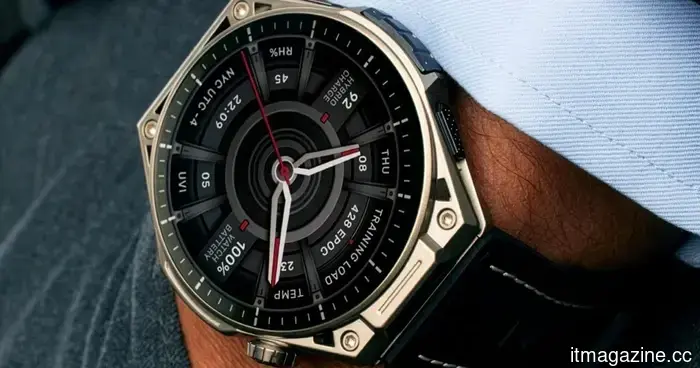 Amazfit has recently launched a smartwatch designed for individuals who train intensely but find recovery challenging.
The Amazfit Balance Ultra is designed for individuals who frequently run, lift weights, and train, equipped with features that indicate when the body is prepared to exert effort and when it requires recovery.
Amazfit has recently launched a smartwatch designed for individuals who train intensely but find recovery challenging.
The Amazfit Balance Ultra is designed for individuals who frequently run, lift weights, and train, equipped with features that indicate when the body is prepared to exert effort and when it requires recovery.
 Audible has recently introduced a rewards program that compensates you for daily listening activities.
Audible has introduced Audible Rewards, which includes rewards for listening days, credit promotions, referral bonuses, anniversary gifts, and gamified challenges.
Audible has recently introduced a rewards program that compensates you for daily listening activities.
Audible has introduced Audible Rewards, which includes rewards for listening days, credit promotions, referral bonuses, anniversary gifts, and gamified challenges.
 Applied Aerospace & Defense secures $650 million in an IPO that was oversubscribed by tenfold.
Applied Aerospace & Defense secured $650 million during its NYSE IPO, setting a share price at $20 for a valuation of $3.4 billion following a book that was oversubscribed by ten times.
Applied Aerospace & Defense secures $650 million in an IPO that was oversubscribed by tenfold.
Applied Aerospace & Defense secured $650 million during its NYSE IPO, setting a share price at $20 for a valuation of $3.4 billion following a book that was oversubscribed by ten times.
France's Quobly secures €115M to develop a quantum computer on a silicon chip.
French quantum startup Quobly secured €115 million ($133 million) in funding, with Bpifrance, STMicroelectronics, and SEALSQ leading the investment to industrialize its silicon-based quantum computing technology.