

Applied Aerospace & Defense secures $650 million in an IPO that was oversubscribed by a factor of ten.
The demand was the highlight of the story. Applied Aerospace & Defense set the price for its initial public offering at $20 per share on Tuesday, raising $650 million, and reports indicated that it was approximately ten times oversubscribed by the time the book closed. Typically, a company that manufactures fuselage sections and solid rocket motor cases wouldn't generate that level of interest, but come June 2026, defense hardware will.
The firm, based in Huntsville, Alabama, offered 32.5 million shares at $20 each, one dollar below the upper end of its $18-to-$21 pricing range. This pricing strategy allows the company to leave some potential gains for the first trading day while still appearing strong. At this price, the company's market capitalization was about $3.4 billion, and it is set to begin trading on the New York Stock Exchange on Wednesday under the ticker AADX.
Applied Aerospace is not a fledgling tech firm masquerading in defense. Established in 1954, it plays a vital role in the supply chain, producing flight control surfaces, engine shafts, solid rocket motor cases, and structural components that are integrated into rockets and aircraft made by other companies. Its list of clients speaks volumes; in addition to Boeing and GE Aerospace, it includes Anduril, a company synonymous with the emerging defense tech movement.
Investors were attracted to this profile: a time-tested manufacturer with nearly seventy years of certification history, supplying established companies and newer entrants alike. This presents a more reliable investment compared to a pre-revenue startup claiming to revolutionize the industry. The order book reflected this confidence.
Morgan Stanley and Jefferies spearheaded the underwriting process, with BofA Securities, RBC Capital Markets, Guggenheim Securities, Baird, Stifel, and the Wolfe Nomura Alliance also acting as joint bookrunners, as indicated in the filings. The initial goal was around $634 million, but the final amount raised exceeded that target.
The listing occurs in a market that has renewed its focus on hardware. Following a decade dominated by software and attention-driven tech firms, there has been a significant shift toward tangible products: chips, satellites, launch capacities, and the materials used in warfare and aerospace.
European defense budgets have increased, U.S. spending remains steady, and public-market investors who previously regarded defense with concern over ESG issues are now viewing it as a growth opportunity.
Applied Aerospace benefits from this shift rather than being a catalyst for it. Its components have been utilized for years, while the significant change is in the valuation the market assigns to them. The company strategically chose to go public when the valuation was at its peak, rather than waiting to see if it would hold.
The inherent risk in any oversubscribed defense IPO mirrors the broader sector's concerns: the possibility that expectations for budget growth driven by political circumstances may not materialize, leaving a manufacturer valued at $3.4 billion vulnerable if customer orders decline. Although Anduril’s current demand is solid, whether it grows at the pace implied by the share price remains uncertain.
For the time being, the market will address the immediate concerns. A book that is ten times covered typically indicates a strong first-day performance, and that initial rise is something every defense-related company planning to go public will be watching closely. AADX will commence trading on Wednesday with a lengthy queue of companies behind it.
Other articles
 Amazfit has just released a smartwatch designed for individuals who train intensely but find it challenging to recover.
The Amazfit Balance Ultra is designed for individuals who frequently run, lift weights, and train, equipped with features that indicate when the body is prepared to exert itself and when it might require recovery.
Amazfit has just released a smartwatch designed for individuals who train intensely but find it challenging to recover.
The Amazfit Balance Ultra is designed for individuals who frequently run, lift weights, and train, equipped with features that indicate when the body is prepared to exert itself and when it might require recovery.
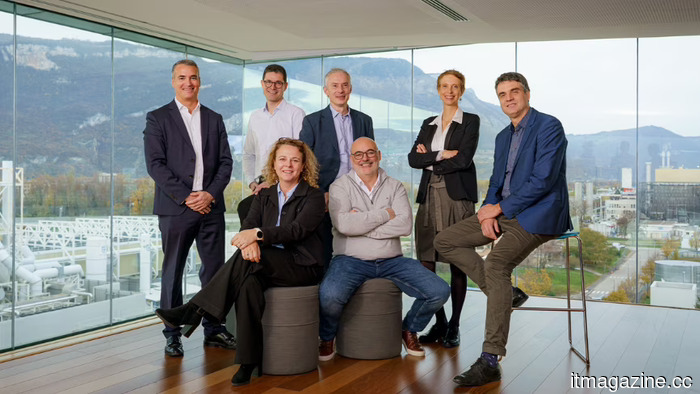 France's Quobly secures €115 million to place a quantum computer on a silicon chip.
French quantum startup Quobly secured €115 million ($133 million) in funding, with Bpifrance, STMicroelectronics, and SEALSQ leading the investment, to advance the industrialization of its silicon-based quantum computers.
France's Quobly secures €115 million to place a quantum computer on a silicon chip.
French quantum startup Quobly secured €115 million ($133 million) in funding, with Bpifrance, STMicroelectronics, and SEALSQ leading the investment, to advance the industrialization of its silicon-based quantum computers.
 Silo season 3 will finally reveal how the world came to an end.
The trailer for season 3 of Silo has arrived, offering a glimpse into the long-awaited origin story, featuring a split timeline, alterations of memory, and a conspiracy set before the apocalypse.
Silo season 3 will finally reveal how the world came to an end.
The trailer for season 3 of Silo has arrived, offering a glimpse into the long-awaited origin story, featuring a split timeline, alterations of memory, and a conspiracy set before the apocalypse.
 A malware campaign targeting Minecraft is said to have infected more than 116,000 players.
According to researchers, a malware campaign masquerading as Minecraft mods and cheats has infected more than 116,000 devices via Discord servers and gaming communities.
A malware campaign targeting Minecraft is said to have infected more than 116,000 players.
According to researchers, a malware campaign masquerading as Minecraft mods and cheats has infected more than 116,000 devices via Discord servers and gaming communities.
 Apoha surfaces from stealth mode with $36 million in funding to instruct machines on the behavior of matter.
London-based deeptech company Apoha has secured $36 million in funding, led by Singular, to develop Liquid State Intelligence, which assesses molecular behavior in real-world scenarios.
Apoha surfaces from stealth mode with $36 million in funding to instruct machines on the behavior of matter.
London-based deeptech company Apoha has secured $36 million in funding, led by Singular, to develop Liquid State Intelligence, which assesses molecular behavior in real-world scenarios.
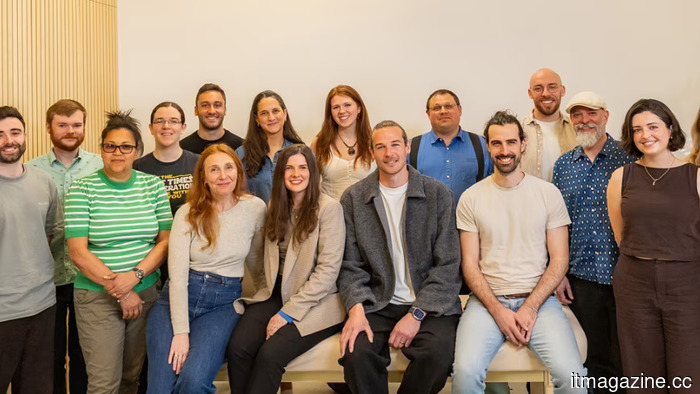 Flok Health secures $12.5 million to expand an AI physiotherapist that the NHS permits to operate without supervision.
Flok Health secured $12.5 million in a Series A funding round led by AlbionVC to expand its CQC-approved AI physiotherapy clinic, which is currently providing treatment to 2.4 million NHS patients suffering from back pain.
Flok Health secures $12.5 million to expand an AI physiotherapist that the NHS permits to operate without supervision.
Flok Health secured $12.5 million in a Series A funding round led by AlbionVC to expand its CQC-approved AI physiotherapy clinic, which is currently providing treatment to 2.4 million NHS patients suffering from back pain.
Applied Aerospace & Defense secures $650 million in an IPO that was oversubscribed by a factor of ten.
Applied Aerospace & Defense secured $650 million in its NYSE initial public offering, setting the price at $20 per share, which resulted in a valuation of $3.4 billion following a book that was ten times oversubscribed.