
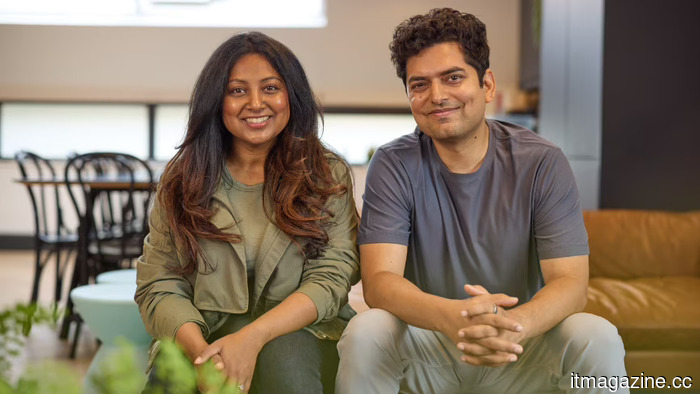
Apoha comes out of stealth mode with $36 million to educate machines on the behavior of matter.
Science can already describe what a molecule is and its structure. However, it has not been able to demonstrate, affordably and on a large scale, how it behaves under the complex conditions of the real world. This gap explains where drugs often fail in trials, where food products do not meet expected taste profiles, and where artificial intelligence increasingly encounters obstacles.
Apoha, a London-based company that emerged from 15 years of research in interfacial physics, claims to have filled this measurement gap. On June 3, it came out of stealth mode with $36 million in funding, announced at the Frontier Technologies Stage at SXSW London.
The funding round is led by Singular, with contributions from Tim Draper's Draper Associates, as well as ongoing support from seed investors Redalpine, Seedcamp, Wilbe, and Nucleus, in addition to grants from Innovate UK.
The company refers to its data layer as Liquid State Intelligence, a new category it positions alongside sequence and structure. While genomics has digitized biological language and structural biology has digitized design, Apoha aims to digitize behavior—specifically, what matter does under stress. They intend to use the funding to establish this as a foundational data class for biologics, food, materials, and physical-world AI.
The scientific foundation dates back to 2008, when founder and CEO Shamit Shrivastava began investigating a problem left unresolved by the Nobel-winning Hodgkin-Huxley model of nerve signaling: the physics at the interface where matter meets liquid. He later published findings on two-dimensional solitary sound waves at a lipid interface in 2014, which the company states was recognized among Scientific American's discoveries with the potential to change everything. In 2021, he co-founded Apoha with Anshika Srivastava, its COO and a former executive director at Goldman Sachs.
The company now holds over 60 patents across various domains, including hardware, software, data, and AI models.
Its flagship product, VIBE, provides an empirical reading of how a sample reacts to controlled stress. The platform uses a minuscule amount of material, small enough to fit on a pinhead, suspends it in liquid, applies a series of perturbations, and records the wave patterns emitted by the molecule in response.
These patterns translate into more than 1,000 measured behavior descriptors in a single reading, whereas traditional assays typically measure one property at a time. The company asserts that a VIBE readout can indicate within minutes if an experimental drug is likely to fail before it progresses to clinical trials.
The platform is already being utilized commercially, with firm evidence presented in a preprint. In collaboration with Boehringer Ingelheim, a long-term commercial partner, Apoha was able to identify high-risk antibody candidates with over 90% accuracy using just 8 micrograms of material.
A subsequent benchmarking study indicates that the platform surpassed 12 industry-standard developability tests across 236 clinical antibodies, revealing information that conventional methods fail to capture without duplicating data.
Various clients highlight the platform's versatility. Apoha is collaborating with German biotech Ethris to predict the behavior of lipid nanoparticles carrying mRNA in animals, and with plant-based food company THIS on a protein replacement intended for retail. They also work with Somru BioSciences and several Fortune 500 companies across pharmaceuticals, food, and materials.
The broader expectation is that physical-world AI will eventually require this capability. While models have advanced in visual perception and interpretation, a new generation of physical AI systems is being developed to act on matter. However, they cannot yet assess how a drug dissolves or how a flavor maintains its integrity, as this data has never been collected on a large scale.
“It cannot be extracted from the internet, synthesized, or adapted from existing assays,” Shrivastava stated. “It must be measured.” The critical question for the next funding round will be whether enough buyers are willing to support the creation of this data class.
Other articles
 Martin Scorsese has officially aligned himself with the AI movement, and it's not what anyone anticipated.
Martin Scorsese has joined as a partner and advisor at the AI startup Black Forest Labs, utilizing its technology for storyboarding in an upcoming film.
Martin Scorsese has officially aligned himself with the AI movement, and it's not what anyone anticipated.
Martin Scorsese has joined as a partner and advisor at the AI startup Black Forest Labs, utilizing its technology for storyboarding in an upcoming film.
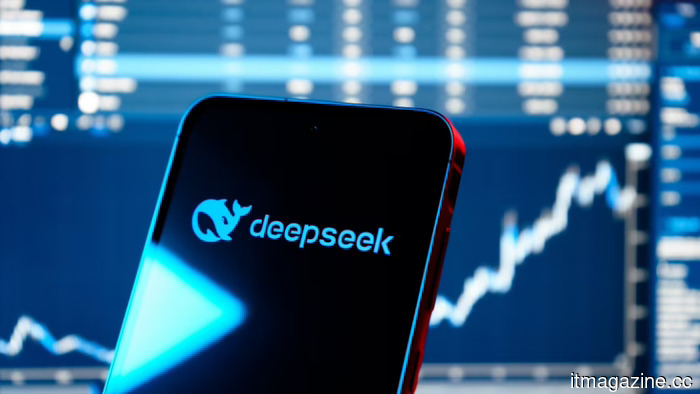 DeepSeek secures its initial external funding: a $7 billion round valuing the company at up to $59 billion.
China's DeepSeek aims to secure around $7 billion in its initial funding round, with investors including Tencent and CATL, and a valuation reaching as high as $59 billion.
DeepSeek secures its initial external funding: a $7 billion round valuing the company at up to $59 billion.
China's DeepSeek aims to secure around $7 billion in its initial funding round, with investors including Tencent and CATL, and a valuation reaching as high as $59 billion.
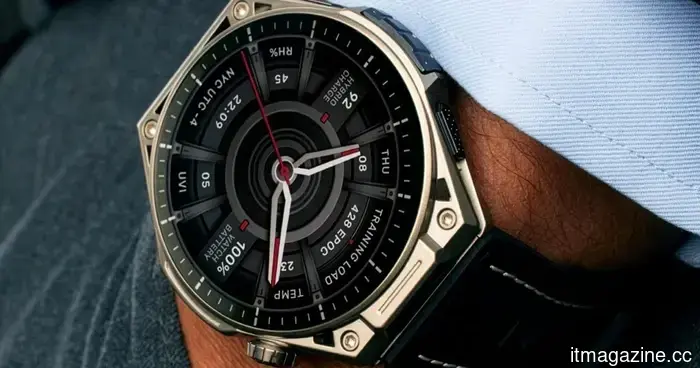 Amazfit has just released a smartwatch designed for individuals who train intensely but find it challenging to recover.
The Amazfit Balance Ultra is designed for individuals who frequently run, lift weights, and train, equipped with features that indicate when the body is prepared to exert itself and when it might require recovery.
Amazfit has just released a smartwatch designed for individuals who train intensely but find it challenging to recover.
The Amazfit Balance Ultra is designed for individuals who frequently run, lift weights, and train, equipped with features that indicate when the body is prepared to exert itself and when it might require recovery.
 Android will now alert you if someone is employing AI to mimic your contact's voice during a call.
Android can now identify when someone is faking a contact's number and using AI to replicate their voice.
Android will now alert you if someone is employing AI to mimic your contact's voice during a call.
Android can now identify when someone is faking a contact's number and using AI to replicate their voice.
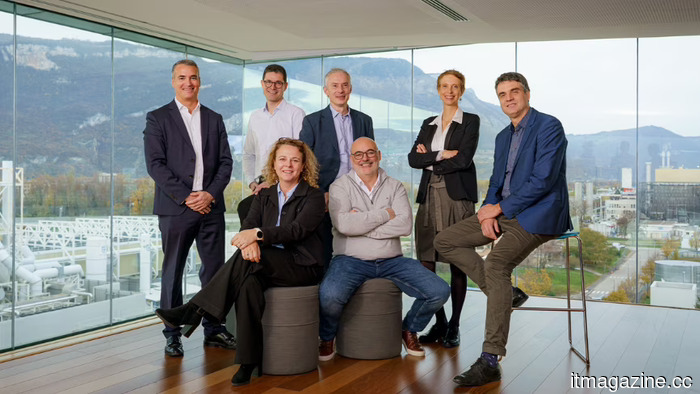 France's Quobly secures €115 million to place a quantum computer on a silicon chip.
French quantum startup Quobly secured €115 million ($133 million) in funding, with Bpifrance, STMicroelectronics, and SEALSQ leading the investment, to advance the industrialization of its silicon-based quantum computers.
France's Quobly secures €115 million to place a quantum computer on a silicon chip.
French quantum startup Quobly secured €115 million ($133 million) in funding, with Bpifrance, STMicroelectronics, and SEALSQ leading the investment, to advance the industrialization of its silicon-based quantum computers.
 The third season of Silo is finally set to reveal how the world came to an end.
The trailer for Silo season 3 has arrived, promising the origin story that fans have eagerly anticipated, featuring a split timeline, memory alteration, and a conspiracy set before the apocalypse.
The third season of Silo is finally set to reveal how the world came to an end.
The trailer for Silo season 3 has arrived, promising the origin story that fans have eagerly anticipated, featuring a split timeline, memory alteration, and a conspiracy set before the apocalypse.
Apoha comes out of stealth mode with $36 million to educate machines on the behavior of matter.
Apoha, a deeptech company based in London, has secured $36 million in funding, with Singular leading the investment, to develop Liquid State Intelligence, which focuses on assessing the behavior of molecules in real-world scenarios.