
SEALSQ acquires a majority stake in WeCan to develop a post-quantum AI compliance co-pilot for private banking institutions.
The Swiss post-quantum cryptocurrency firm has raised its ownership in WeCan from 28% to a majority stake and has pledged CHF 5 million to expedite the development of AI compliance tools for Pictet, Lombard Odier, and Barclays.
SEALSQ, based in Geneva, has secured a majority equity interest in WeCan Group, increasing its share from 28%, which it acquired in October 2025, and investing an additional CHF 5 million ($6.1 million) to fast-track the co-development of an AI-driven compliance co-pilot utilizing post-quantum cryptography for the global financial sector.
This investment comes from SEALSQ’s dedicated Quantum Fund, an internal strategic initiative set up to support early-stage companies in quantum computing and security.
WeCan's existing customer base underscores the significance of this announcement. The company already serves private banking clients such as Pictet, Lombard Odier, Edmond de Rothschild, Syz, and Barclays with its know-your-customer (KYC) infrastructure, which has been active among several top-tier Swiss wealth managers since 2020.
The WeCan compliance suite employs blockchain technology for document verification to better manage KYC and anti-money laundering (AML) data-sharing, a challenge private banks have historically faced even when dealing with overlapping clientele. SEALSQ's majority ownership now aligns this customer base with SEALSQ’s own quantum-resistant Hardware Security Modules (HSMs) and post-quantum cryptography (PQC) intellectual property.
The collaborative product they are developing is particularly strategically significant. This platform will integrate SEALSQ’s PQC elements for the cryptographic component, WeCan's established private bank client integration for the operational aspect, and an AI compliance co-pilot designed to automate the current manual judgment tasks carried out by compliance teams in private banks.
According to the companies' own perspective, the product aims to be a compliance system that withstands both the EU AI Act’s 2027 enforcement deadline and the predicted transition to post-quantum cryptography, marked by NIST’s PQC standards set to take effect in August 2024.
The post-quantum aspect is likely to be undervalued by those not versed in cryptography. Current public-key cryptography—RSA and elliptic-curve protocols—underpinning most secure communication systems in banking and government can be compromised by sufficiently advanced quantum computers.
Assessments of when this vulnerability will be exploitably realized vary between five to fifteen years, yet the concern remains that adversaries could capture encrypted financial transactions now and decrypt them once quantum technology advances, necessitating a proactive transition.
In 2024, NIST finalized its first set of standards for post-quantum cryptography, including CRYSTALS-Kyber and CRYSTALS-Dilithium, and the financial services sector is reportedly at the forefront of planning mandatory PQC migration.
SEALSQ's strategy aligns well with this timeline. Operating on Nasdaq under the ticker LAES, the company has developed a range of quantum-resistant HSMs and is currently building what it terms a fully integrated quantum vertical-sovereign stack via its Quantum Fund investments in carefully selected quantum computing firms in the US and Europe.
The WeCan agreement serves as a significant commercial evaluation of whether the SEALSQ stack can be effectively integrated into operational banking systems rather than merely existing as a theoretical regulatory aim.
Simultaneously, the European banking sector is making strides in developing a comprehensive AI compliance and security framework, positioning SEALSQ-WeCan in relation to cryptographic integrity, Bayshore in legal rules, and the BNP-Mistral program regarding AI defense against attacks.
One aspect that remains unspecified in the SEALSQ-WeCan announcement is the timeline. Neither firm has provided a launch date for the compliance co-pilot or indicated which of the banks mentioned will be the first to deploy it.
The CHF 5 million commitment should be viewed as more akin to a Series A-equivalent runway, rather than indicative of the total cost required for full integration. The next pertinent question is whether SEALSQ will attract additional capital from its public equity or from external investors.
Following the announcement, SEALSQ's stock saw a modest increase in pre-market trading.
Other articles
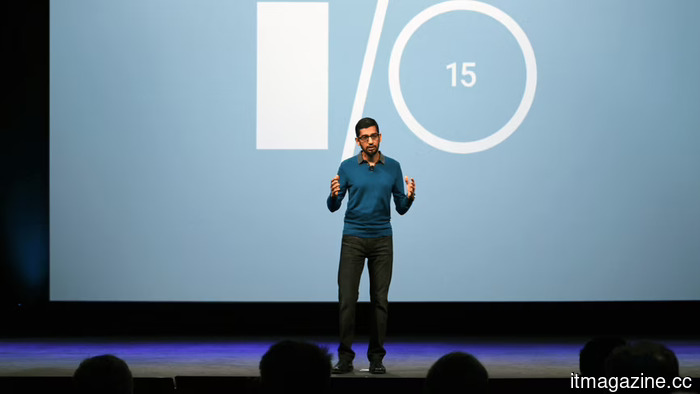 Alphabet plans to raise $80 billion in equity to finance its AI investments.
Alphabet intends to generate $80 billion in equity for AI infrastructure, which includes a $10 billion private placement with Berkshire Hathaway and a $40 billion at-the-market program.
Alphabet plans to raise $80 billion in equity to finance its AI investments.
Alphabet intends to generate $80 billion in equity for AI infrastructure, which includes a $10 billion private placement with Berkshire Hathaway and a $40 billion at-the-market program.
 Google's first new smart speaker in six years may finally have a launch date.
Google remained silent about its Home Speaker powered by Gemini during the entirety of I/O 2026.
Google's first new smart speaker in six years may finally have a launch date.
Google remained silent about its Home Speaker powered by Gemini during the entirety of I/O 2026.
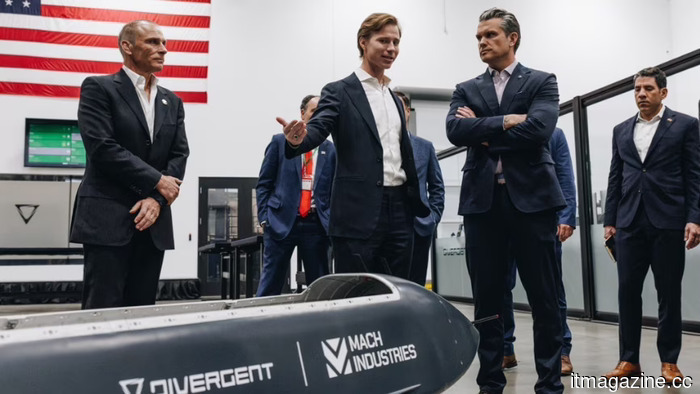 Mach Industries increases fourfold to $1.8 billion as the Pentagon's focus on drone superiority boosts valuations across the defense technology sector.
Mach Industries, a US defense-tech startup established three years ago by 22-year-old Ethan Thornton, has secured $300 million in a Series C funding round, achieving a valuation of $1.8 billion, nearly quadrupling its valuation from June 2025.
Mach Industries increases fourfold to $1.8 billion as the Pentagon's focus on drone superiority boosts valuations across the defense technology sector.
Mach Industries, a US defense-tech startup established three years ago by 22-year-old Ethan Thornton, has secured $300 million in a Series C funding round, achieving a valuation of $1.8 billion, nearly quadrupling its valuation from June 2025.
 ByteDance and Oracle are utilizing Arm's proprietary AGI CPU, marking the completion of the hyperscaler-x86 transition.
Arm has announced that ByteDance and Oracle are customers for its proprietary AGI CPU, reaffirming its transition from a CPU-IP licensor to a silicon supplier and increasing competitive pressure on Intel and AMD from the hyperscaler side.
ByteDance and Oracle are utilizing Arm's proprietary AGI CPU, marking the completion of the hyperscaler-x86 transition.
Arm has announced that ByteDance and Oracle are customers for its proprietary AGI CPU, reaffirming its transition from a CPU-IP licensor to a silicon supplier and increasing competitive pressure on Intel and AMD from the hyperscaler side.
 Australia's largest bank reports that corporate AI is leading to increased expenses and generating 'subpar work'.
CBA CEO Matt Comyn highlighted rising AI expenses and "work slop," noting that the complexity of production stages is reversing the advantageous per-token AI economics that characterized 2024-2025.
Australia's largest bank reports that corporate AI is leading to increased expenses and generating 'subpar work'.
CBA CEO Matt Comyn highlighted rising AI expenses and "work slop," noting that the complexity of production stages is reversing the advantageous per-token AI economics that characterized 2024-2025.
 Samsung One UI 9 will deactivate your fingerprint every time you access the power menu.
One UI 9 Beta 2 automates the lockdown mode on Samsung Galaxy devices, eliminating the need for a manual activation step.
Samsung One UI 9 will deactivate your fingerprint every time you access the power menu.
One UI 9 Beta 2 automates the lockdown mode on Samsung Galaxy devices, eliminating the need for a manual activation step.
SEALSQ acquires a majority stake in WeCan to develop a post-quantum AI compliance co-pilot for private banking institutions.
The Swiss post-quantum crypto company SEALSQ has purchased a controlling stake in WeCan Group and has pledged CHF 5 million to expedite the development of an AI compliance co-pilot aimed at private banks such as Pictet, Lombard Odier, and Barclays.