

ByteDance and Oracle are utilizing Arm's proprietary AGI CPU, marking the completion of the hyperscaler-x86 transition.
Arm CEO René Haas confirmed at Computex that ByteDance and Oracle have joined Meta as clients for Arm's newly developed data-centre CPU, confirming the company’s transition from a licensor to a semiconductor vendor. René Haas, the chief executive of Arm, announced on Monday at Computex that ByteDance and Oracle are now customers of AGI, which is Arm's first internally developed data-centre CPU, making them the third and fourth recognized users of a chip that the Cambridge-based firm is positioning as a viable alternative to Intel's Xeon and AMD's EPYC server offerings.
This announcement substantiates a significant strategic shift for Arm. For the last thirty years, the company has focused on licensing CPU intellectual property to other chip manufacturers, who then designed and marketed their own silicon, including AWS’s Graviton, Microsoft’s Cobalt, Google’s Axion, Nvidia’s Grace, and now Vera.
AGI symbolizes Arm’s move to design and sell final silicon products directly to customers. The newly announced clients for AGI are not existing licensees; instead, they are the very hyperscalers and enterprise-cloud purchasers that Arm’s licensees would have traditionally targeted. The launch of Arm’s AGI can thus be seen as both a vertically integrated strategy against its own customer base, as well as a horizontal strategy to compete with Intel and AMD.
The customer list is telling. Meta was the first officially recognized AGI customer, acknowledged during the AGI launch event in San Francisco last March. ByteDance, as the largest Chinese AI workload customer, is particularly notable given the company's simultaneous custom-CPU initiative on both Arm and RISC-V platforms, as reported last week. Oracle serves as the enterprise-cloud powerhouse that integrates Arm-based servers with its database solutions for customer implementations. The diversity of customers is significant: one US frontier-AI lab, one Chinese hyperscaler, and one US enterprise-cloud provider. Arm has now shown, through these three named customers, that AGI is gaining traction across three distinct categories of data-centre clients.
The financial projections associated with this development are crucial. Haas stated at the launch of AGI that sales from the chip alone could generate $15 billion for Arm by 2031. This chip was co-designed with Meta and features a chiplet design utilizing TSMC’s 3nm N3P process, the same technology used by Nvidia for Rubin. This $15 billion estimate represents, under the most optimistic interpretation, a doubling of Arm’s current annual revenue if realized. The recent announcement of customers provides significant validation for these projections.
The overall context of the CPU market is an important point to highlight. Nvidia’s Vera CPU was launched recently with OpenAI, Anthropic, and SpaceX as its listed customers. Snowflake’s $6 billion commitment to AWS's Graviton last week further added a prominent enterprise-data-platform customer to Arm’s server-side portfolio. Meanwhile, ByteDance is in the process of developing its own custom CPUs based on Arm and RISC-V. Arm itself is now selling AGI to Meta, ByteDance, and Oracle.
Currently, every major AI data-centre customer publicly recognized has committed to using Arm-based silicon at least at one level of their computing architecture, whether through direct purchases, custom designs created by hyperscalers, or co-developed products. The evidence suggests that the x86 incumbents have significantly lost ground in the hyperscaler-CPU market in the four weeks following the launch of Computex 2026.
This situation presents serious implications for Intel and AMD. Historically, both companies have relied heavily on hyperscaler purchases for most of their server-CPU revenue, and the hyperscaler segment of the data-centre CPU market is structurally the most profitable. The current public commitments to Arm silicon are likely to substantially reduce the addressable market for the x86 incumbents in this high-margin segment.
While this compression isn’t yet visible in Intel’s and AMD’s reported revenues due to the multi-year cycles of hyperscaler purchasing, the trend leading through 2028 is becoming apparent. A more challenging question for Arm is whether selling finished silicon directly to customers of its existing licensees will diminish its core IP-licensing revenues. The hyperscalers who previously paid Arm royalties via their custom CPUs (like Graviton, Cobalt, and Axion) may find less incentive to sustain those projects if Arm’s own AGI design meets similar performance and pricing needs. Thus, this vertical integration strategy poses a competitive risk for Arm itself.
Following the announcement, Arm shares saw a modest increase in pre-market trading. The AGI chip is currently being shipped to all three identified customers.
Other articles
 Wondershare PDFelement: Optimize Your PDF Workflow with One Click — Save Hours Each Day
Handling PDFs frequently involves navigating multiple OCR websites, editing tools, conversion utilities, and approval platforms within the same workflow. Wondershare PDFelement consolidates these processes into a single productivity-oriented workspace designed for document-intensive office tasks.
Wondershare PDFelement: Optimize Your PDF Workflow with One Click — Save Hours Each Day
Handling PDFs frequently involves navigating multiple OCR websites, editing tools, conversion utilities, and approval platforms within the same workflow. Wondershare PDFelement consolidates these processes into a single productivity-oriented workspace designed for document-intensive office tasks.
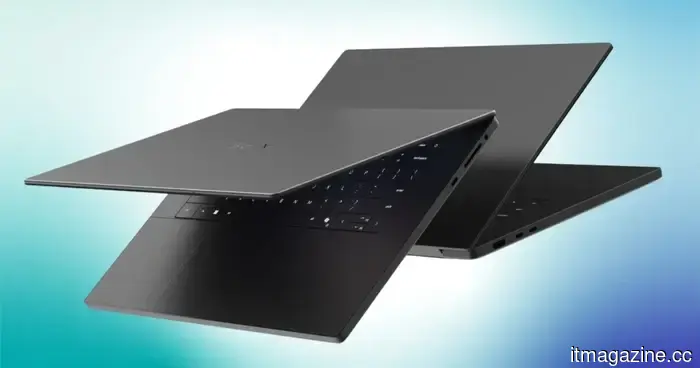 Dell's latest XPS 16 Creator Edition aims to serve as a substitute for your MacBook Pro.
Dell's XPS 16 Creator Edition features Nvidia RTX Spark, a Tandem OLED screen, as much as 128GB of unified memory, and includes the ports that MacBook Pro users have been longing for.
Dell's latest XPS 16 Creator Edition aims to serve as a substitute for your MacBook Pro.
Dell's XPS 16 Creator Edition features Nvidia RTX Spark, a Tandem OLED screen, as much as 128GB of unified memory, and includes the ports that MacBook Pro users have been longing for.
 Australia's largest bank reports that corporate AI is leading to increased expenses and generating 'subpar work'.
CBA CEO Matt Comyn highlighted rising AI expenses and "work slop," noting that the complexity of production stages is reversing the advantageous per-token AI economics that characterized 2024-2025.
Australia's largest bank reports that corporate AI is leading to increased expenses and generating 'subpar work'.
CBA CEO Matt Comyn highlighted rising AI expenses and "work slop," noting that the complexity of production stages is reversing the advantageous per-token AI economics that characterized 2024-2025.
 Google's first new smart speaker in six years may soon have a launch date.
Google remained silent about its Gemini-powered Home Speaker during the entirety of I/O 2026.
Google's first new smart speaker in six years may soon have a launch date.
Google remained silent about its Gemini-powered Home Speaker during the entirety of I/O 2026.
 Vinted Ventures supports Tilt's $26 million funding round for live-commerce as pressure from Whatnot increases.
London's Tilt has secured $26 million in funding, with Vinted Ventures coming on board as a new investor. This appears to be a strategic response to Whatnot's expansion into European live commerce.
Vinted Ventures supports Tilt's $26 million funding round for live-commerce as pressure from Whatnot increases.
London's Tilt has secured $26 million in funding, with Vinted Ventures coming on board as a new investor. This appears to be a strategic response to Whatnot's expansion into European live commerce.
 Apple may be looking to introduce a feature that allows users to split expenses in iOS 27.
Apple is said to be introducing a feature for built-in bill splitting on iPhones, enabling users to scan receipts and automatically share costs via Apple Cash.
Apple may be looking to introduce a feature that allows users to split expenses in iOS 27.
Apple is said to be introducing a feature for built-in bill splitting on iPhones, enabling users to scan receipts and automatically share costs via Apple Cash.
ByteDance and Oracle are utilizing Arm's proprietary AGI CPU, marking the completion of the hyperscaler-x86 transition.
Arm has announced that ByteDance and Oracle are customers for its proprietary AGI CPU, reaffirming its transition from a CPU-IP licensor to a silicon supplier and increasing competitive pressure on Intel and AMD from the hyperscaler side.