
Microsoft announces Project Solara: an operating system designed for agent-first devices.
TL;DR: At Build 2026, Microsoft introduced Project Solara, a chip-to-cloud platform tailored for "agent-first devices" that utilize AI agents instead of conventional applications. Two concept devices, a wearable badge and a desk companion, are currently being tested with Best Buy, CVS Health, Levi’s, and Target.
Microsoft presented Project Solara at Build 2026, a novel chip-to-cloud platform specifically designed for devices that operate with AI agents rather than traditional applications. The platform includes a streamlined operating system built on AOSP, enterprise-level security and management features through Intune and Entra ID, and what Microsoft refers to as "just-in-time UI," which allows agent experiences to adapt their interfaces based on the device they are on. Two concept device prototypes were introduced: a wearable badge and a desk companion, both aimed at enterprise users.
This announcement is noteworthy as it marks Microsoft's initial effort to create an operating system and hardware ecosystem predicated on the idea that agents will replace applications as the primary means through which users engage with computers. While companies like Google, Salesforce, and OpenAI are developing agent platforms, Microsoft is the first to create dedicated hardware that is neither a phone, PC, nor tablet.
Device Designs
The badge concept transforms the traditional corporate access badge into a continuously connected AI companion. It features a touchscreen, a fingerprint sensor for Hello for Business authentication, a far-field microphone array and speaker for voice interactions, a side-facing camera, and connectivity options including WiFi, Bluetooth, 5G, and satellite, all powered by Qualcomm wearable technology. Users such as nurses, retail associates, or office workers can quickly check upcoming meetings, tap to record in-person discussions with full transcription, or ask their agents questions without using their hands.
The desk concept is a compact stationary device featuring a touchscreen, dual microphones, a speaker, a UWB presence sensor, and MediaTek IoT technology. It uses facial recognition (Hello for Business) for authentication and offers ambient access to AI agents while the user is engaged in work. When connected to an external monitor via USB-C, it can function as a Windows 365 cloud PC client, providing enterprises with a device that operates both as an agent companion and a thin client.
Both devices are specifically not designed to run conventional applications. There is no app store, traditional browser experience, or desktop interface. The entire interaction model is centered around the notion that users will interact with software via agents rather than by navigating individual applications.
Platform Architecture
Project Solara is built on MDEP (Microsoft Device Ecosystem Platform), an enterprise-level operating system based on the Android Open Source Project. This is significant as Microsoft is developing its next-generation device platform on Android’s open-source foundation, rather than on Windows. This pragmatic choice allows the platform to benefit from Android’s hardware compatibility and driver support while enabling Microsoft to integrate its own agent interface, security structure, and management framework.
The platform is anchored by three main components. First, enterprise readiness is supported by Intune for device management, Entra ID for authentication, Hello for Business biometrics, and physical privacy features such as a hardware mic mute button. Second, an agent-driven interaction model includes just-in-time UI that adjusts dynamically across various screen sizes, formats, and input methods. Third, the platform is extensible for multiple agents, incorporating Microsoft’s own (Copilot, Researcher, Facilitator, and the new Priority Agent) alongside third-party agents developed using the Microsoft 365 Agents SDK, Copilot Studio, or the Microsoft Agent Framework.
While enterprise AI agents are already being utilized in retail, finance, and healthcare on existing devices, Project Solara posits that custom-built hardware tailored to how agents operate, rather than how applications function, can enhance user experiences in specific workflows and environments.
Just-in-Time UI
The most technically ambitious aspect of this announcement is the just-in-time UI. Typically, introducing a new device form factor necessitates developers to redesign their applications to match the new screen size, resolution, and input method, making new device categories costly to develop and reliant on a strong app ecosystem.
Microsoft suggests that agents should autonomously create their own interfaces. For example, on a small badge screen, an agent might display a simple card with one action, while on a desk device, the same agent can provide a more elaborate visual layout. On a connected display, it can generate a comprehensive dashboard. The agent modifies its presentation based on the device instead of requiring developers to create distinct experiences for each form factor.
Currently, this functionality is realized through semi-structured formats like adaptive cards. As AI models improve in generating layouts and interfaces, Microsoft anticipates moving towards increasingly dynamic and eventually fully generative user interfaces. The company clarifies that fully generative UI "is not here yet," but it is investing in developments that lie between responsive design and unrestricted generation.
Pilot Testing
Hundreds of Microsoft employees are already using the concept devices internally. The company has also initiated
Other articles
 RogueDB presents a streamlined database platform aimed at minimizing infrastructure tasks for startups and IT teams.
RogueDB provides a fully managed, API-centric database that eliminates the need for configuration and tuning, allowing startup engineering teams to focus on product development rather than infrastructure maintenance.
RogueDB presents a streamlined database platform aimed at minimizing infrastructure tasks for startups and IT teams.
RogueDB provides a fully managed, API-centric database that eliminates the need for configuration and tuning, allowing startup engineering teams to focus on product development rather than infrastructure maintenance.
 Poland implements
The Prime Minister of Poland, Tusk, has declared a sovereignty assessment for the procurement of government technology, along with yearly reports on IT autonomy. He cautioned that reliance on foreign AI poses risks to both security and the economy.
Poland implements
The Prime Minister of Poland, Tusk, has declared a sovereignty assessment for the procurement of government technology, along with yearly reports on IT autonomy. He cautioned that reliance on foreign AI poses risks to both security and the economy.
 The EU's plan for an AI gigafactory faces setbacks as delays cause partners to feel disconnected.
The EU's 20 billion euro initiative for five AI data centers is experiencing delays and funding shortages, resulting in bidding being postponed until July. The number of interested companies has decreased from 70 to 10, and consortia are reevaluating their positions.
The EU's plan for an AI gigafactory faces setbacks as delays cause partners to feel disconnected.
The EU's 20 billion euro initiative for five AI data centers is experiencing delays and funding shortages, resulting in bidding being postponed until July. The number of interested companies has decreased from 70 to 10, and consortia are reevaluating their positions.
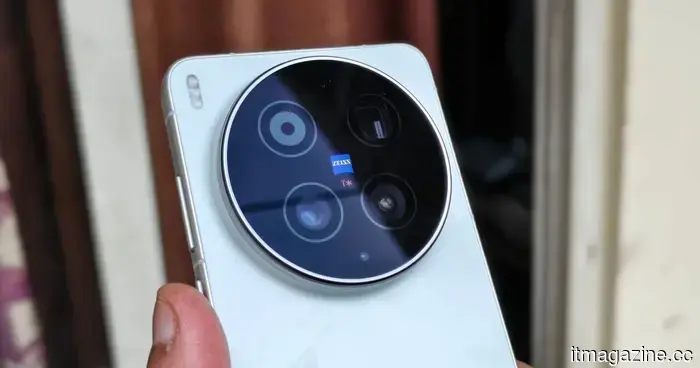 The Vivo X300 Ultra is outshining all other camera phones, and here's the reason.
The Vivo X300 Ultra integrates external lenses, accessories designed for creators, and top-tier camera hardware to bring smartphone photography nearer to the experience of using a professional camera.
The Vivo X300 Ultra is outshining all other camera phones, and here's the reason.
The Vivo X300 Ultra integrates external lenses, accessories designed for creators, and top-tier camera hardware to bring smartphone photography nearer to the experience of using a professional camera.
 Focused Energy secures $240 million to commercialize NIF laser fusion technology.
German fusion startup Focused Energy has secured $240 million in Series A funding, led by utility company RWE, to develop a laser-powered reactor inspired by the net energy gain breakthrough achieved by the NIF.
Focused Energy secures $240 million to commercialize NIF laser fusion technology.
German fusion startup Focused Energy has secured $240 million in Series A funding, led by utility company RWE, to develop a laser-powered reactor inspired by the net energy gain breakthrough achieved by the NIF.
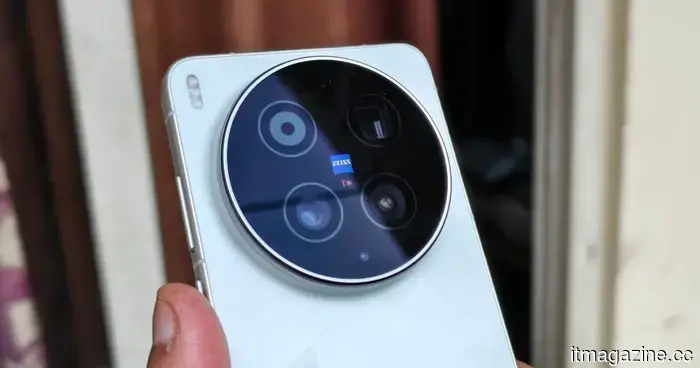 The Vivo X300 Ultra is putting other camera phones to shame, and here's the reason.
The Vivo X300 Ultra integrates external lenses, accessories aimed at creators, and top-tier camera hardware to enhance smartphone photography towards a more professional camera experience.
The Vivo X300 Ultra is putting other camera phones to shame, and here's the reason.
The Vivo X300 Ultra integrates external lenses, accessories aimed at creators, and top-tier camera hardware to enhance smartphone photography towards a more professional camera experience.
Microsoft announces Project Solara: an operating system designed for agent-first devices.
Microsoft's Project Solara is an innovative platform designed for devices that utilize AI agents rather than traditional apps. Currently, two concept designs—a badge and a desk device—are being tested in partnership with Best Buy, CVS, Levi's, and Target.