
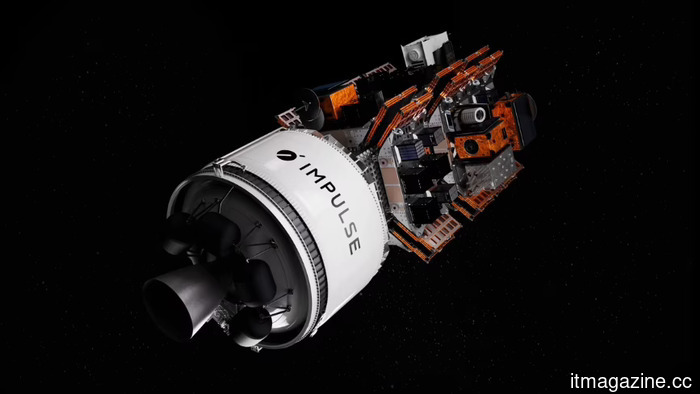
Impulse Space secures $500 million, achieving a valuation of $4.26 billion for its orbital transfer vehicles.
Impulse Space has secured $500 million in a Series D funding round, bringing its valuation to $4.26 billion and total funding to $1 billion. The startup, founded by Tom Mueller, the first employee at SpaceX, develops "space tugs" for orbital transfers and is collaborating with Anduril on missile defense for Trump’s Golden Dome initiative.
The Series D financing was co-led by 137 Ventures and Banner VC, with support from existing investors such as Peter Thiel’s Founders Fund and Linse Capital. Since its inception in 2021, Impulse Space has raised about $1 billion, including a $300 million Series C last year.
Mueller's background sets him apart from conventional startup founders. He was SpaceX’s original employee and the propulsion engineer responsible for the Merlin and Raptor engines that power all Falcon 9 and Starship launches. As SpaceX approaches an unprecedented IPO, valued at $1.8 trillion, the company Mueller helped grow from a modest facility in El Segundo is now a massive player in the industry, while his own venture has achieved a valuation of $4.26 billion.
Regarding space tugs, while rockets can launch satellites into space, accurately placing them in their required orbits is a distinct and often costly challenge. Most launch vehicles put payloads into a standard low Earth orbit or transfer orbit, necessitating the satellite's use of its own propulsion to reach the final orbit, which depletes fuel that could otherwise ensure the satellite's operational longevity.
Impulse Space addresses this issue by creating vehicles that function as orbital taxis. Its Mira craft has completed three missions so far, with the latest one launched in November 2025. Mira can deploy satellites, carry payloads, and navigate within orbits. In an industry where a single launch failure can lead to significant financial losses, having a flexible transfer vehicle for precise payload positioning enhances reliability and efficiency in deployment.
The upcoming Helios vehicle, currently in development, aims to transport heavier payloads from low Earth orbit to geostationary orbit and beyond. Impulse intends to initiate rideshare missions to geostationary orbit via Helios in 2027, allowing various satellite operators to share the expenses of reaching higher orbits rather than requiring dedicated launches.
On the defense front, Impulse Space is collaborating with Anduril Industries to develop prototypes for space-based interceptors for Trump's Golden Dome missile defense system, designed to shield the U.S. from ballistic missile and hypersonic weapon threats. This initiative demands spacecraft capable of fast and precise maneuvers in orbit, aligning perfectly with the capabilities of Impulse’s propulsion systems.
The defense aspect significantly impacts the company's valuation. Defense contracts are known for providing stable, long-term revenue streams that commercial satellite contracts typically lack, and the Golden Dome program is expected to yield billions in procurements over the next decade. With “hundreds of millions of dollars” in customer contracts disclosed by Impulse, defense-related work could become its largest revenue source.
Impulse Space currently has 500 employees and around 200 job openings, having more than doubled its workforce in the past year and establishing new offices in Washington, DC, and Boulder, Colorado, signaling increased interaction with government and defense clients. The recent $500 million funding will support team growth, manufacturing capabilities, and the development of propulsion systems tailored for various applications, including long-range transport and orbital adjustments.
The company is pursuing its own propulsion technology rather than depending on third-party engines, following a vertically integrated strategy reminiscent of SpaceX’s approach. This control over the propulsion stack enables Impulse to optimize its vehicles for diverse mission profiles and minimizes reliance on suppliers, especially in a market where the lead times for specialized space hardware can extend for years.
Impulse Space’s valuation of $4.26 billion reflects a broader investment perspective that a robust infrastructure is needed between launch and operational phases within the space economy. SpaceX primarily handles launches, and satellite operators like Starlink and Amazon’s Kuiper are developing the applications. Impulse is targeting the logistics of efficiently moving hardware to the correct locations in space.
If the analogy holds, Impulse Space is establishing the orbital logistics and trucking network. With $1 billion raised in five years, backing from the Founders Fund, a SpaceX pedigree, and the Golden Dome contract, investors are betting that the company will become vital infrastructure for both commercial and military space operations. The question remains whether the growing space economy can support a $4.26 billion valuation for a company with only three completed missions, which is the risk taken by the Series D investors.
Other articles
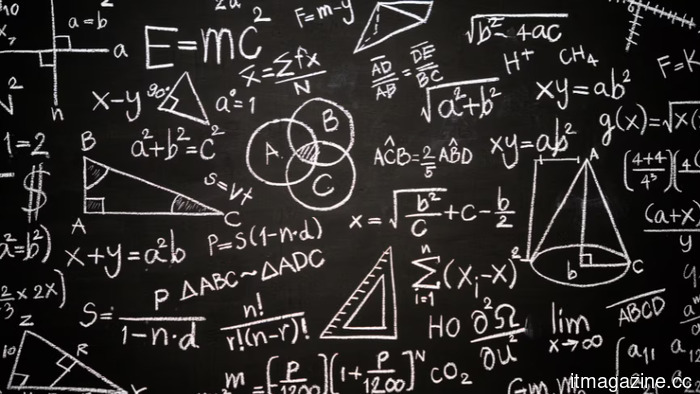 Mathematicians have released the Leiden Declaration to oppose the misuse of their work by AI.
The Leiden Declaration, supported by the IMU, cautions that AI poses a risk to the integrity of proof, attribution, and research independence, urging mathematicians to safeguard their field from corporate exploitation.
Mathematicians have released the Leiden Declaration to oppose the misuse of their work by AI.
The Leiden Declaration, supported by the IMU, cautions that AI poses a risk to the integrity of proof, attribution, and research independence, urging mathematicians to safeguard their field from corporate exploitation.
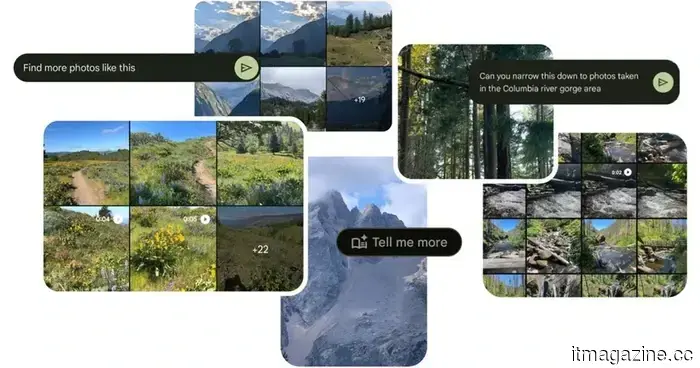 Google Photos is finally simplifying the process of backups and exports a bit.
Google Photos is introducing incremental Takeout exports, which will reduce the size of recurring local backups following the initial full archive. However, it’s important to note that Photos must be the only product chosen during the setup process.
Palo Alto Networks' CEO compensation has been turned down on seven occasions, even with an 800% increase in stock value.
Palo Alto Networks' $100 million CEO compensation package has faced rejection from shareholders seven times, the highest number among S&P 500 companies, even though the stock has increased by 800% under Nikesh Arora's leadership.
Google Photos is finally simplifying the process of backups and exports a bit.
Google Photos is introducing incremental Takeout exports, which will reduce the size of recurring local backups following the initial full archive. However, it’s important to note that Photos must be the only product chosen during the setup process.
Palo Alto Networks' CEO compensation has been turned down on seven occasions, even with an 800% increase in stock value.
Palo Alto Networks' $100 million CEO compensation package has faced rejection from shareholders seven times, the highest number among S&P 500 companies, even though the stock has increased by 800% under Nikesh Arora's leadership.
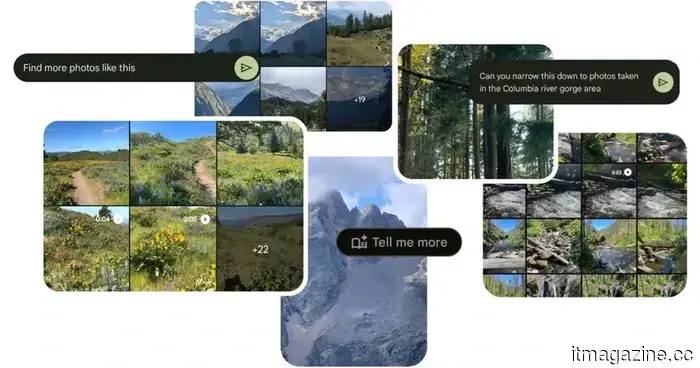 Google Photos is finally making backups and exports somewhat less frustrating.
Google Photos is introducing incremental Takeout exports, which will reduce the size of recurring local backups after the initial full archive. However, the condition is that Photos needs to be the sole product selected during the setup process.
Google Photos is finally making backups and exports somewhat less frustrating.
Google Photos is introducing incremental Takeout exports, which will reduce the size of recurring local backups after the initial full archive. However, the condition is that Photos needs to be the sole product selected during the setup process.
 Mathematicians release the Leiden Declaration to oppose the misuse of their work by AI.
The Leiden Declaration, supported by the IMU, cautions that AI poses risks to the integrity of proofs, attribution, and the independence of research, urging mathematicians to safeguard their field from corporate exploitation.
Palo Alto Networks' CEO compensation was turned down seven times, even with an 800% increase in stock value.
Palo Alto Networks' CEO compensation package of $100 million has faced rejection from shareholders on seven occasions, the highest number in the S&P 500, even as the stock has appreciated by 800% under Nikesh Arora's leadership.
Mathematicians release the Leiden Declaration to oppose the misuse of their work by AI.
The Leiden Declaration, supported by the IMU, cautions that AI poses risks to the integrity of proofs, attribution, and the independence of research, urging mathematicians to safeguard their field from corporate exploitation.
Palo Alto Networks' CEO compensation was turned down seven times, even with an 800% increase in stock value.
Palo Alto Networks' CEO compensation package of $100 million has faced rejection from shareholders on seven occasions, the highest number in the S&P 500, even as the stock has appreciated by 800% under Nikesh Arora's leadership.
Impulse Space secures $500 million, achieving a valuation of $4.26 billion for its orbital transfer vehicles.
Tom Mueller, SpaceX's inaugural employee, secured $500 million for Impulse Space, attaining a valuation of $4.26 billion. The company is developing space tugs for both commercial clients and Golden Dome defense customers.