
Alphabet plans to raise $80 billion in equity to support its AI expenditures.
Alphabet is raising $80 billion in equity, a notably large amount for a company that seldom needs to solicit funds. The parent company of Google announced this plan on Monday to finance what it termed an investment in top-tier AI compute infrastructure to address soaring customer demand. The structure of this raise is as significant as the impressive total.
It consists of three components. The first part is $30 billion in concurrent underwritten public offerings, evenly divided between mandatory convertible preferred stock and common and capital shares.
The second component is a $40 billion at-the-market program, through which Alphabet will gradually sell shares into the market, anticipated to commence in the third quarter.
The third, and most striking element, is a $10 billion private placement to Berkshire Hathaway, which is divided between Class A common stock priced at $351.81 and Class C capital stock at $348.20, according to Alphabet’s filings.
The involvement of Berkshire is what makes this financing narrative particularly intriguing. Warren Buffett’s company has historically been cautious regarding highly valued tech firms and has been slow to invest in capital-intensive projects.
A $10 billion investment in Alphabet’s AI initiatives signifies a strong vote of confidence from an investor not typically drawn to such themes, and it provides a recognizable name to anchor the otherwise market-driven tranche.
Alphabet stated that it plans to utilize the net proceeds from the underwritten offerings and private placement for general corporate purposes, including the capital expenditures necessary for expanding AI infrastructure and global computing capabilities.
While the wording is broad, the intention is clear. The company has projected capital expenditures of approximately $175 billion to $185 billion by 2026, a figure that has significantly increased over recent years as major tech companies strive to enhance their compute capabilities.
This backdrop frames the equity raise. Microsoft, Amazon, and Alphabet are each investing tens of billions of dollars annually in AI infrastructure, and the total costs have escalated to the point where even companies with substantial cash reserves are turning to the equity market to share the financial burden.
By raising equity instead of relying solely on cash or debt, Alphabet can finance the expansion while maintaining a flexible balance sheet, albeit at the expense of some dilution for current shareholders. The mandatory convertible preferred stock is a strategy often employed by companies to mitigate dilution by postponing the conversion into common shares while still contributing to the capital raised today.
What remains uncertain from the announcement is the exact timing of the at-the-market sales beyond the planned third-quarter kickoff, as well as the final amounts for each tranche, which could fluctuate based on the stock price.
These details will unfold in the upcoming quarters. For the moment, the most striking takeaway is straightforward: Alphabet, a company historically renowned for cash generation, is selling $80 billion in stock to sustain its growth.
Other articles
 Sony's FlexStrike fight stick and gaming monitor featuring a charging hook will be available for purchase starting in June.
Sony's eagerly anticipated gaming accessories now have official launch dates. One is designed for fans of fighting games, while the other offers a unique perspective on desk configurations.
Sony's FlexStrike fight stick and gaming monitor featuring a charging hook will be available for purchase starting in June.
Sony's eagerly anticipated gaming accessories now have official launch dates. One is designed for fans of fighting games, while the other offers a unique perspective on desk configurations.
 Apple may be considering the introduction of a feature that allows users to split expenses in iOS 27.
Apple is said to be introducing a feature for built-in bill splitting on iPhones, enabling users to scan receipts and automatically distribute expenses using Apple Cash.
Apple may be considering the introduction of a feature that allows users to split expenses in iOS 27.
Apple is said to be introducing a feature for built-in bill splitting on iPhones, enabling users to scan receipts and automatically distribute expenses using Apple Cash.
 SEALSQ acquires a majority stake in WeCan to develop a post-quantum AI compliance co-pilot for private banking institutions.
Swiss post-quantum crypto company SEALSQ has purchased a majority stake in WeCan Group and has pledged CHF 5 million to expedite the development of an AI compliance co-pilot for private banks such as Pictet, Lombard Odier, and Barclays.
SEALSQ acquires a majority stake in WeCan to develop a post-quantum AI compliance co-pilot for private banking institutions.
Swiss post-quantum crypto company SEALSQ has purchased a majority stake in WeCan Group and has pledged CHF 5 million to expedite the development of an AI compliance co-pilot for private banks such as Pictet, Lombard Odier, and Barclays.
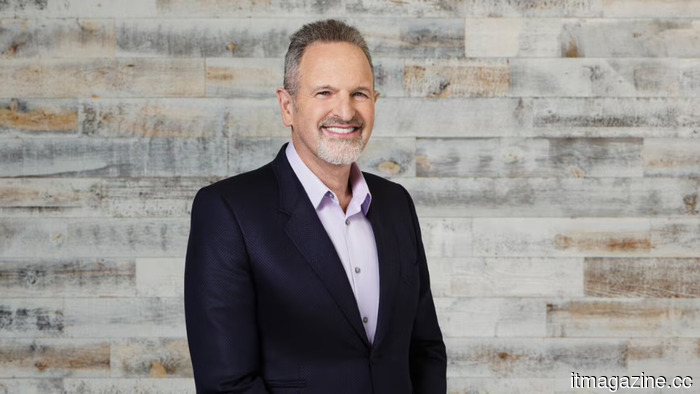 ByteDance and Oracle are utilizing Arm's proprietary AGI CPU, marking the completion of the hyperscaler-x86 transition.
Arm has announced that ByteDance and Oracle are customers for its proprietary AGI CPU, reaffirming its transition from a CPU-IP licensor to a silicon supplier and increasing competitive pressure on Intel and AMD from the hyperscaler side.
ByteDance and Oracle are utilizing Arm's proprietary AGI CPU, marking the completion of the hyperscaler-x86 transition.
Arm has announced that ByteDance and Oracle are customers for its proprietary AGI CPU, reaffirming its transition from a CPU-IP licensor to a silicon supplier and increasing competitive pressure on Intel and AMD from the hyperscaler side.
 Australia's largest bank reports that corporate AI is increasing costs and generating subpar work.
CBA CEO Matt Comyn highlighted the rising costs of AI and the "work slop" that comes with increased complexity in production, which is reversing the advantageous per-token AI economics that characterized 2024-2025.
Australia's largest bank reports that corporate AI is increasing costs and generating subpar work.
CBA CEO Matt Comyn highlighted the rising costs of AI and the "work slop" that comes with increased complexity in production, which is reversing the advantageous per-token AI economics that characterized 2024-2025.
 Wondershare PDFelement: Optimize Your PDF Workflow with One Click — Save Hours Each Day
Handling PDFs frequently involves navigating multiple OCR websites, editing tools, conversion utilities, and approval platforms within the same workflow. Wondershare PDFelement consolidates these processes into a single productivity-oriented workspace designed for document-intensive office tasks.
Wondershare PDFelement: Optimize Your PDF Workflow with One Click — Save Hours Each Day
Handling PDFs frequently involves navigating multiple OCR websites, editing tools, conversion utilities, and approval platforms within the same workflow. Wondershare PDFelement consolidates these processes into a single productivity-oriented workspace designed for document-intensive office tasks.
Alphabet plans to raise $80 billion in equity to support its AI expenditures.
Alphabet intends to secure $80 billion in equity for AI infrastructure, which includes a $10 billion private placement to Berkshire Hathaway and a $40 billion at-the-market program.