
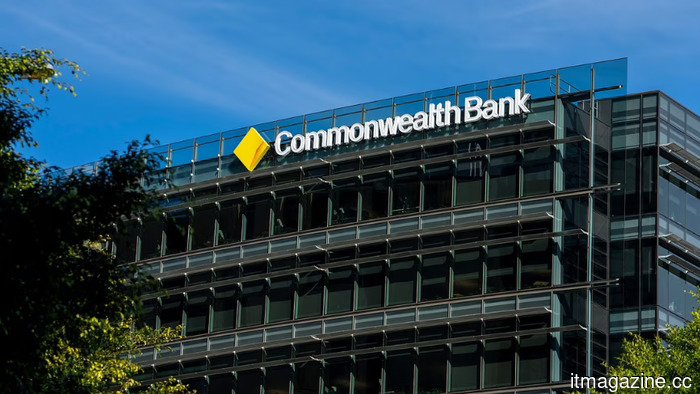
Australia's largest bank reports that corporate AI is increasing costs and generating subpar work.
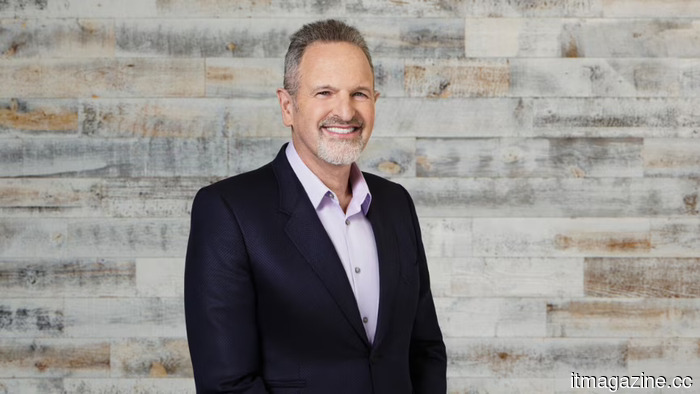
CBA chief executive Matt Comyn characterized the subpar AI output currently prevalent in corporate processes as "work slop," noting that AI costs based on token usage are increasing significantly with task complexity.
In a speech on Monday, Matt Comyn highlighted two issues regarding AI adoption that large corporate buyers have been grappling with privately for several months.
The first issue is that the expense of implementing generative AI within corporate operations is rising much more rapidly than most firms had anticipated as the complexity of tasks increases.
The second issue, described by Comyn as “work slop,” refers to the low-quality AI-generated text, code, and analyses that circulate through internal company systems when employees utilize AI without adequate quality oversight.
The financial implications of these issues will resonate with corporate IT buyers, as token-based pricing—a billing model based on character count utilized by foundational model labs for enterprise clients—has escalated in the last 18 months from a minor expense to a significant operational cost.
Comyn emphasized that costs accumulate more quickly than expected because token usage per task increases non-linearly with the complexity of the task. For example, a basic summarization might use 1,000 tokens, whereas a multi-step reasoning task involving tool utilization could exceed 100,000 tokens for the same value output. Companies that based their AI implementation costs on simpler tasks are now facing bills that reflect the more complex task curve.
This issue is not exclusive to CBA. Last week, Morgan Stanley doubled its forecast for job losses in European banking due in part to evidence that AI cost-benefit ratios are tightening precisely when large institutions expected them to improve. The problem with escalating token costs that Comyn outlined represents the fundamental mechanism—an AI deployment that functioned well during the pilot stage can incur 10 to 100 times the costs once it reaches production complexity.
Consequently, Comyn anticipates a corporate AI procurement squeeze will intensify through 2026, as companies become more cautious with AI-related spending while pressure mounts to demonstrate ROI.
The “work slop” description is the more vivid yet equally critical aspect of the speech. Comyn referred to low-quality AI-generated output that may superficially complete tasks but ultimately undermines subsequent workflows; this is comparable to the “AI slop” issue that arose in social media in 2024 with image generation tools.
For instance, an employee might use ChatGPT to draft a customer email; the email could be grammatically correct yet factually inaccurate. The recipient may interpret the inaccuracies as commitments, leading to a complaint addressed weeks later at a significantly greater cost than if the task had been done without AI assistance.
The context specific to CBA is important. The bank previously announced 90 job reductions this year and another 120 in May, clearly linked to productivity gains from AI, alongside a commitment of A$90 million for reskilling its workforce in AI.
Comyn's comments fit within a CBA strategy that visibly embraces large-scale AI integration; the “work slop” framing is not a defensive critique from a bank that has rejected AI, but an insightful analysis from one of Australia’s major adopters of the technology.
The broader situation among Australian banks is also notable. Over the past month, Sam Altman has argued that a sweeping job loss due to AI is unlikely at the macro level, and labor statistics through March 2026 have thus far supported a cautious viewpoint.
Comyn's observations complicate this view: while macro labor data doesn't yet indicate widespread displacement, the operating margin data in large corporations is beginning to reveal the tradeoffs between AI costs and quality that CBA has now explicitly identified.
The significant implication is that the narrative surrounding AI costs for 2024-2025, which suggested that token prices were decreasing quickly enough to resolve deployment economics, has fundamentally reversed.
Declining per-token costs are being outweighed by increased per-task token consumption as enterprises transition from pilot projects to full-scale applications. The phase of procurement discipline that Comyn predicts will extend through 2026 appears to be a logical outcome of this evidence.
Other articles
 Google's first new smart speaker in six years may soon have a launch date.
Google remained silent about its Gemini-powered Home Speaker during the entirety of I/O 2026.
Google's first new smart speaker in six years may soon have a launch date.
Google remained silent about its Gemini-powered Home Speaker during the entirety of I/O 2026.
 Wondershare PDFelement: Streamline PDF Workflows with a Single Click — Save Hours Daily
Handling PDFs frequently involves a mix of OCR websites, editing applications, conversion tools, and approval systems within the same workflow. Wondershare PDFelement consolidates these processes into a single productivity-oriented workspace designed for document-intensive office activities.
Wondershare PDFelement: Streamline PDF Workflows with a Single Click — Save Hours Daily
Handling PDFs frequently involves a mix of OCR websites, editing applications, conversion tools, and approval systems within the same workflow. Wondershare PDFelement consolidates these processes into a single productivity-oriented workspace designed for document-intensive office activities.
 Samsung One UI 9 will deactivate your fingerprint every time you access the power menu.
One UI 9 Beta 2 automates the lockdown mode on Samsung Galaxy devices, eliminating the need for a manual activation step.
Samsung One UI 9 will deactivate your fingerprint every time you access the power menu.
One UI 9 Beta 2 automates the lockdown mode on Samsung Galaxy devices, eliminating the need for a manual activation step.
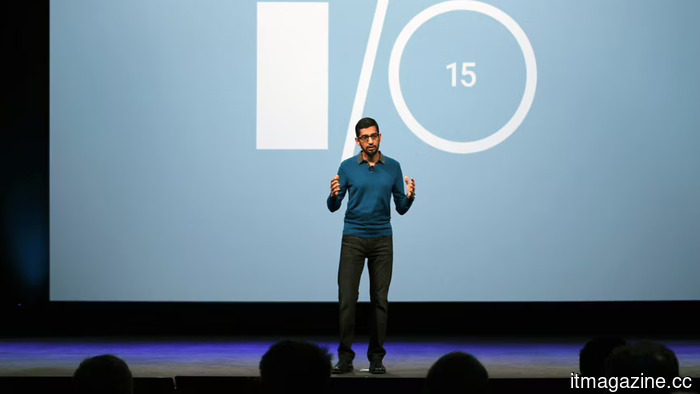 Alphabet plans to raise $80 billion in equity to support its AI expenditures.
Alphabet intends to secure $80 billion in equity for AI infrastructure, which includes a $10 billion private placement to Berkshire Hathaway and a $40 billion at-the-market program.
Alphabet plans to raise $80 billion in equity to support its AI expenditures.
Alphabet intends to secure $80 billion in equity for AI infrastructure, which includes a $10 billion private placement to Berkshire Hathaway and a $40 billion at-the-market program.
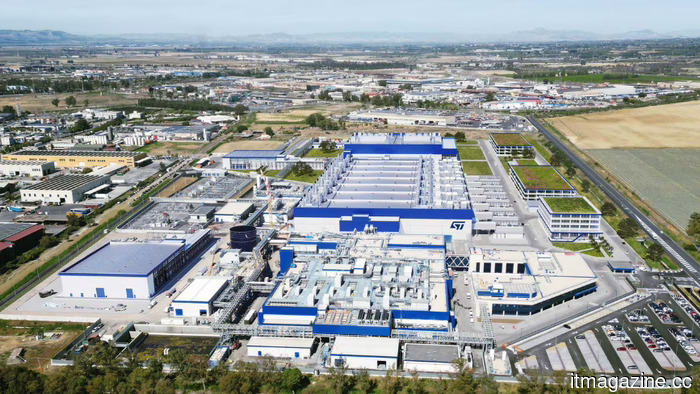 STMicroelectronics increases its revenue projection for data centers to $1 billion.
STMicroelectronics now anticipates around $1 billion in revenue from data centers by 2026, an increase from over $500 million, attributing this growth to demand for AI infrastructure and an agreement with AWS.
STMicroelectronics increases its revenue projection for data centers to $1 billion.
STMicroelectronics now anticipates around $1 billion in revenue from data centers by 2026, an increase from over $500 million, attributing this growth to demand for AI infrastructure and an agreement with AWS.
 ByteDance and Oracle are utilizing Arm's proprietary AGI CPU, marking the conclusion of the hyperscaler-x86 transition.
Arm has officially acknowledged ByteDance and Oracle as clients for its proprietary AGI CPU, confirming its transition from being a CPU-IP licensor to a silicon supplier and increasing competitive pressure on Intel and AMD from hyperscalers.
ByteDance and Oracle are utilizing Arm's proprietary AGI CPU, marking the conclusion of the hyperscaler-x86 transition.
Arm has officially acknowledged ByteDance and Oracle as clients for its proprietary AGI CPU, confirming its transition from being a CPU-IP licensor to a silicon supplier and increasing competitive pressure on Intel and AMD from hyperscalers.
Australia's largest bank reports that corporate AI is increasing costs and generating subpar work.
CBA CEO Matt Comyn highlighted the rising costs of AI and the "work slop" that comes with increased complexity in production, which is reversing the advantageous per-token AI economics that characterized 2024-2025.