
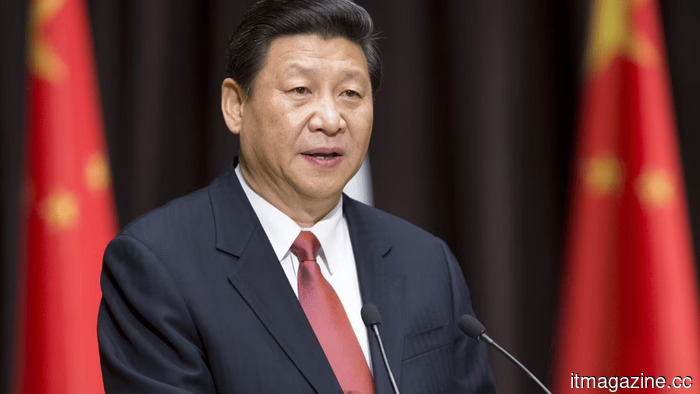
China officially establishes stricter regulations on outbound investments following the Meta-Manus blockade.
Beijing has established a stricter framework for reviewing outbound investments, formalizing the approach that the National Development and Reform Commission (NDRC) employed to block Meta's $2 billion acquisition of the AI startup Manus. This development significantly complicates cross-border AI transactions.
According to a Reuters report on Monday, the updated regulations empower Chinese regulators with a greatly enhanced toolkit to obstruct transactions involving foreign investment in AI and technology, especially when these involve technology, talent, or intellectual property originating from China, irrespective of whether the company is incorporated outside of China.
The Meta-Manus case serves as the model for this new framework. Manus, a startup founded in China that moved its headquarters to Singapore before announcing its acquisition by Meta in December 2025, was halted by the NDRC in April due to national security concerns. The regulator's rationale was notably aggressive, focusing not solely on the company's legal domicile but also considering the origin of Manus's technology, the expertise of its engineering team, and the transfer of its intellectual property from its original Chinese corporate entity.
The new regulations formalize this technology-tracing method, asserting Chinese jurisdiction over international agreements based on the technological origin rather than the corporate registration of the entity involved. Consequently, the restructuring strategies used by many Chinese AI startups over the past five years — relocating to places like Singapore or the Cayman Islands — no longer offer reliable protection from Chinese regulatory scrutiny when accepting foreign acquisition proposals.
Historically, the pattern for Chinese AI talent seeking to monetize their work in the global market involved founding companies in China, restructuring them offshore, and then selling to U.S. buyers. With the NDRC's formalization of the technology-tracing approach, Beijing now has effective veto power over these exits, regardless of where the pertinent corporate entity is located during the transaction.
The Manus acquisition blockage marked the first publicly acknowledged application of China's foreign-investment review mechanism to reverse a cross-border AI deal. The new regulations make this approach the norm, encompassing technology, intellectual property, and key personnel as triggers for review, even if the target of the acquisition is not Chinese.
This framework is part of a broader initiative by Beijing for 2026, which includes heightened travel restrictions on leading AI researchers at private companies, directives for major AI startups like Moonshot and StepFun to decline U.S.-sourced investments without prior approval, and efforts to establish Chinese AI firms within mainland corporate structures.
In contrast, the U.S. has been tightening its outbound investment regulations and expanding semiconductor export controls over the last three years to slow Chinese AI advancement. Evidence of the new framework suggests that Beijing is responding by implementing matching restrictions in the opposite direction, closing off pathways for outbound exits rather than inbound investment.
For Meta, the Manus acquisition appears to be permanently off the table, with the company reportedly writing off the $2 billion in its most recent quarter and scrapping its integration plans. Similarly, other U.S. tech firms contemplating acquisitions of Chinese-origin AI entities through offshore companies now encounter a much higher regulatory threshold. As a result, several pending deals are being restructured or abandoned.
The landscape for Chinese AI businesses is adjusting accordingly. Companies like Moonshot AI and StepFun that had leveraged offshore structures are now considering reincorporation in mainland China, as the previous protections of offshore restructuring have weakened. Additionally, Beijing's domestic IPO framework presents a more straightforward exit strategy for firms willing to operate within China.
As a result, China's AI talent pool is increasingly being retained within the country for the same reasons. The new outbound investment regulations are effective immediately, imposing a significantly higher regulatory barrier for foreign buyers interested in Chinese AI assets than just four months ago.
Other articles
 China has officially established stricter regulations for outbound investments following the Meta-Manus blockade.
China has established stricter regulations for outbound investments that formalize the technology-tracing method employed by the NDRC to reverse Meta’s $2 billion Manus acquisition. Cross-border AI transactions have become significantly more difficult.
China has officially established stricter regulations for outbound investments following the Meta-Manus blockade.
China has established stricter regulations for outbound investments that formalize the technology-tracing method employed by the NDRC to reverse Meta’s $2 billion Manus acquisition. Cross-border AI transactions have become significantly more difficult.
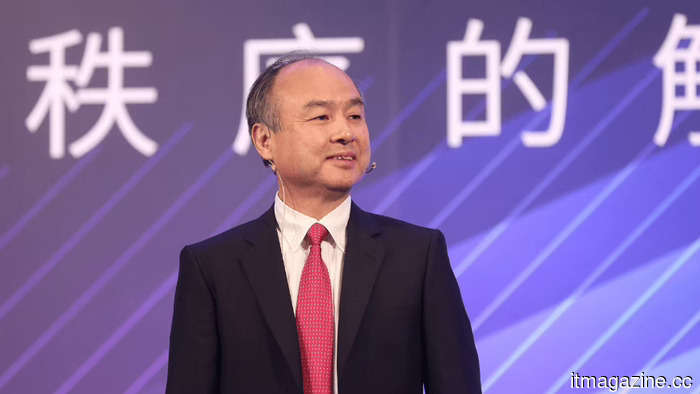 SoftBank surpasses Toyota to become Japan's most valuable company amid the AI surge.
On Monday, SoftBank's market capitalization surpassed Toyota's for the first time in 23 years, fueled by its $65 billion investment in OpenAI and a Nikkei 225 reaching over 67,000.
SoftBank surpasses Toyota to become Japan's most valuable company amid the AI surge.
On Monday, SoftBank's market capitalization surpassed Toyota's for the first time in 23 years, fueled by its $65 billion investment in OpenAI and a Nikkei 225 reaching over 67,000.
 Snapchat Planets: What is their sequence, and what do they represent?
Snapchat Planets transforms your friendship rankings into a miniature social solar system, where being Mercury is prestigious, while being Neptune could be a bit hurtful.
Snapchat Planets: What is their sequence, and what do they represent?
Snapchat Planets transforms your friendship rankings into a miniature social solar system, where being Mercury is prestigious, while being Neptune could be a bit hurtful.
 The prompt box is consuming Photoshop.
AI image editors are shifting the creative process to feel more like providing directives rather than operating software. However, the prompt box introduces its own set of challenges.
The prompt box is consuming Photoshop.
AI image editors are shifting the creative process to feel more like providing directives rather than operating software. However, the prompt box introduces its own set of challenges.
 The US takes steps to eliminate the loophole that allows Nvidia's leading chips to be shipped to Chinese companies overseas.
The US Commerce Department has broadened the chip-export license regulations to encompass Chinese-based companies regardless of their location, thereby addressing a loophole that has existed for a year.
The US takes steps to eliminate the loophole that allows Nvidia's leading chips to be shipped to Chinese companies overseas.
The US Commerce Department has broadened the chip-export license regulations to encompass Chinese-based companies regardless of their location, thereby addressing a loophole that has existed for a year.
 ASML spinout Invisix has secured €20 million to explore what optics cannot visualize within the chips.
Eindhoven's Invisix has secured a €20 million seed investment to introduce soft X-ray metrology, based on Nobel Prize-winning physics, into large-scale chip production.
ASML spinout Invisix has secured €20 million to explore what optics cannot visualize within the chips.
Eindhoven's Invisix has secured a €20 million seed investment to introduce soft X-ray metrology, based on Nobel Prize-winning physics, into large-scale chip production.
China officially establishes stricter regulations on outbound investments following the Meta-Manus blockade.
China has established stricter regulations for outbound investments that formalize the technology-tracing method previously employed by the NDRC to block Meta's $2 billion Manus acquisition. Securing cross-border AI transactions has become significantly more challenging.