
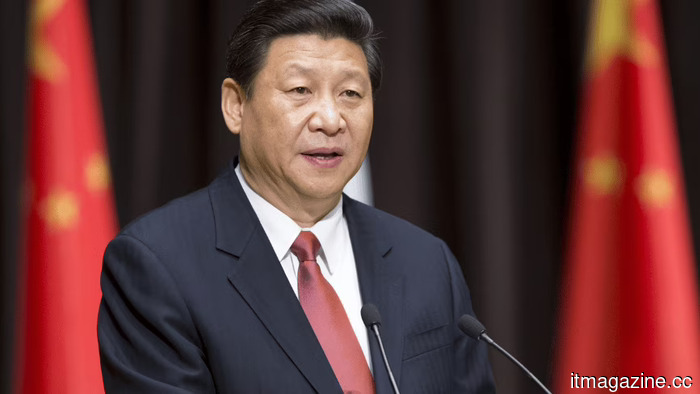
China has officially established stricter regulations for outbound investments following the Meta-Manus blockade.
Beijing has established a stricter framework for reviewing outbound investments, formalising the legal and administrative tactics that the National Development and Reform Commission (NDRC) employed to block Meta’s $2 billion purchase of the AI startup Manus. This new set of rules, reported by Reuters on Monday, equips Chinese regulators with a significantly enhanced set of tools to obstruct cross-border AI and technology transactions, especially those involving technology, personnel, or intellectual property originating from China, regardless of the location of the involved company.
The Meta-Manus case serves as the foundation for this new framework. Manus, a startup founded in China that moved its headquarters to Singapore before announcing its acquisition by Meta in December 2025, was initially halted by the NDRC on national security grounds in April. The NDRC took a proactive stance by examining the origins of Manus’s technology rather than just its legal registration. They considered where the technology was developed, where the engineering team's expertise was built, and how the intellectual property was transferred from the original Chinese entity.
The updated regulations formalise this technology-tracing method, establishing Chinese jurisdiction over international deals based on the origin of the technology rather than merely the corporate registration. As a result, the restructuring tactics many Chinese AI startups had previously relied on, such as moving to Singapore or the Cayman Islands, no longer effectively shield companies from Chinese regulatory scrutiny when accepting foreign acquisition offers.
The former exit strategy, which involved starting in China, restructuring offshore, and selling to a U.S. buyer, has been the common pathway for Chinese AI talent seeking to profit from their work internationally. Now that the NDRC's technology-tracing method is official, Beijing retains significant veto power over such exits, irrespective of the jurisdiction in which the corporate entity resides at the time of the transaction.
The Manus transaction was the first instance confirmed publicly where China’s foreign-investment security review mechanism was used to intervene in a cross-border AI deal. The new regulations have established this approach as the norm rather than an exception, explicitly identifying technology, intellectual property, and key personnel as review triggers, even if the formal acquisition target is not Chinese.
This framework is part of a broader initiative by Beijing aimed for 2026, which also includes heightened travel restrictions on leading AI researchers from private companies, guidance for prominent AI startups, such as Moonshot and StepFun, to refuse U.S.-sourced investment without prior approval, and an effort to reinforce the presence of Chinese AI companies within mainland corporate structures.
In contrast, the U.S. has implemented clearer and progressively stricter outbound investment policies and expanded export controls on semiconductors over the last three years, aiming to restrict Chinese advancements in AI. Beijing’s response, as indicated by the new framework, is to enact reciprocal restrictions; China is now focusing on preventing AI capabilities from leaving the country rather than facilitating inbound capital.
For Meta, the Manus acquisition appears to be permanently scrapped, with reports indicating that the company has written off the $2 billion investment in its most recent quarter and has relinquished any plans for operational integration. Other U.S. tech firms considering acquisitions of Chinese-origin AI companies through offshore entities now face a significant regulatory hurdle. Several pending deals are reportedly being restructured or abandoned in light of these new rules.
The landscape of Chinese AI commerce is thus shifting. Companies like Moonshot AI and StepFun, previously using offshore structures, are exploring the possibility of reincorporating in China, motivated by the diminished efficacy of the offshore protection strategy and the clearer exit options presented by Beijing's domestic IPO framework. Consequently, China is actively working to retain its AI talent within the country.
The new outbound-investment regulations are effective immediately, imposing a considerably higher regulatory burden on foreign buyers looking to acquire Chinese AI-origin assets compared to just four months ago.
Other articles
 Apple's smart glasses are anticipated to arrive towards the end of 2027 following some delays.
According to Bloomberg's Gurman, the release date for Apple's smart glasses has been pushed back from early 2027 to late 2027.
Apple's smart glasses are anticipated to arrive towards the end of 2027 following some delays.
According to Bloomberg's Gurman, the release date for Apple's smart glasses has been pushed back from early 2027 to late 2027.
 The prompt box is consuming Photoshop.
AI image editors are shifting the creative process to feel more like providing directives rather than operating software. However, the prompt box introduces its own set of challenges.
The prompt box is consuming Photoshop.
AI image editors are shifting the creative process to feel more like providing directives rather than operating software. However, the prompt box introduces its own set of challenges.
 The prompt box is consuming Photoshop.
AI image editors are transforming creative tasks, making them feel less like traditional software use and more akin to providing instructions. However, the prompt box introduces its own type of challenge.
The prompt box is consuming Photoshop.
AI image editors are transforming creative tasks, making them feel less like traditional software use and more akin to providing instructions. However, the prompt box introduces its own type of challenge.
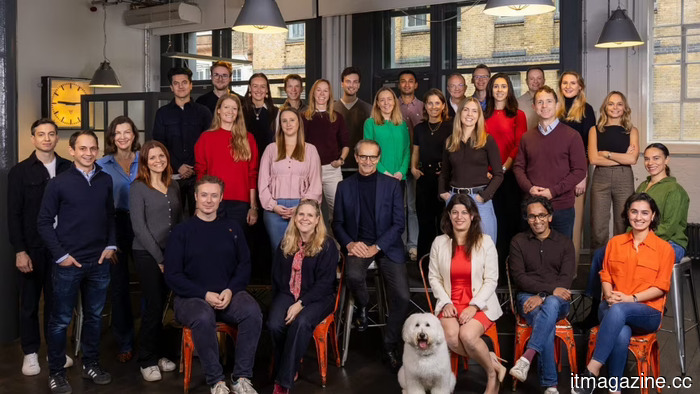 Founders of Revolut, Mistral, and Wayve support Balderton’s initiative for ‘Built in Europe.’
Balderton Capital has initiated 'Built in Europe', a five-city advertising campaign and job platform supported by over 100 founders from companies including Revolut, Mistral, Wayve, among others.
Founders of Revolut, Mistral, and Wayve support Balderton’s initiative for ‘Built in Europe.’
Balderton Capital has initiated 'Built in Europe', a five-city advertising campaign and job platform supported by over 100 founders from companies including Revolut, Mistral, Wayve, among others.
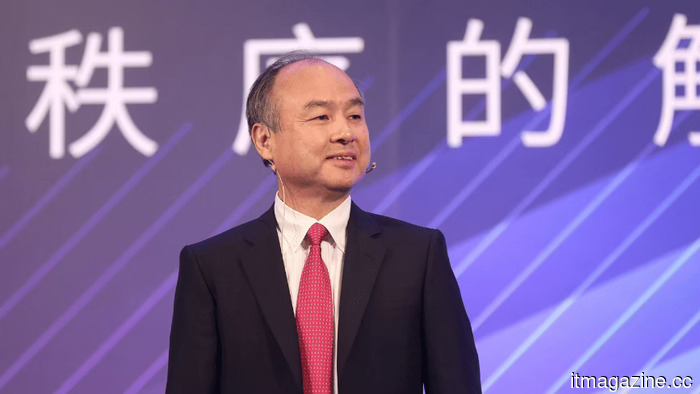 SoftBank surpasses Toyota to become Japan’s most valuable firm amid the AI surge.
On Monday, SoftBank's market capitalization surpassed that of Toyota for the first time in 23 years, propelled by its $65 billion investment in OpenAI and the Nikkei 225 index exceeding 67,000.
SoftBank surpasses Toyota to become Japan’s most valuable firm amid the AI surge.
On Monday, SoftBank's market capitalization surpassed that of Toyota for the first time in 23 years, propelled by its $65 billion investment in OpenAI and the Nikkei 225 index exceeding 67,000.
 Apple's smart glasses are anticipated to be released toward the end of 2027 following some delays.
According to Bloomberg's Gurman, Apple's smart glasses have been postponed from an initial shipping date in early 2027 to late 2027.
Apple's smart glasses are anticipated to be released toward the end of 2027 following some delays.
According to Bloomberg's Gurman, Apple's smart glasses have been postponed from an initial shipping date in early 2027 to late 2027.
China has officially established stricter regulations for outbound investments following the Meta-Manus blockade.
China has established stricter regulations for outbound investments that formalize the technology-tracing method employed by the NDRC to reverse Meta’s $2 billion Manus acquisition. Cross-border AI transactions have become significantly more difficult.