
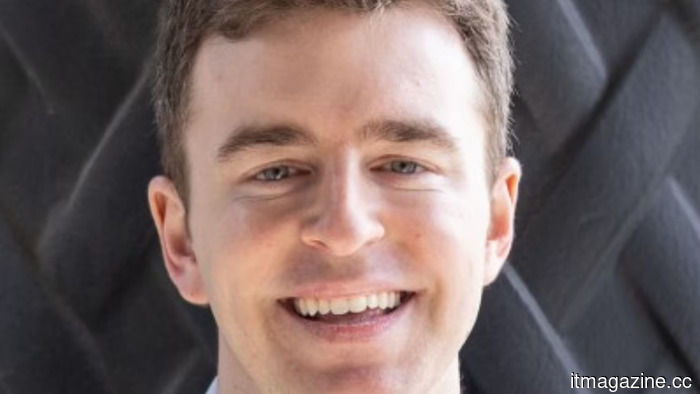
Former DeepMind researchers have secured $50 million to develop AI that determines which scientific questions are worth exploring.
Inherent, an AI lab based in London, has raised $50 million in a seed funding round co-led by Index Ventures and Radical Ventures to develop self-improving AI aimed at scientific discovery. The investment also saw participation from NVentures, Ex/Ante, Metaplanet, Macroscopic Ventures, and Mythos Ventures, marking one of the largest seed rounds for AI in Europe in 2026.
The founding team includes talent from DeepMind, Microsoft, and Reka AI, with Tantum Collins and Edward Hughes previously working together on collaborative AI research at DeepMind. Co-founder Louis Kirsch has a background at DeepMind, while Kaloyan Aleksiev previously worked at both Reka AI and Microsoft. Notably, Collins brings a policy perspective uncommon among AI lab founders, having previously been involved in AI policy at the Biden White House before co-founding Inherent. Additionally, Matt Clifford, co-founder of Entrepreneurs First and former UK AI tsar, serves as an adviser.
Inherent is developing a platform called Faraday, named after the scientist, which focuses not on answering questions more quickly but on identifying which questions are worth pursuing initially. Danny Rimer from Index Ventures pointed out that while most AI today is designed to answer questions, it lacks the ability to discern which ones are truly valuable—an aspect that Faraday aims to address.
Faraday will integrate human researchers with AI agents that can iteratively enhance themselves while tackling challenging scientific issues. Inherent describes this as "AI-native science," which is envisioned to differ significantly from the established scientific method of the last 400 years. Index Ventures characterized this approach as “messier” and less straightforward but capable of producing remarkable outcomes, suggesting that the primary value of advanced AI lies not in automating existing processes but in facilitating breakthroughs that human researchers alone could not achieve.
Established as a public benefit corporation, Inherent is legally required to consider its societal impact in addition to shareholder profits, a structure that is uncommon among venture-backed AI labs. This indicates that the founders perceive governance as a potential competitive advantage.
European AI startups are increasingly demonstrating their capability to secure funding at levels previously exclusive to Silicon Valley. Inherent’s $50 million seed funding complements other significant European raises, such as Peec AI’s $10 million in six months, Lovable’s $100 million in a month, and Mistral’s $300 million ARR, highlighting a narrowing gap in funding between Europe and the U.S. for companies developing genuinely innovative technologies.
Anthropic’s Glasswing project has shown that advanced AI can identify vulnerabilities more rapidly than humans can address them. Inherent believes a similar principle applies to scientific discovery, where AI agents can explore hypothesis spaces quicker than human researchers, who will provide necessary judgment, intuition, and ethical oversight.
With a combination of DeepMind research expertise and White House policy experience, the team is well-positioned to appeal to both the scientific community and government bodies that support basic research. The success of Faraday in fulfilling the vision of AI-native science will take time to assess, but the $50 million funding allows the team the opportunity to explore this potential.
Other articles
 Nvidia acquired Groq for $20 billion and recruited its leading engineers. Now, Groq is looking to raise $650 million for its remaining resources.
Groq's current investors were bought out in what's known as a not-acqui-hire. They have now been requested to reinvest $650 million into the remaining inference cloud operations.
HeartFocus Link integrates AI cardiac ultrasound into any cart system.
French medtech DESKi has introduced HeartFocus Link, which enables AI-assisted cardiac imaging on any cart-based ultrasound through a tablet and HDMI connection, addressing the worldwide shortage of sonographers.
Nvidia acquired Groq for $20 billion and recruited its leading engineers. Now, Groq is looking to raise $650 million for its remaining resources.
Groq's current investors were bought out in what's known as a not-acqui-hire. They have now been requested to reinvest $650 million into the remaining inference cloud operations.
HeartFocus Link integrates AI cardiac ultrasound into any cart system.
French medtech DESKi has introduced HeartFocus Link, which enables AI-assisted cardiac imaging on any cart-based ultrasound through a tablet and HDMI connection, addressing the worldwide shortage of sonographers.
 AI is undermining summer internships. The entry-level pathway that shaped careers is faltering.
Tech internship listings have decreased by 30% since 2023. A survey conducted by Drexel indicates that more companies are reducing their workforce rather than hiring more. AI is now handling the tasks that interns previously performed.
AI is undermining summer internships. The entry-level pathway that shaped careers is faltering.
Tech internship listings have decreased by 30% since 2023. A survey conducted by Drexel indicates that more companies are reducing their workforce rather than hiring more. AI is now handling the tasks that interns previously performed.
 Parloa invests $350 million through collaborations with SAP, Microsoft, and OpenAI.
Parloa, established in Berlin, is broadening its AI agent platform by forming strategic partnerships with SAP, Microsoft, OpenAI, Five9, and Epic, following the successful raising of $350 million at a valuation of $3 billion.
Parloa invests $350 million through collaborations with SAP, Microsoft, and OpenAI.
Parloa, established in Berlin, is broadening its AI agent platform by forming strategic partnerships with SAP, Microsoft, OpenAI, Five9, and Epic, following the successful raising of $350 million at a valuation of $3 billion.
 Microsoft warned a security researcher of potential criminal charges, sparking outrage within the cybersecurity community.
A researcher disclosed unaddressed vulnerabilities in Defender and BitLocker following an alleged account revocation by Microsoft. In response, Microsoft activated its Digital Crimes Unit.
Microsoft warned a security researcher of potential criminal charges, sparking outrage within the cybersecurity community.
A researcher disclosed unaddressed vulnerabilities in Defender and BitLocker following an alleged account revocation by Microsoft. In response, Microsoft activated its Digital Crimes Unit.
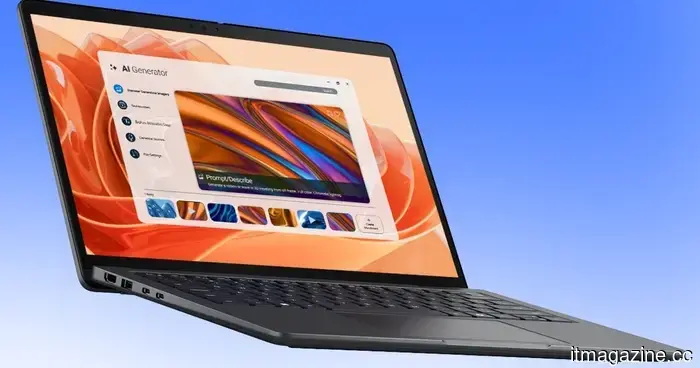 Dell reinforces its commitment to 5G cellular connectivity for its high-end business laptops in the US.
Dell's pre-Computex 2026 laptop announcement features 5G cellular connectivity as a key focus of its high-end range.
Dell reinforces its commitment to 5G cellular connectivity for its high-end business laptops in the US.
Dell's pre-Computex 2026 laptop announcement features 5G cellular connectivity as a key focus of its high-end range.
Former DeepMind researchers have secured $50 million to develop AI that determines which scientific questions are worth exploring.
The London-based AI lab Inherent has come out of stealth mode, with Index Ventures and Radical Ventures as co-leaders. Nvidia Ventures also took part, and Matt Clifford serves as an advisor.