
Nvidia acquired Groq for $20 billion and recruited its leading engineers. Now, Groq is looking to raise $650 million for its remaining resources.
Groq is securing $650 million from its current investors to support its inference cloud, according to Axios. This fundraising follows Nvidia's $20 billion not-acqui-hire six months earlier, which compensated Groq’s investors in cash, recruited several senior engineers, and licensed Groq’s hardware technology.
The investors who received payouts in December are now being invited to reinvest. Disruptive and Infinitium have pledged to back the fundraising effort if other existing investors opt not to participate. Thus, the financing is essentially assured.
Interim leadership of the company is provided by CEO Adam Winter and CFO Matt Eng, following the departure of multiple senior staff members to Nvidia due to the December deal. Currently, Groq is focused on its inference cloud business, which enables developers and businesses to run inference-intensive applications on its proprietary Language Processing Unit hardware.
Inference refers to the calculations performed after an AI prompt is given, and it has grown into a significant market, overshadowing model training. Every interaction with AI, such as queries to ChatGPT or responses from Claude, requires inference computing. Economically, purpose-built chips that offer tokens at lower costs and faster speeds than general-purpose GPUs are advantageous.
Groq’s LPU architecture was specifically engineered for this type of workload. The company has delivered its chips to various model providers and cloud clients, consistently outperforming Nvidia’s GPU-based inference in terms of speed measured in tokens per second at comparable price points.
The December deal crafted by Nvidia was atypical. It didn't entail a full acquisition; instead, Nvidia compensated Groq’s investors in cash at what would have been its largest purchase price, licensed Groq’s chip technology, and recruited senior engineers without fully absorbing the company. Consequently, Groq has undergone a financial reset, experienced a loss of senior talent, and is now seeking to rebuild around a more focused yet potentially profitable inference-as-a-service model.
The inference chip sector is currently drawing significant investment. Cerebras recently went public with a valuation of $95 billion based on its inference-optimized technology. Fractile secured $220 million in London for inference chips that integrate compute and memory on the same die. Google is producing millions of Ironwood TPUs designed for inference tasks.
This week, DeepSeek announced a permanent 75% price reduction for its V4 Pro offering, which adversely affects the revenue-per-token structure that inference cloud providers rely on. Groq’s business model depends on its hardware providing tokens at a low enough cost to effectively compete with both GPU-based inference and the pricing of the model providers' APIs. The price drop from DeepSeek intensifies that competitive challenge.
The $650 million investment signifies a belief that dedicated inference hardware will maintain its edge over GPUs, despite Nvidia’s ongoing efforts to enhance its own inference capabilities. Nvidia's Blackwell and forthcoming Vera Rubin architectures aim to narrow the performance gap that has allowed companies like Groq to thrive.
The central question posed by this $650 million is whether Groq can restore its engineering expertise, expand its inference cloud, and sustain a cost advantage amid Nvidia’s hardware advancements and the aggressive price reductions from model providers. The investors who profited from the $20 billion deal are now being asked to place new bets on a smaller, streamlined version of Groq. Two of those investors have committed to backing the fundraising round, reflecting either strong confidence or a sense of obligation.
Other articles
 Parloa invests $350 million through partnerships with SAP, Microsoft, and OpenAI.
Parloa, established in Berlin, is enhancing its AI agent platform by forming strategic partnerships with SAP, Microsoft, OpenAI, Five9, and Epic, following a successful fundraising of $350 million at a valuation of $3 billion.
HeartFocus Link integrates AI cardiac ultrasound into any cart system.
French medtech DESKi has introduced HeartFocus Link, which enables AI-assisted cardiac imaging on any cart-based ultrasound through a tablet and HDMI connection, addressing the worldwide shortage of sonographers.
Parloa invests $350 million through partnerships with SAP, Microsoft, and OpenAI.
Parloa, established in Berlin, is enhancing its AI agent platform by forming strategic partnerships with SAP, Microsoft, OpenAI, Five9, and Epic, following a successful fundraising of $350 million at a valuation of $3 billion.
HeartFocus Link integrates AI cardiac ultrasound into any cart system.
French medtech DESKi has introduced HeartFocus Link, which enables AI-assisted cardiac imaging on any cart-based ultrasound through a tablet and HDMI connection, addressing the worldwide shortage of sonographers.
 Microsoft warned a security researcher of potential criminal charges, sparking outrage within the cybersecurity community.
A researcher disclosed unaddressed vulnerabilities in Defender and BitLocker following an alleged account revocation by Microsoft. In response, Microsoft activated its Digital Crimes Unit.
Microsoft warned a security researcher of potential criminal charges, sparking outrage within the cybersecurity community.
A researcher disclosed unaddressed vulnerabilities in Defender and BitLocker following an alleged account revocation by Microsoft. In response, Microsoft activated its Digital Crimes Unit.
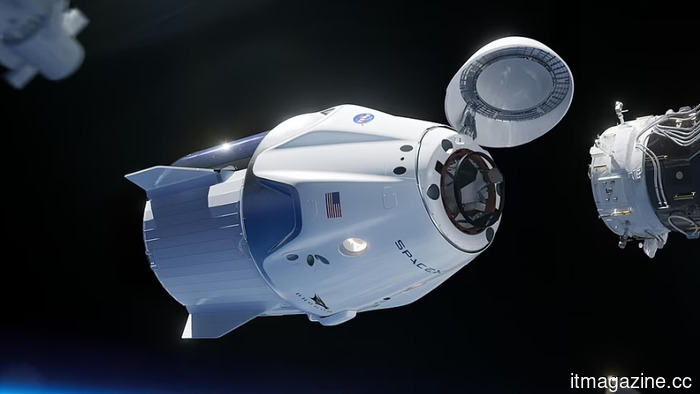 SpaceX has recently secured its second Golden Dome contract, valued at $4.16 billion.
Two days after securing a $2.29 billion backbone contract, the Space Force granted SpaceX the AMTI satellite deal. SpaceX's total for Golden Dome projects now amounts to $6.45 billion.
SpaceX has recently secured its second Golden Dome contract, valued at $4.16 billion.
Two days after securing a $2.29 billion backbone contract, the Space Force granted SpaceX the AMTI satellite deal. SpaceX's total for Golden Dome projects now amounts to $6.45 billion.
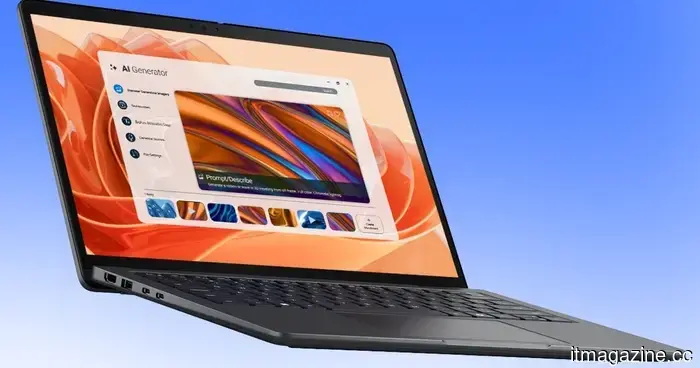 Dell reinforces its commitment to 5G cellular connectivity for its high-end business laptops in the US.
Dell's pre-Computex 2026 laptop announcement features 5G cellular connectivity as a key focus of its high-end range.
Dell reinforces its commitment to 5G cellular connectivity for its high-end business laptops in the US.
Dell's pre-Computex 2026 laptop announcement features 5G cellular connectivity as a key focus of its high-end range.
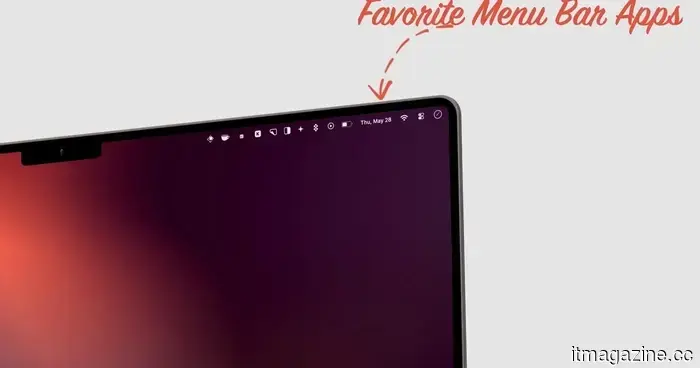 5 Menu Bar apps that have secured a permanent place on my Mac in 2026
The menu bar on my Mac is valuable space, and not every application deserves to occupy it. In 2026, these five apps were selected and have truly enhanced my daily workflow.
5 Menu Bar apps that have secured a permanent place on my Mac in 2026
The menu bar on my Mac is valuable space, and not every application deserves to occupy it. In 2026, these five apps were selected and have truly enhanced my daily workflow.
Nvidia acquired Groq for $20 billion and recruited its leading engineers. Now, Groq is looking to raise $650 million for its remaining resources.
Groq's current investors were bought out in what's known as a not-acqui-hire. They have now been requested to reinvest $650 million into the remaining inference cloud operations.