
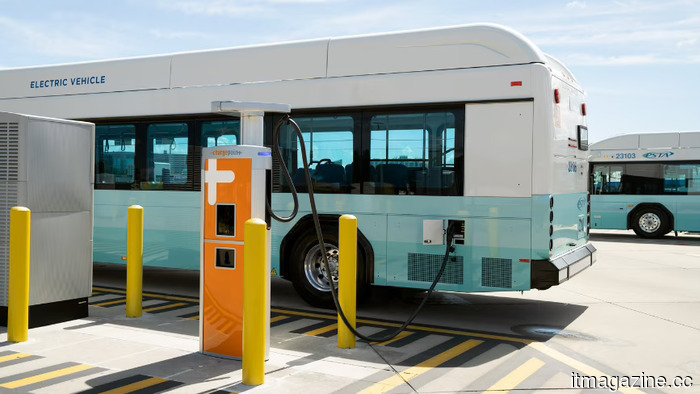
ChargePoint partners with Powers Parts to provide charging solutions for transit electric buses.
ChargePoint and Powers Parts have teamed up to provide charging hardware, software, and fleet telematics to transit agencies operating PhoenixEV electric buses. This partnership aims to assist operators facing service gaps following Proterra's bankruptcy in 2023 and allows ChargePoint's platform to be routed through Powers Parts' established distribution network.
The collaboration between ChargePoint and Powers Parts, a nationwide distributor of electric vehicle components and parts for fleet replacement, will enable the direct sale of ChargePoint charging hardware, software, and fleet management services to transit agencies across North America. This initiative specifically targets agencies using E2 and ZX5 electric buses manufactured by PhoenixEV, which acquired Proterra's transit bus assets during its bankruptcy proceedings in early 2024 for $3.5 million.
This partnership addresses a particular challenge faced by transit agencies that procured Proterra’s E2 and ZX5 buses prior to the 2023 bankruptcy. Many of these agencies are now managing these vehicles with insufficient service, charging support, or fleet management solutions. Powers Parts was founded to supply replacement parts to these operators, and the integration of ChargePoint’s DC fast charging infrastructure and telematics platform into its distribution network provides these agencies with a streamlined procurement process for both parts and charging solutions.
Details of the partnership
Transit operators can now acquire ChargePoint’s charging stations, fleet management software, and telematics services via Powers Parts’ distribution network. ChargePoint’s telematics platform is compatible with all types of vehicles and charging stations, regardless of the manufacturer, enabling real-time insights into battery health, route efficiency, and total cost of ownership. The software complies with OCPP standards, allowing it to manage charging hardware from third parties as well as ChargePoint’s own stations.
The telematics system is also effective for mixed-fuel fleets, which is significant because many transit agencies are transitioning to electric vehicles gradually rather than replacing entire fleets simultaneously. An agency operating a combination of diesel, compressed natural gas, and electric buses can oversee all three types through a unified interface.
The aftermath of Proterra
Proterra entered Chapter 11 bankruptcy in August 2023 after enduring years of losses, despite being a leading manufacturer of electric buses in the U.S. Its transit bus division was sold to Phoenix Motorcars, now known as PhoenixEV, for a mere $3.5 million, while Volvo acquired Proterra’s battery and powertrain division for about $223 million. The charging infrastructure segment was sold separately.
This bankruptcy left transit agencies that had invested in Proterra buses in a precarious situation. The support for replacement parts, software updates, and charging infrastructure, which was previously managed by a single provider, became fragmented across multiple companies or was entirely inaccessible. Although PhoenixEV took over the bus platform and manufacturing rights, the overall service framework had to be reconstructed from the ground up.
Challenges in transit electrification
The partnership comes at a challenging time for electric transit in the U.S. The Federal Transit Administration's Low or No Emission Vehicle Program has allocated $5.6 billion over five years, from 2022 to 2026, prompting numerous agencies to procure electric buses. However, the shift has revealed significant operational hurdles, such as advertised battery range falling short in extreme weather, prolonged charging times that disrupt schedules, and a limited aftermarket supply chain for parts.
California, the nation's leader in electric bus adoption, has already postponed some of its zero-emission transit mandates to allow the market to stabilize. Agencies in colder regions have reported winter range reductions of over 30%, necessitating additional buses to cover the same routes.
ChargePoint's initiative in fleet management
For ChargePoint, this partnership marks an extension of its efforts in fleet and transit charging, complementing its larger consumer and commercial operations. The company reported total revenue of $411 million for the fiscal year 2026 and operates more than 1.37 million public and private charging ports globally. The share of electric buses within this network is growing as transit agencies electrify under federal mandates and funding incentives.
CEO Rick Wilmer has noted that transit is "crucial to the broader electrification of transportation" and mentioned that the collaboration with Powers Parts enhances ChargePoint’s reach within the transit space. While the agreement is primarily a distribution contract rather than a technological innovation, it provides a tangible improvement for agencies dealing with the fallout from Proterra’s downfall by offering a unified channel for parts, charging, and fleet software.
Other articles
 Tesla’s biggest competitor introduces self-driving technology with comprehensive crash coverage at a much lower price.
BYD is promoting its God’s Eye assisted-driving system by offering a crash-cost coverage guarantee and a 12,000 yuan upgrade fee, which is lower than Tesla’s assisted-driving package.
Tesla’s biggest competitor introduces self-driving technology with comprehensive crash coverage at a much lower price.
BYD is promoting its God’s Eye assisted-driving system by offering a crash-cost coverage guarantee and a 12,000 yuan upgrade fee, which is lower than Tesla’s assisted-driving package.
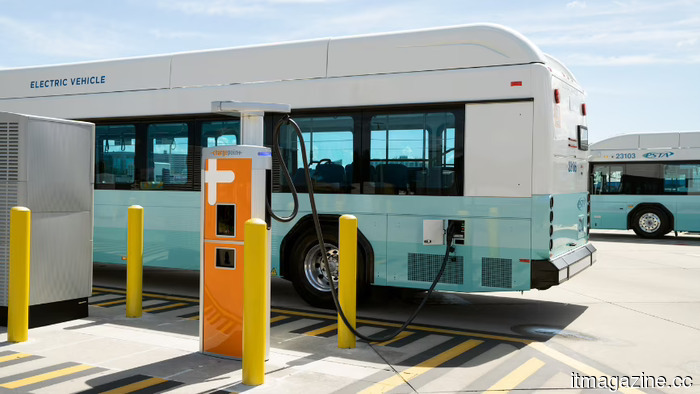 ChargePoint partners with Powers Parts for electric bus transit charging.
ChargePoint and Powers Parts have collaborated to offer charging solutions and fleet telematics to transit agencies operating PhoenixEV buses, filling the service void created by Proterra's bankruptcy.
ChargePoint partners with Powers Parts for electric bus transit charging.
ChargePoint and Powers Parts have collaborated to offer charging solutions and fleet telematics to transit agencies operating PhoenixEV buses, filling the service void created by Proterra's bankruptcy.
 As AI proliferates with rapid responses, studies indicate that the essence of the internet is fading.
A recent joint research effort by UC Riverside scientists reveals that as an increasing number of individuals rely on AI for information, the internet is diminishing in the emotional richness and human reasoning that initially made it valuable to explore.
As AI proliferates with rapid responses, studies indicate that the essence of the internet is fading.
A recent joint research effort by UC Riverside scientists reveals that as an increasing number of individuals rely on AI for information, the internet is diminishing in the emotional richness and human reasoning that initially made it valuable to explore.
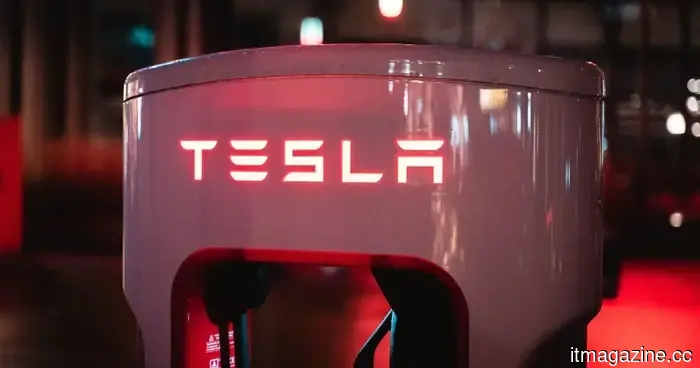 In China, low-cost sodium batteries are already achieving performance levels comparable to those of Tesla.
A commercial sodium-ion battery developed in China is nearing performance levels similar to those of Tesla, utilizing more affordable materials and a double-aluminum structure that has the potential to compete with lithium-ion batteries in cost-sensitive electric vehicles and grid storage applications.
In China, low-cost sodium batteries are already achieving performance levels comparable to those of Tesla.
A commercial sodium-ion battery developed in China is nearing performance levels similar to those of Tesla, utilizing more affordable materials and a double-aluminum structure that has the potential to compete with lithium-ion batteries in cost-sensitive electric vehicles and grid storage applications.
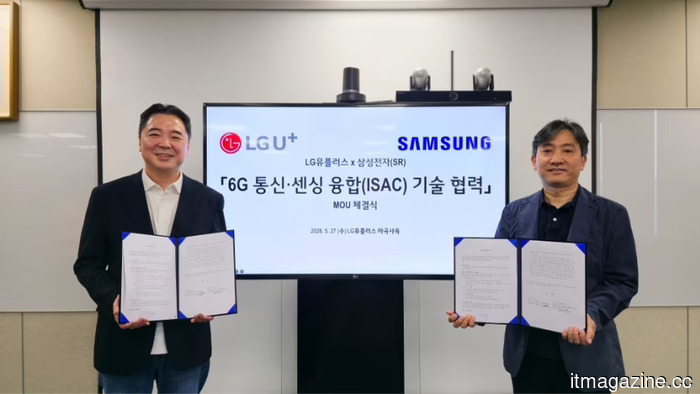 Samsung and LG Uplus will conduct tests on 6G sensing technology that serves as a replacement for radar.
Samsung and LG Uplus will trial ISAC, a 6G technology that transforms cell towers into environmental sensors by analyzing reflected wireless signals, eliminating the need for specialized LiDAR and radar systems.
CoStar acquires Zonda for $800 million to finalize its real estate data kingdom.
CoStar has purchased the new-home data platform Zonda for $800 million in cash, completing the final piece of a real estate information empire established through over 40 acquisitions amounting to $7.3 billion.
Samsung and LG Uplus will conduct tests on 6G sensing technology that serves as a replacement for radar.
Samsung and LG Uplus will trial ISAC, a 6G technology that transforms cell towers into environmental sensors by analyzing reflected wireless signals, eliminating the need for specialized LiDAR and radar systems.
CoStar acquires Zonda for $800 million to finalize its real estate data kingdom.
CoStar has purchased the new-home data platform Zonda for $800 million in cash, completing the final piece of a real estate information empire established through over 40 acquisitions amounting to $7.3 billion.
ChargePoint partners with Powers Parts to provide charging solutions for transit electric buses.
ChargePoint and Powers Parts have teamed up to provide charging solutions and fleet telematics to transit agencies operating PhoenixEV buses, filling the service void created by Proterra's bankruptcy.