
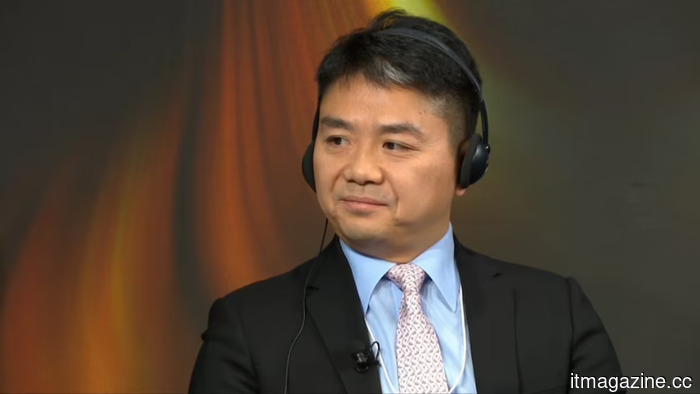
The founder of JD.com pledges to safeguard 900,000 jobs from AI. However, his approach to warehousing suggests a different direction.
Liu Qiangdong’s commitment to protect JD.com’s employees from automation clashes with his vision of an 'unmanned era’ and a flagship warehouse already operating with just four workers. According to a Bloomberg report, the founder of the Chinese e-commerce giant JD.com assured during an internal address this week that the company’s workforce of 900,000 would be safeguarded from AI and robotics, as referenced in a video shared on Chinese social media.
Liu stated that JD.com will “do everything possible to protect employment for hundreds of thousands of staff, including blue-collar workers,” despite the company's rapid adoption of AI and autonomous logistics. This pledge aligns with the current environment in China, where major employers are expected to prioritize job security.
In a series of rulings in 2026, Chinese courts determined that companies cannot dismiss employees solely because AI can perform their tasks, clarifying that the adoption of AI does not constitute an unforeseeable circumstance under the Labour Contract Law that would justify termination. Earlier this year, Beijing’s primary governing bodies established protections for gig workers, affecting more than 200 million platform workers, with algorithm-transparency regulations set to take effect in 2027. Consequently, the political repercussions for a large employer in China laying off workers due to AI are significantly high.
However, Liu’s recent statements contradict his previous positions from the past year. At the 2025 World Internet Conference in Wuzhen, he claimed that in the upcoming “unmanned era,” individuals may need to work just one hour per week and suggested that governments impose a 90% tax on tech monopolies to fund the social agreements that would arise from this shift. Additionally, he announced JD's intention to launch the world’s first fully unmanned delivery station in April 2026, which will incorporate drones, autonomous vehicles, and household robots that can deliver packages directly into homes through approved smart locks.
Liu has fluctuated between asserting that “automation will replace most jobs and that is a problem to be policy-managed” and his recent pledge to “protect jobs.” The practical implementation aligns more closely with JD’s actions than with Liu’s rhetoric. JD.com has been one of the most proactive companies in utilizing warehouse robotics within the Chinese e-commerce landscape. The company initiated a fully automated warehouse in 2018 that processes 200,000 orders daily with only four human employees, all of whom support the robots.
JD Logistics, the firm’s separately listed delivery division, utilizes Large Language Models for route optimization and has widely deployed autonomous delivery vehicles, drones, and robot couriers across various Chinese cities. The 900,000 employees Liu now promises to protect are primarily a leftover from JD’s past as a labor-intensive operation, rather than part of a strategic vision for the future role of human workers in the company.
JD is attempting to navigate the same dilemma facing the entire Chinese platform-economy sector. Beijing aims to harness the productivity improvements that AI can provide while maintaining the employment stability essential for the Communist Party’s legitimacy. These two objectives are not inherently compatible. JD’s narrative this week—that automation will lower logistics costs and initiate a “positive cycle” leading to increased employee wages and greater consumer confidence—aligns best with Beijing’s preferences. It remains to be seen whether company-level cost-reduction efforts will lead to this cycle or merely result in a decrease in the number of human couriers and warehouse employees over time.
The framing in JD’s press release, in addition to the Bloomberg-sourced video of the internal address, reportedly highlights that the company has created 183 distinct types of frontline jobs, such as AI trainers and robot maintenance engineers. Although these new positions are real, they are minimal when compared to the existing workforce in couriers and warehouses. It is uncertain if these roles will accommodate workers displaced from larger positions or if they will simply attract higher-skilled candidates from outside this affected workforce; this will become clearer through JD’s labor data over the coming years. Neither JD.com nor Liu provided official comments regarding the internal speech reported by Bloomberg.
Other articles
 Snowflake has pledged $6 billion to AWS over a five-year period, with Graviton chips being a key focus.
Snowflake has pledged $6 billion to AWS over a five-year period, which is 2.4 times greater than its agreement in 2023, focusing on AWS Graviton chips. Following this announcement and a better-than-expected Q1 earnings report, shares surged by 38%.
Snowflake has pledged $6 billion to AWS over a five-year period, with Graviton chips being a key focus.
Snowflake has pledged $6 billion to AWS over a five-year period, which is 2.4 times greater than its agreement in 2023, focusing on AWS Graviton chips. Following this announcement and a better-than-expected Q1 earnings report, shares surged by 38%.
 The Pentagon has awarded Dell a $9.7 billion contract to streamline Microsoft licenses throughout the military.
The Pentagon has granted Dell a contract worth $9.7 billion over five years to unify Microsoft software licensing for the US military and intelligence agencies, with an expected annual savings of $422 million.
The Pentagon has awarded Dell a $9.7 billion contract to streamline Microsoft licenses throughout the military.
The Pentagon has granted Dell a contract worth $9.7 billion over five years to unify Microsoft software licensing for the US military and intelligence agencies, with an expected annual savings of $422 million.
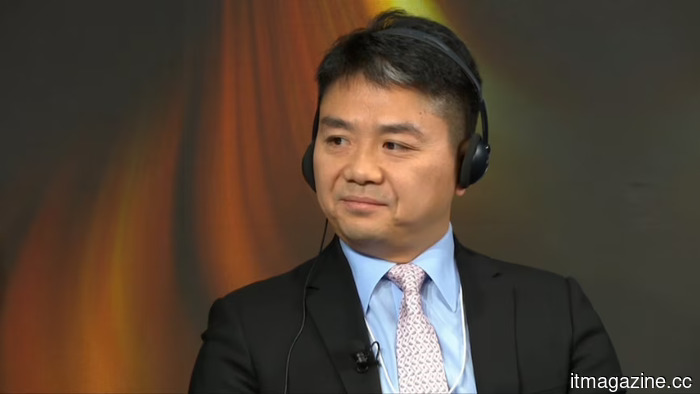 The founder of JD.com promises to safeguard 900,000 jobs from AI, but his warehouse approach suggests a different story.
Liu Qiangdong, the founder of JD.com, promised in an internal address to safeguard the company's 900,000 employees from being replaced by AI. This commitment is at odds with JD's significant reliance on automation and his own characterization of the 'unmanned era.'
The founder of JD.com promises to safeguard 900,000 jobs from AI, but his warehouse approach suggests a different story.
Liu Qiangdong, the founder of JD.com, promised in an internal address to safeguard the company's 900,000 employees from being replaced by AI. This commitment is at odds with JD's significant reliance on automation and his own characterization of the 'unmanned era.'
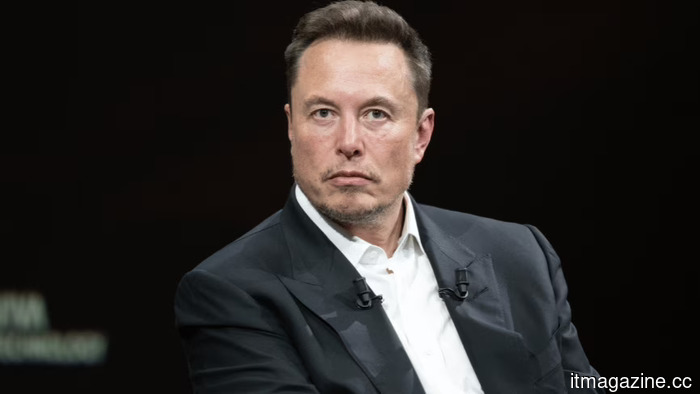 Musk reverts the Anthropic Colossus agreement to a six-month lease.
Elon Musk stated on Wednesday that SpaceX has not entered into a multi-year lease for Colossus 1 with Anthropic, clarifying that the agreement is for 180 days and includes a 90-day mutual cancellation option.
ByteDance is developing its own CPUs based on Arm and RISC-V to support its AI infrastructure.
ByteDance is working on its own data-center CPUs, pursuing both Arm and RISC-V pathways, as Intel and AMD increase prices by 10-35% each quarter and U.S. export restrictions become stricter.
ByteDance is developing its own CPUs based on Arm and RISC-V architectures to support its AI infrastructure.
ByteDance is creating its own data center CPUs through parallel efforts on both Arm and RISC-V paths, as Intel and AMD raise prices by 10-35% each quarter and US export regulations become stricter.
Musk reverts the Anthropic Colossus agreement to a six-month lease.
Elon Musk stated on Wednesday that SpaceX has not entered into a multi-year lease for Colossus 1 with Anthropic, clarifying that the agreement is for 180 days and includes a 90-day mutual cancellation option.
ByteDance is developing its own CPUs based on Arm and RISC-V to support its AI infrastructure.
ByteDance is working on its own data-center CPUs, pursuing both Arm and RISC-V pathways, as Intel and AMD increase prices by 10-35% each quarter and U.S. export restrictions become stricter.
ByteDance is developing its own CPUs based on Arm and RISC-V architectures to support its AI infrastructure.
ByteDance is creating its own data center CPUs through parallel efforts on both Arm and RISC-V paths, as Intel and AMD raise prices by 10-35% each quarter and US export regulations become stricter.
The founder of JD.com pledges to safeguard 900,000 jobs from AI. However, his approach to warehousing suggests a different direction.
Liu Qiangdong, the founder of JD.com, promised in an internal address to safeguard the company's 900,000 employees from being replaced by AI. This commitment is in contrast to JD's significant reliance on automation and Liu's own vision of an "unmanned era."