
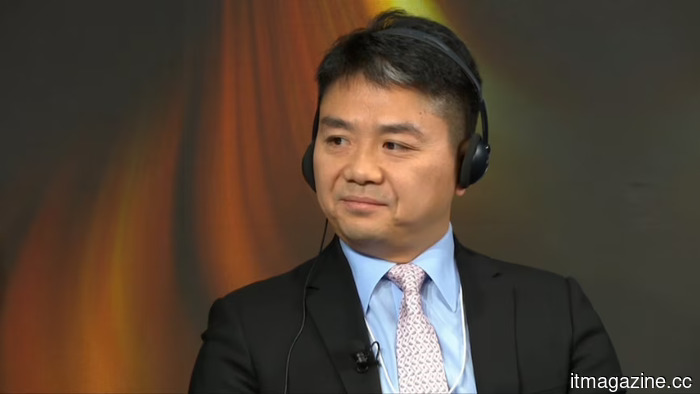
The founder of JD.com promises to safeguard 900,000 jobs from AI, but his warehouse approach suggests a different story.
Liu Qiangdong’s commitment to protect JD.com’s employees from automation stands at odds with his vision for an ‘unmanned era’ and a flagship warehouse currently operating with just four staff members. The founder of the Chinese e-commerce giant JD.com declared in an internal address this week that he would ensure the company’s workforce of 900,000 is shielded from the impacts of AI and robotics, as reported by Bloomberg on Thursday, referencing a video shared on Chinese social media.
According to Liu, JD.com will “take every possible measure to protect jobs for hundreds of thousands of employees, including those in blue-collar positions,” while simultaneously speeding up the implementation of AI and autonomous logistics within the organization. This promise comes in a Chinese policy landscape where it would be imprudent for a major employer to suggest otherwise.
Earlier this year, Chinese courts ruled twice that businesses cannot dismiss employees solely because AI can perform their tasks, determining that the strategic decision to adopt AI does not meet the Labour Contract Law's criteria for termination grounds. Additionally, Beijing's governing bodies formalized protections for gig workers affecting over 200 million platform workers, with mandatory algorithm transparency requirements set to begin in 2027. The political repercussions for a significant Chinese employer seen to lay off workers due to AI are considerably high.
However, Liu’s statement seems to conflict with his previous viewpoints expressed over the last year. During the 2025 World Internet Conference in Wuzhen, he claimed that in the future “unmanned era,” people might only need to work one hour per week and proposed a 90% tax on tech monopolies to support the resulting societal adjustments. He has also announced JD's intention to launch the world’s first fully unmanned delivery station by April 2026, utilizing drones, autonomous vehicles, and home robots that can deliver parcels directly into residences through authorized smart locks.
Liu’s public positions have fluctuated between the notion that “automation will replace most jobs and that needs to be managed through policy” and this week’s emphasis on “we will protect jobs.” The operational reality, however, tells a different story. JD.com has aggressively adopted warehouse robotics in the Chinese e-commerce sector, having opened a fully automated warehouse in 2018 that processes 200,000 orders daily, staffed by four employees who service the robots.
JD Logistics, the company’s publicly traded delivery branch, employs Large Language Models for optimizing routes, alongside a range of autonomous delivery vehicles, drones, and robot couriers across various Chinese cities. The 900,000 employees Liu pledges to protect reflect the historical labor-intensive nature of JD’s operations rather than a future-oriented strategy regarding human labor within the company.
JD’s current balancing act mirrors the broader struggles of the entire Chinese platform-economy sector. Beijing seeks to obtain the productivity advantages of AI while maintaining the employment stability that underpins the Communist Party’s political authority. These two objectives are not easily reconciled. JD's messaging this week suggested that automation will reduce logistics costs and create a “positive cycle” of enhanced employee wages and increased consumer trust—narratives that align with Beijing's interests.
The key question is whether the incentives for cost-cutting at the corporate level will truly foster that cycle or merely lead to a gradual reduction in the number of human couriers and warehouse staff. The press-release language, apart from the Bloomberg-sourced video of the internal speech, reportedly highlights that JD has created 183 different types of frontline roles, including AI trainers and robot maintenance engineers. While these new roles exist, they remain small compared to the existing courier and warehouse workforce. It remains to be seen whether these positions will accommodate workers displaced from larger roles or merely fill higher-skilled vacancies with external candidates. The upcoming years of JD’s labor data will provide clarity on this matter. JD.com and Liu have not responded through official channels regarding the internal speech reported by Bloomberg.
Other articles
 Gold-Backed Stablecoins Aim to Make Cryptocurrency Seem More Familiar
Recent digital assets are bringing up well-known concerns regarding trust, regulation, and transparency of reserves. Traditionally, gold has been seen as a stable option amid market uncertainties. In response to the volatility inherent in crypto assets, stablecoins were developed. An increasing number of initiatives are now merging these concepts by establishing digital tokens that are connected to physical gold reserves. [...]
Gold-Backed Stablecoins Aim to Make Cryptocurrency Seem More Familiar
Recent digital assets are bringing up well-known concerns regarding trust, regulation, and transparency of reserves. Traditionally, gold has been seen as a stable option amid market uncertainties. In response to the volatility inherent in crypto assets, stablecoins were developed. An increasing number of initiatives are now merging these concepts by establishing digital tokens that are connected to physical gold reserves. [...]
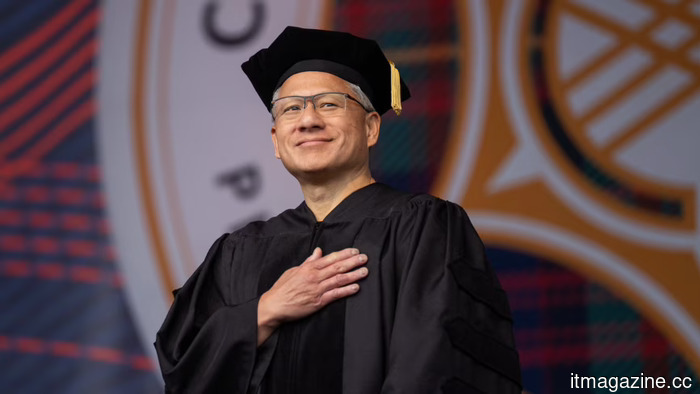 Jensen Huang becomes a member of the advisory board at Tsinghua University, which is chaired by Tim Cook.
Jensen Huang has joined Tsinghua University’s SEM advisory board, joining notable figures such as Tim Cook, Elon Musk, Satya Nadella, and Mark Zuckerberg.
Jensen Huang becomes a member of the advisory board at Tsinghua University, which is chaired by Tim Cook.
Jensen Huang has joined Tsinghua University’s SEM advisory board, joining notable figures such as Tim Cook, Elon Musk, Satya Nadella, and Mark Zuckerberg.
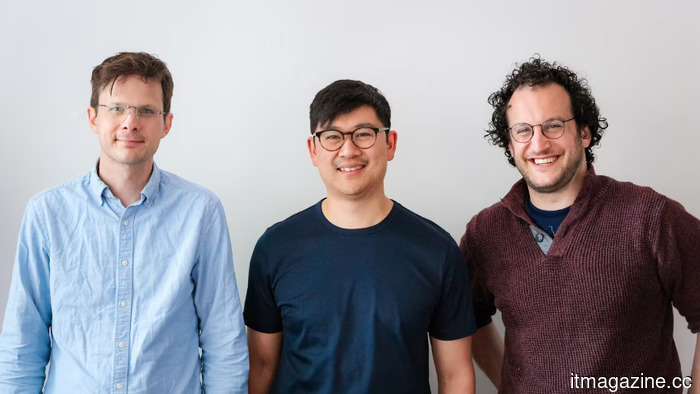 Orbital Industries secures $50 million in Series B funding for AI-designed data center equipment.
Orbital Industries, previously known as Orbital Materials, has secured $50 million in a Series B funding round, led by Plural, with participation from Nvidia’s NVentures. The funding is intended for their AI-designed, PFAS-free GPU cooling fluid and modular data center infrastructure.
Orbital Industries secures $50 million in Series B funding for AI-designed data center equipment.
Orbital Industries, previously known as Orbital Materials, has secured $50 million in a Series B funding round, led by Plural, with participation from Nvidia’s NVentures. The funding is intended for their AI-designed, PFAS-free GPU cooling fluid and modular data center infrastructure.
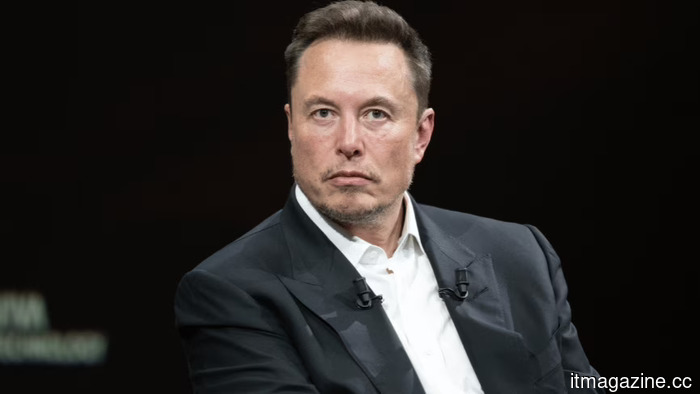 Musk changes the Anthropic Colossus agreement to a six-month lease.
On Wednesday, Elon Musk stated that SpaceX did not enter into a multi-year lease for Colossus 1 with Anthropic, clarifying that the agreement is for 180 days and includes a mutual cancellation option after 90 days.
Musk changes the Anthropic Colossus agreement to a six-month lease.
On Wednesday, Elon Musk stated that SpaceX did not enter into a multi-year lease for Colossus 1 with Anthropic, clarifying that the agreement is for 180 days and includes a mutual cancellation option after 90 days.
 A Google engineer utilized internal search data to place a $2.7 million bet on Polymarket. He has been charged by the DOJ.
The Department of Justice has accused Google information-security engineer Michele Spagnuolo of utilizing internal search-trend data to earn $1.2 million on Polymarket’s Year-in-Search market.
A Google engineer utilized internal search data to place a $2.7 million bet on Polymarket. He has been charged by the DOJ.
The Department of Justice has accused Google information-security engineer Michele Spagnuolo of utilizing internal search-trend data to earn $1.2 million on Polymarket’s Year-in-Search market.
 Father's Day Gift Guide - Digital Trends
This gift guide features sponsored content in certain sections. Why trust us? This Father's Day, move away from the usual gifts and enhance Dad’s daily routine with technology that he will genuinely utilize. Whether he's charging gadgets while on the move, riding an e-bike, enjoying high-quality audio, or transforming the backyard into a cinema, these devices combine […]
Father's Day Gift Guide - Digital Trends
This gift guide features sponsored content in certain sections. Why trust us? This Father's Day, move away from the usual gifts and enhance Dad’s daily routine with technology that he will genuinely utilize. Whether he's charging gadgets while on the move, riding an e-bike, enjoying high-quality audio, or transforming the backyard into a cinema, these devices combine […]
The founder of JD.com promises to safeguard 900,000 jobs from AI, but his warehouse approach suggests a different story.
Liu Qiangdong, the founder of JD.com, promised in an internal address to safeguard the company's 900,000 employees from being replaced by AI. This commitment is at odds with JD's significant reliance on automation and his own characterization of the 'unmanned era.'