
ByteDance is developing its own CPUs based on Arm and RISC-V to support its AI infrastructure.
The parent company of TikTok is creating custom processors for its data centers using two different architectural approaches, as Intel and AMD have increased their prices by 10% to 35% each quarter, coupled with the impact of U.S. export controls. According to a Reuters report on Thursday, ByteDance is developing its own central processing units to support the expanding AI infrastructure behind its operations, based on insights from sources familiar with the company's chip initiatives.
ByteDance is pursuing two concurrent design paths: one using Arm architecture and another utilizing the open-source RISC-V instruction set, while it evaluates which option aligns best with its long-term requirements. This decision aligns with a notably active week for the company’s strategy to diversify its chip development.
The motivations behind this shift are both commercial and geopolitical. Intel and AMD, which currently account for the majority of ByteDance's server CPU needs, have recently increased prices for data-center processors by 10% to 35%, as reported by Reuters. ByteDance’s budget for AI infrastructure for 2026 has reportedly increased by 25% to around 200 billion yuan ($29.4 billion), making the costs associated with these price hikes significant for the company’s overall financials. The push for in-house production has transitioned from a theoretical strategy to a necessity.
The dual approach involving Arm and RISC-V is indicative of ByteDance's serious commitment to chip development. Arm-based server CPUs are a well-established option, with products like Amazon’s Graviton, Microsoft’s Cobalt, and Google’s Axion already in production. RISC-V, a royalty-free instruction set originally created at Berkeley, has not yet proven itself at the server scale but is gaining traction in China due to its ability to avoid the licensing and export control issues associated with Arm's IP, which is owned by Softbank and based in the UK. Chinese authorities have explicitly promoted RISC-V as a means of achieving strategic autonomy, as Beijing strengthens its stance on chip sovereignty through 2026.
ByteDance's broader chip initiative is increasingly multi-faceted. Earlier this week, the company struck an agreement with Qualcomm to provide millions of application-specific integrated circuits for AI data-center inference and to assist in bringing its own ASIC design to production. Beijing's National Development and Reform Commission has advised ByteDance to turn down funding from U.S. sources in its financing rounds unless cleared. Additionally, recent travel restrictions affecting senior AI talent in the private sector also apply to ByteDance employees as well as those at DeepSeek, Moonshot, and StepFun. The custom CPU program reflects a strategic approach that includes general-purpose server silicon.
The implications for Intel and AMD are more challenging. The movement of major cloud service providers (like AWS, Microsoft, and Google) away from traditional x86 architectures towards custom Arm-based solutions over the past five years has already shifted a substantial segment of the cloud CPU market. If ByteDance successfully enters this space, it could further diminish the x86 customer base. The pricing dynamics are mutually impactful: rising x86 prices encourage hyperscalers to adopt custom CPUs, while decreased purchases by hyperscalers reduce the volume base for x86 vendors, leading to additional price increases.
Given its size, ByteDance operates more like a hyperscaler than a typical enterprise client. However, uncertainties remain concerning production facilities. Custom CPUs require cutting-edge fabrication; while TSMC manages most hyperscaler designs at 4nm and below, U.S. export restrictions on advanced manufacturing nodes for Chinese clients complicate the situation. SMIC, the leading-edge foundry in China, has achieved 7nm production but is roughly two nodes behind TSMC. ByteDance’s chip program will need to navigate these production challenges even after resolving design issues, which Reuters did not elaborate on.
ByteDance has not provided comments regarding the design program or potential timelines for first silicon. The company’s operations in Beijing did not confirm or deny the details in the Reuters report.
Other articles
 Gold-Backed Stablecoins Aim to Make Cryptocurrency More Relatable
New digital assets are prompting well-known concerns regarding trust, regulation, and transparency of reserves. Gold has historically been linked with stability in volatile market conditions. Stablecoins were developed to mitigate the volatility associated with cryptocurrency assets. An increasing number of initiatives are now merging these concepts by establishing digital tokens that are connected to physical gold reserves. [...]
Gold-Backed Stablecoins Aim to Make Cryptocurrency More Relatable
New digital assets are prompting well-known concerns regarding trust, regulation, and transparency of reserves. Gold has historically been linked with stability in volatile market conditions. Stablecoins were developed to mitigate the volatility associated with cryptocurrency assets. An increasing number of initiatives are now merging these concepts by establishing digital tokens that are connected to physical gold reserves. [...]
 Snowflake has pledged $6 billion to AWS over a five-year period, with Graviton chips being a key focus.
Snowflake has pledged $6 billion to AWS over a five-year period, which is 2.4 times greater than its agreement in 2023, focusing on AWS Graviton chips. Following this announcement and a better-than-expected Q1 earnings report, shares surged by 38%.
Snowflake has pledged $6 billion to AWS over a five-year period, with Graviton chips being a key focus.
Snowflake has pledged $6 billion to AWS over a five-year period, which is 2.4 times greater than its agreement in 2023, focusing on AWS Graviton chips. Following this announcement and a better-than-expected Q1 earnings report, shares surged by 38%.
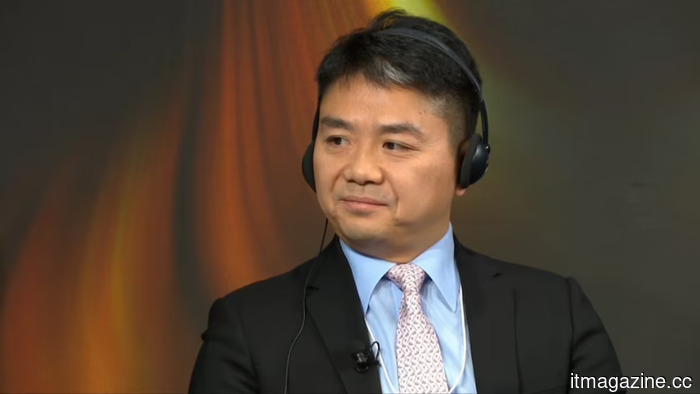 The founder of JD.com pledges to safeguard 900,000 jobs from AI. However, his approach to warehousing suggests a different direction.
Liu Qiangdong, the founder of JD.com, promised in an internal address to safeguard the company's 900,000 employees from being replaced by AI. This commitment is in contrast to JD's significant reliance on automation and Liu's own vision of an "unmanned era."
The founder of JD.com pledges to safeguard 900,000 jobs from AI. However, his approach to warehousing suggests a different direction.
Liu Qiangdong, the founder of JD.com, promised in an internal address to safeguard the company's 900,000 employees from being replaced by AI. This commitment is in contrast to JD's significant reliance on automation and Liu's own vision of an "unmanned era."
 Gold-Backed Stablecoins Aim to Make Cryptocurrency Seem More Familiar
New digital assets are bringing up familiar concerns regarding trust, oversight, and transparency of reserves. Gold has historically been seen as a stable option in times of market uncertainty. Stablecoins were developed to mitigate some of the volatility associated with crypto assets. An increasing number of initiatives are now merging these concepts by producing digital tokens that are tied to physical gold reserves. […]
Gold-Backed Stablecoins Aim to Make Cryptocurrency Seem More Familiar
New digital assets are bringing up familiar concerns regarding trust, oversight, and transparency of reserves. Gold has historically been seen as a stable option in times of market uncertainty. Stablecoins were developed to mitigate some of the volatility associated with crypto assets. An increasing number of initiatives are now merging these concepts by producing digital tokens that are tied to physical gold reserves. […]
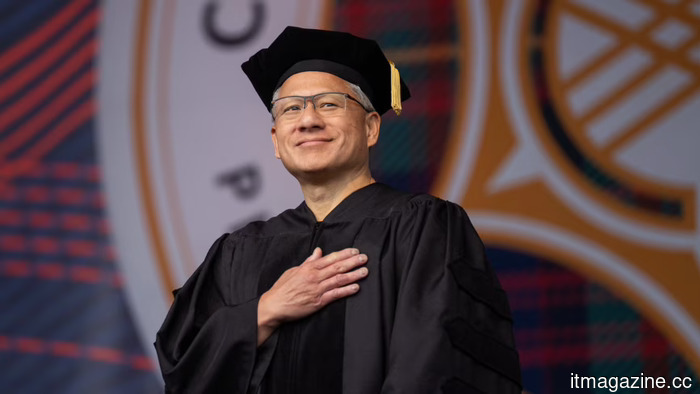 Jensen Huang becomes a member of the advisory board at Tsinghua University, which is chaired by Tim Cook.
Jensen Huang has joined Tsinghua University’s SEM advisory board, joining notable figures such as Tim Cook, Elon Musk, Satya Nadella, and Mark Zuckerberg.
Jensen Huang becomes a member of the advisory board at Tsinghua University, which is chaired by Tim Cook.
Jensen Huang has joined Tsinghua University’s SEM advisory board, joining notable figures such as Tim Cook, Elon Musk, Satya Nadella, and Mark Zuckerberg.
 Father's Day Gift Guide - Digital Trends
This gift guide features sponsored content in certain sections. Why trust us? This Father's Day, move away from the usual gifts and enhance Dad’s daily routine with technology that he will genuinely utilize. Whether he's charging gadgets while on the move, riding an e-bike, enjoying high-quality audio, or transforming the backyard into a cinema, these devices combine […]
Father's Day Gift Guide - Digital Trends
This gift guide features sponsored content in certain sections. Why trust us? This Father's Day, move away from the usual gifts and enhance Dad’s daily routine with technology that he will genuinely utilize. Whether he's charging gadgets while on the move, riding an e-bike, enjoying high-quality audio, or transforming the backyard into a cinema, these devices combine […]
ByteDance is developing its own CPUs based on Arm and RISC-V to support its AI infrastructure.
ByteDance is creating its own data-center CPUs, pursuing both Arm and RISC-V paths, as Intel and AMD increase their prices by 10-35% each quarter, and US export regulations become stricter.