
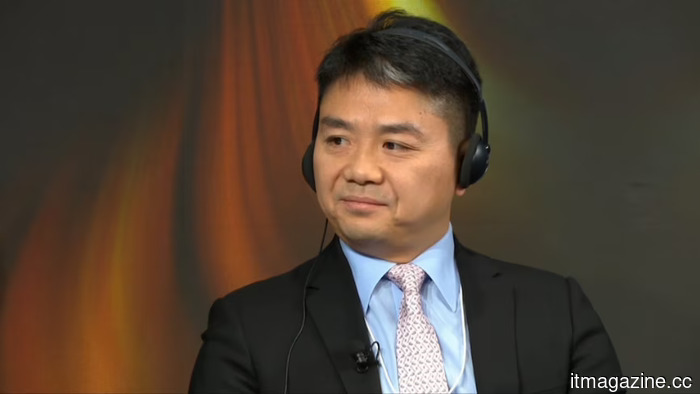
The founder of JD.com promises to safeguard 900,000 jobs from AI, yet his approach to warehousing suggests a different direction.
Liu Qiangdong's commitment to protect JD.com’s employees from automation is at odds with his own vision of an “unmanned era” and the flagship warehouse currently operating with just four employees. According to a Bloomberg report citing a video shared on Chinese social media, Liu, the founder of the Chinese e-commerce giant JD.com, stated in an internal speech this week that he would ensure the protection of the company’s workforce of 900,000 from AI and robotics.
Liu asserted that JD.com would “do everything possible to safeguard employment for hundreds of thousands of staff, including blue-collar workers,” even as the company accelerates its implementation of AI and autonomous logistics. This statement comes in a Chinese policy landscape where it would not be prudent for a major employer to express anything different.
In 2026, Chinese courts ruled twice within six months that businesses cannot terminate employees solely because AI can perform their tasks, clarifying that opting to adopt AI is not an unforeseen circumstance that justifies termination under the Labour Contract Law. Earlier this year, China’s top governing bodies established protections for gig workers, impacting over 200 million platform workers, and binding requirements for algorithm transparency are set to take effect in 2027. The political repercussions for a major Chinese employer firing employees due to AI are significantly high now.
However, Liu’s pledge is in stark contrast to his previous statements made in the past year. At the 2025 World Internet Conference in Wuzhen, he claimed that in the impending “unmanned era,” individuals might only need to work one hour a week and suggested that governments should impose a 90% tax on tech monopolies to support the associated social changes. Additionally, he announced JD's intention to introduce the world’s first fully unmanned delivery station in April 2026, featuring a combination of drones, autonomous vehicles, and household robots that could deliver packages directly inside homes using authorized smart locks.
His public declarations have shifted between the notion that “automation will replace most jobs and that is a problem to be policy-managed” and, more recently, “we will protect jobs.” The operational reality is more telling than the rhetoric, as JD.com has aggressively implemented warehouse robotics within the Chinese e-commerce sector. In 2018, the company launched a fully automated warehouse capable of processing 200,000 orders daily, staffed by just four human employees who support the robots.
JD Logistics, the company's delivery arm, utilizes Large Language Models for route optimization and has widely deployed autonomous delivery vehicles, drones, and robot couriers throughout Chinese cities. The 900,000 employees Liu promises to protect are remnants of JD’s past as a labor-intensive operator, rather than part of a forward-looking strategy regarding the role of human workers within the company.
JD is attempting to navigate a path similar to that of the entire Chinese platform economy, where Beijing desires the efficiency gains from AI while also ensuring employment stability, which is vital for the Communist Party’s political support. These goals are not easily aligned. This week, JD characterized automation as a means to reduce logistics costs and create a “positive cycle” of increased employee wages and boosted consumer confidence, a narrative likely to resonate well with Beijing.
The operational reality of whether the cost-saving measures at the company will lead to this cycle or merely result in fewer human couriers and warehouse personnel over time is the central issue. In addition to this, separate from the Bloomberg-sourced video of the internal speech, the press release reportedly highlighted that JD has created 183 different types of frontline roles, such as AI trainers and robot maintenance engineers. While these new positions are tangible, they are relatively minor compared to the existing workforce of couriers and warehouse staff. Whether these roles will sufficiently absorb employees displaced from larger positions or simply lead to more specialized positions filled by skilled individuals outside the affected workforce remains to be seen in the forthcoming years of JD’s labor data.
Neither JD.com nor Liu provided comments through official channels regarding the internal speech reported by Bloomberg.
Other articles
 Amazon has recently revealed three animated series created using AI, and they will be available on Prime Video.
Amazon MGM Studios and AWS have announced their initial three AI-generated animated series, all scheduled to be released on Prime Video at a later date.
Amazon has recently revealed three animated series created using AI, and they will be available on Prime Video.
Amazon MGM Studios and AWS have announced their initial three AI-generated animated series, all scheduled to be released on Prime Video at a later date.
 Gold-Backed Stablecoins Aim to Make Cryptocurrency More Relatable
New digital assets are prompting well-known concerns regarding trust, regulation, and transparency of reserves. Gold has historically been linked with stability in volatile market conditions. Stablecoins were developed to mitigate the volatility associated with cryptocurrency assets. An increasing number of initiatives are now merging these concepts by establishing digital tokens that are connected to physical gold reserves. [...]
Gold-Backed Stablecoins Aim to Make Cryptocurrency More Relatable
New digital assets are prompting well-known concerns regarding trust, regulation, and transparency of reserves. Gold has historically been linked with stability in volatile market conditions. Stablecoins were developed to mitigate the volatility associated with cryptocurrency assets. An increasing number of initiatives are now merging these concepts by establishing digital tokens that are connected to physical gold reserves. [...]
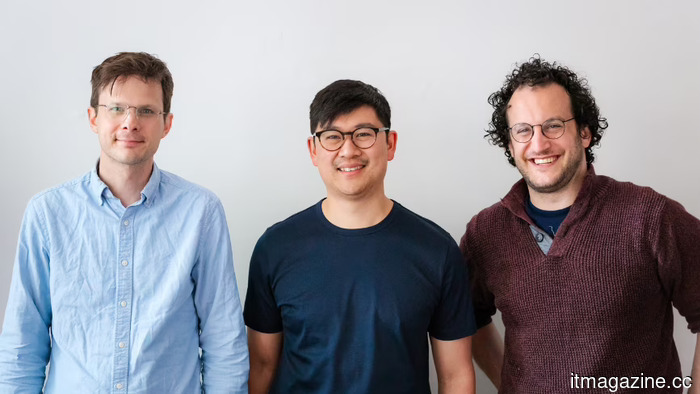 Orbital Industries secures $50 million in Series B funding for AI-developed data center hardware.
Orbital Industries, previously known as Orbital Materials, has secured a $50 million Series B funding round led by Plural, with participation from Nvidia’s NVentures. The funding will be used for AI-designed PFAS-free GPU cooling fluid and modular data center infrastructure.
ByteDance is developing its own CPUs based on Arm and RISC-V architectures to support its AI infrastructure.
ByteDance is creating its own data center CPUs through parallel efforts on both Arm and RISC-V paths, as Intel and AMD raise prices by 10-35% each quarter and US export regulations become stricter.
Orbital Industries secures $50 million in Series B funding for AI-developed data center hardware.
Orbital Industries, previously known as Orbital Materials, has secured a $50 million Series B funding round led by Plural, with participation from Nvidia’s NVentures. The funding will be used for AI-designed PFAS-free GPU cooling fluid and modular data center infrastructure.
ByteDance is developing its own CPUs based on Arm and RISC-V architectures to support its AI infrastructure.
ByteDance is creating its own data center CPUs through parallel efforts on both Arm and RISC-V paths, as Intel and AMD raise prices by 10-35% each quarter and US export regulations become stricter.
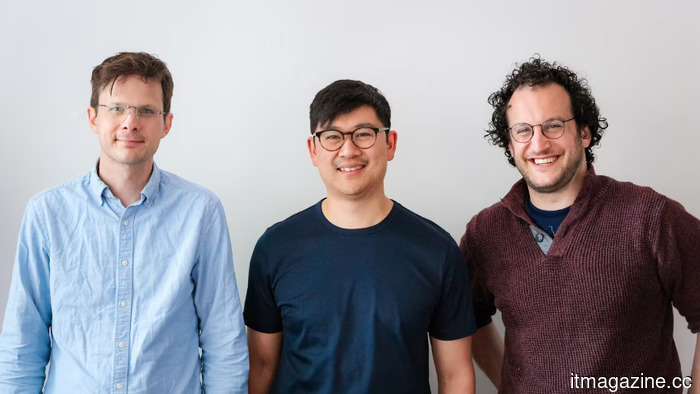 Orbital Industries secures $50 million in Series B funding for AI-designed data center equipment.
Orbital Industries, previously known as Orbital Materials, has secured $50 million in a Series B funding round, led by Plural, with participation from Nvidia’s NVentures. The funding is intended for their AI-designed, PFAS-free GPU cooling fluid and modular data center infrastructure.
Orbital Industries secures $50 million in Series B funding for AI-designed data center equipment.
Orbital Industries, previously known as Orbital Materials, has secured $50 million in a Series B funding round, led by Plural, with participation from Nvidia’s NVentures. The funding is intended for their AI-designed, PFAS-free GPU cooling fluid and modular data center infrastructure.
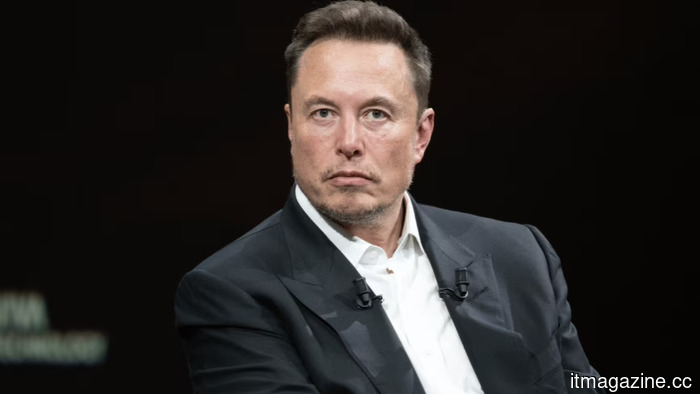 Musk reduces the Anthropic Colossus agreement to a six-month lease.
Elon Musk stated on Wednesday that SpaceX did not agree to a multi-year lease for Colossus 1 with Anthropic, clarifying that the deal is for 180 days with a 90-day mutual cancellation option.
Musk reduces the Anthropic Colossus agreement to a six-month lease.
Elon Musk stated on Wednesday that SpaceX did not agree to a multi-year lease for Colossus 1 with Anthropic, clarifying that the deal is for 180 days with a 90-day mutual cancellation option.
The founder of JD.com promises to safeguard 900,000 jobs from AI, yet his approach to warehousing suggests a different direction.
Liu Qiangdong, the founder of JD.com, promised in an internal speech to safeguard the company’s 900,000 employees from being replaced by AI. This commitment feels somewhat contradictory given JD's significant reliance on automation and his own conceptualization of the ‘unmanned era.’