
ByteDance is developing its own CPUs based on Arm and RISC-V architectures to support its AI infrastructure.
The parent company of TikTok is working on custom processors for data centers using two parallel architectures, as Intel and AMD have raised prices by 10-35% in recent quarters, compounded by US export controls. According to a Reuters report on Thursday, ByteDance is creating its own central processing units to support the expanding AI infrastructure of the company.
ByteDance is following two concurrent design paths: one based on Arm architecture and the other utilizing the open-source RISC-V instruction set, while determining which design best suits its long-term objectives. This decision comes during an unusually active week for the company’s chip-diversification efforts.
This initiative is driven by both commercial and geopolitical factors. Intel and AMD, the primary suppliers of server CPUs for ByteDance, have been increasing the prices of data center processors by 10% to 35% in recent quarters, as reported by Reuters. ByteDance's budget for AI infrastructure in 2026 has risen 25% to about 200 billion yuan ($29.4 billion), turning the procurement challenges from these price hikes into a significant concern for the company. Creating processors in-house has shifted from a theoretical advantage to a necessity for its financial health.
The dual focus on Arm and RISC-V architectures highlights ByteDance's serious commitment to its chip development. Arm-based server CPUs have a proven track record, with production models like Amazon's Graviton, Microsoft's Cobalt, and Google's Axion already in operation. Conversely, RISC-V, a royalty-free instruction set initially created at Berkeley, is less established at server scale but gaining favor in China as it avoids the licensing and export-control issues tied to Arm's UK-based, Softbank-owned intellectual property.
Chinese authorities have explicitly supported RISC-V as a means of achieving strategic autonomy, and Beijing's stance on chip sovereignty has been solidifying ahead of 2026. ByteDance's chip initiative is now evidently multifaceted, having recently signed an agreement with Qualcomm to provide millions of application-specific integrated circuits for AI data center operations, while Qualcomm is assisting in bringing ByteDance's own ASIC designs to production.
The National Development and Reform Commission in Beijing has mandated that ByteDance avoid US-origin capital in funding rounds without prior approval. Moreover, new travel restrictions imposed on senior AI talent this month affect ByteDance employees as well as those from DeepSeek, Moonshot, and StepFun. The custom CPU initiative reflects an overarching strategic approach toward general-purpose server silicon.
For Intel and AMD, the competitive landscape is becoming more challenging. In the past five years, there has been a noticeable shift in the cloud-CPU market away from traditional x86 suppliers towards custom Arm solutions due to the departure of major hyperscalers like AWS, Microsoft, and Google. If ByteDance's efforts succeed, it could pull another significant customer from the x86 market, further intensifying price pressures in both directions: rising x86 prices encourage hyperscalers to adopt custom CPUs, while declining orders from hyperscalers decrease the volume that x86 vendors need to spread their fabrication costs, pushing prices even higher.
For its size, ByteDance resembles a hyperscaler more than a typical enterprise customer. However, the situation regarding production facilities remains uncertain. Custom CPUs require cutting-edge fabrication; TSMC handles most hyperscaler designs at 4nm and below, but US export restrictions on advanced nodes for Chinese clientele complicate matters. SMIC, China's primary advanced foundry, has achieved 7nm production but is trailing TSMC by about two nodes. ByteDance’s chip program will need to navigate the realities of production nodes even after resolving design challenges, a point not addressed in the Reuters report.
ByteDance has not provided comments regarding the design program or anticipated timelines for the first silicon. The company’s operations in Beijing declined to confirm or deny the information presented in the Reuters report.
Other articles
 The Pentagon has awarded Dell a $9.7 billion contract to streamline Microsoft licenses throughout the military.
The Pentagon has granted Dell a contract worth $9.7 billion over five years to unify Microsoft software licensing for the US military and intelligence agencies, with an expected annual savings of $422 million.
The Pentagon has awarded Dell a $9.7 billion contract to streamline Microsoft licenses throughout the military.
The Pentagon has granted Dell a contract worth $9.7 billion over five years to unify Microsoft software licensing for the US military and intelligence agencies, with an expected annual savings of $422 million.
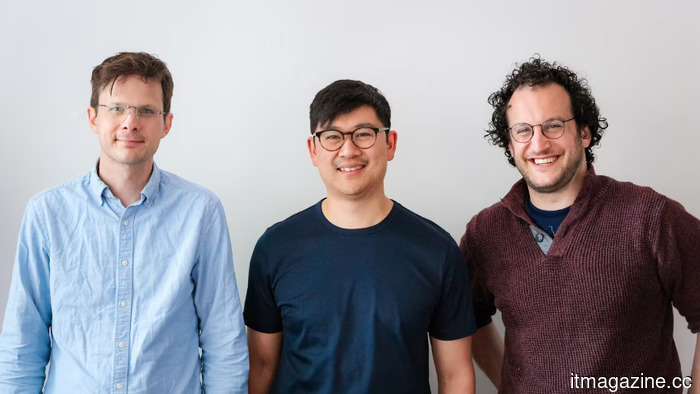 Orbital Industries secures $50 million in Series B funding for AI-designed data center equipment.
Orbital Industries, previously known as Orbital Materials, has secured $50 million in a Series B funding round, led by Plural, with participation from Nvidia’s NVentures. The funding is intended for their AI-designed, PFAS-free GPU cooling fluid and modular data center infrastructure.
Orbital Industries secures $50 million in Series B funding for AI-designed data center equipment.
Orbital Industries, previously known as Orbital Materials, has secured $50 million in a Series B funding round, led by Plural, with participation from Nvidia’s NVentures. The funding is intended for their AI-designed, PFAS-free GPU cooling fluid and modular data center infrastructure.
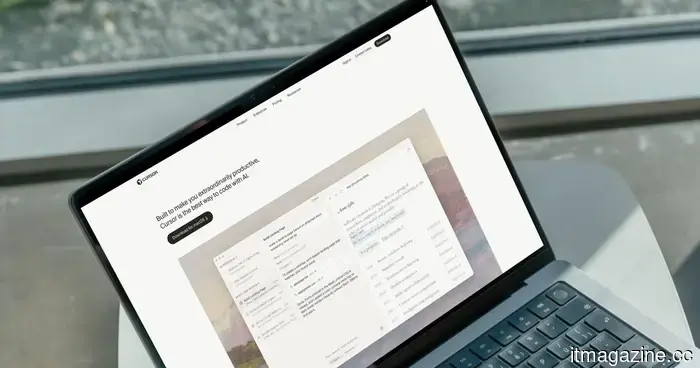 Layr is a new clipboard manager for macOS that substitutes hotkeys with gestures on the trackpad.
Layr is an innovative clipboard manager for macOS that allows users to access clipboard history close to the cursor by tapping the trackpad with four fingers.
Layr is a new clipboard manager for macOS that substitutes hotkeys with gestures on the trackpad.
Layr is an innovative clipboard manager for macOS that allows users to access clipboard history close to the cursor by tapping the trackpad with four fingers.
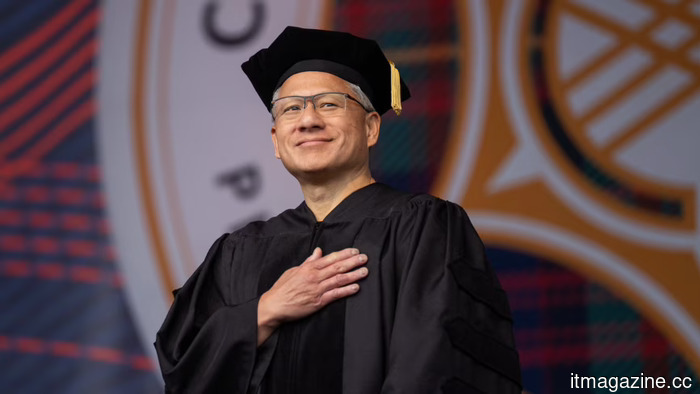 Jensen Huang becomes a member of the advisory board at Tsinghua University, which is chaired by Tim Cook.
Jensen Huang has joined Tsinghua University’s SEM advisory board, joining notable figures such as Tim Cook, Elon Musk, Satya Nadella, and Mark Zuckerberg.
Jensen Huang becomes a member of the advisory board at Tsinghua University, which is chaired by Tim Cook.
Jensen Huang has joined Tsinghua University’s SEM advisory board, joining notable figures such as Tim Cook, Elon Musk, Satya Nadella, and Mark Zuckerberg.
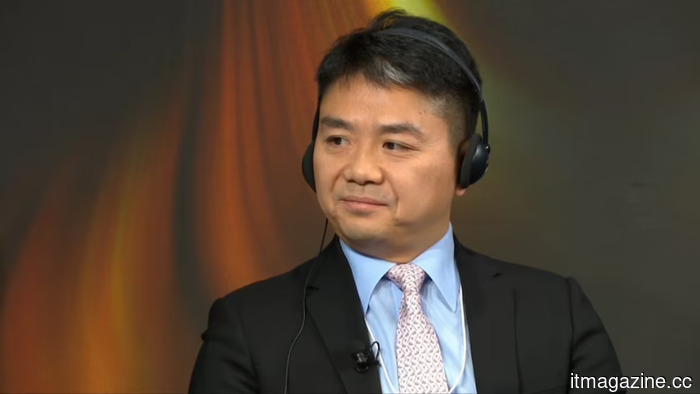 The founder of JD.com pledges to safeguard 900,000 jobs from AI. However, his approach to warehousing suggests a different direction.
Liu Qiangdong, the founder of JD.com, promised in an internal address to safeguard the company's 900,000 employees from being replaced by AI. This commitment is in contrast to JD's significant reliance on automation and Liu's own vision of an "unmanned era."
The founder of JD.com pledges to safeguard 900,000 jobs from AI. However, his approach to warehousing suggests a different direction.
Liu Qiangdong, the founder of JD.com, promised in an internal address to safeguard the company's 900,000 employees from being replaced by AI. This commitment is in contrast to JD's significant reliance on automation and Liu's own vision of an "unmanned era."
 Musk reduces the Anthropic Colossus agreement to a six-month lease.
Elon Musk stated on Wednesday that SpaceX did not agree to a multi-year lease for Colossus 1 with Anthropic, clarifying that the deal is for 180 days with a 90-day mutual cancellation option.
Musk reduces the Anthropic Colossus agreement to a six-month lease.
Elon Musk stated on Wednesday that SpaceX did not agree to a multi-year lease for Colossus 1 with Anthropic, clarifying that the deal is for 180 days with a 90-day mutual cancellation option.
ByteDance is developing its own CPUs based on Arm and RISC-V architectures to support its AI infrastructure.
ByteDance is creating its own data center CPUs through parallel efforts on both Arm and RISC-V paths, as Intel and AMD raise prices by 10-35% each quarter and US export regulations become stricter.