

The Pentagon has awarded Dell a $9.7 billion contract to unify Microsoft licenses throughout the military.
The five-year agreement brings together various Microsoft 365 and cloud subscriptions for the Defense Department, the intelligence community, and the Coast Guard. Dell, not Microsoft, serves as the primary contractor.
According to a Reuters report on Wednesday, the US Department of Defense has granted Dell a five-year contract worth approximately $9.7 billion to unify Microsoft software licensing across the entire US military, the intelligence community, and the Coast Guard. The formal title of the deal is the Microsoft Department of War Enterprise Software Agreement II Core Enterprise Technology Agreement. Dell Federal Systems is the lead contractor, while Microsoft is the underlying software supplier.
The contract is between the Pentagon and Dell Federal Systems, the division focused on government contracts. Dell will provide Microsoft 365 subscriptions, enhanced cloud services, and on-premises licensing to the designated military and intelligence personnel under a unified structure, which replaces the disjointed, individually negotiated agreements that have accumulated over the past ten years.
The Pentagon claims that this consolidation is aimed at reducing costs. Officials estimate that it will save about $422 million annually by eliminating redundant licensing expenditures that have quietly increased over years of fragmented purchasing processes. Thus, the $9.7 billion figure represents a reallocation of existing IT budgets from individual branches and agencies into a comprehensive enterprise agreement.
The Air Force, Army, Navy, Marine Corps, Space Force, intelligence agencies, and Coast Guard will all utilize the same contract for Microsoft software, with terms negotiated centrally rather than by each service’s procurement team.
Notably, the structure where Dell is the primary contractor is significant. The value of the contract is associated with Dell’s federal systems profit and loss; Microsoft receives the software-license revenue based on the rates established through the agreement. Dell's role resembles that of a managed-services provider more than that of a simple reseller, as the company will handle integration, support, and centralized licensing management intended by this consolidation.
This arrangement secures Dell a five-year guaranteed revenue flow, while Microsoft ensures a five-year presence in the Pentagon's software ecosystem, including within the intelligence community where Microsoft 365's adoption has been less prominent than in the commercial sector.
The political aspect has drawn attention, especially in light of previous defense-procurement narratives from the Trump era. Dell CEO Michael Dell has notably maintained a close relationship with the administration over the past year; Nancy Pelosi’s stock-tracker accounts identified Dell as a federal-procurement beneficiary shortly before the contract was awarded.
Dell’s stock rose following the announcement. Whether the company's political connections significantly influenced its bid against competitors such as CDW, Insight, and Carahsoft is unclear, and the procurement history does not provide a definitive answer.
Overall, the trend towards consolidation in Pentagon software procurement has been evident. Earlier this week, the US Space Force awarded SpaceX a $2.29 billion contract to develop the Space Data Network Backbone using Starshield satellites. The Pentagon has also been engaged in disputes with SpaceX regarding Starlink pricing related to the Iran-war drone program. This pattern—large, vendor-consolidated framework contracts replacing smaller, fragmented agreements that characterized Defense IT in the 2010s and early 2020s—appears likely to continue through 2026.
Cost discipline serves as the official rationale, while the rationale involving strategic vendor relationships operates beneath the surface. Microsoft and Dell did not disclose specific terms beyond the $9.7 billion ceiling. The contract is set to be in effect from June 2026 to May 2031, with renewal options not publicly revealed.
Other articles
 Orbital Industries secures $50 million in Series B funding for AI-developed data center hardware.
Orbital Industries, previously known as Orbital Materials, has secured a $50 million Series B funding round led by Plural, with participation from Nvidia’s NVentures. The funding will be used for AI-designed PFAS-free GPU cooling fluid and modular data center infrastructure.
Orbital Industries secures $50 million in Series B funding for AI-developed data center hardware.
Orbital Industries, previously known as Orbital Materials, has secured a $50 million Series B funding round led by Plural, with participation from Nvidia’s NVentures. The funding will be used for AI-designed PFAS-free GPU cooling fluid and modular data center infrastructure.
 Jensen Huang becomes a member of the advisory board at Tsinghua University, which is chaired by Tim Cook.
Jensen Huang has joined Tsinghua University’s SEM advisory board, joining notable figures such as Tim Cook, Elon Musk, Satya Nadella, and Mark Zuckerberg.
Jensen Huang becomes a member of the advisory board at Tsinghua University, which is chaired by Tim Cook.
Jensen Huang has joined Tsinghua University’s SEM advisory board, joining notable figures such as Tim Cook, Elon Musk, Satya Nadella, and Mark Zuckerberg.
 Orbital Industries secures $50 million in Series B funding for AI-designed data center equipment.
Orbital Industries, previously known as Orbital Materials, has secured $50 million in a Series B funding round, led by Plural, with participation from Nvidia’s NVentures. The funding is intended for their AI-designed, PFAS-free GPU cooling fluid and modular data center infrastructure.
Orbital Industries secures $50 million in Series B funding for AI-designed data center equipment.
Orbital Industries, previously known as Orbital Materials, has secured $50 million in a Series B funding round, led by Plural, with participation from Nvidia’s NVentures. The funding is intended for their AI-designed, PFAS-free GPU cooling fluid and modular data center infrastructure.
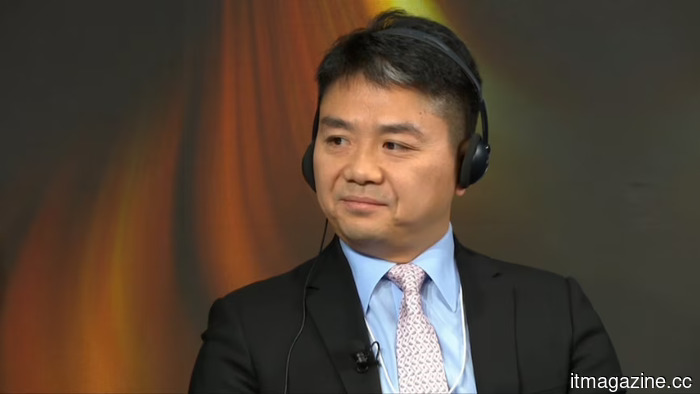 The founder of JD.com promises to safeguard 900,000 jobs from AI, but his warehouse approach suggests a different story.
Liu Qiangdong, the founder of JD.com, promised in an internal address to safeguard the company's 900,000 employees from being replaced by AI. This commitment is at odds with JD's significant reliance on automation and his own characterization of the 'unmanned era.'
The founder of JD.com promises to safeguard 900,000 jobs from AI, but his warehouse approach suggests a different story.
Liu Qiangdong, the founder of JD.com, promised in an internal address to safeguard the company's 900,000 employees from being replaced by AI. This commitment is at odds with JD's significant reliance on automation and his own characterization of the 'unmanned era.'
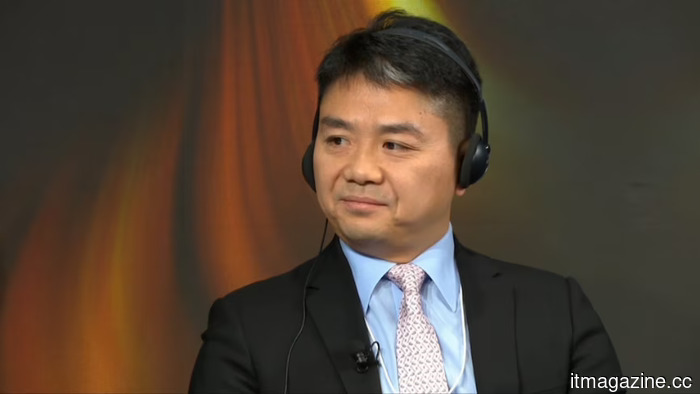 The founder of JD.com promises to safeguard 900,000 jobs from AI, yet his approach to warehousing suggests a different direction.
Liu Qiangdong, the founder of JD.com, promised in an internal speech to safeguard the company’s 900,000 employees from being replaced by AI. This commitment feels somewhat contradictory given JD's significant reliance on automation and his own conceptualization of the ‘unmanned era.’
ByteDance is developing its own CPUs based on Arm and RISC-V to support its AI infrastructure.
ByteDance is working on its own data-center CPUs, pursuing both Arm and RISC-V pathways, as Intel and AMD increase prices by 10-35% each quarter and U.S. export restrictions become stricter.
The founder of JD.com promises to safeguard 900,000 jobs from AI, yet his approach to warehousing suggests a different direction.
Liu Qiangdong, the founder of JD.com, promised in an internal speech to safeguard the company’s 900,000 employees from being replaced by AI. This commitment feels somewhat contradictory given JD's significant reliance on automation and his own conceptualization of the ‘unmanned era.’
ByteDance is developing its own CPUs based on Arm and RISC-V to support its AI infrastructure.
ByteDance is working on its own data-center CPUs, pursuing both Arm and RISC-V pathways, as Intel and AMD increase prices by 10-35% each quarter and U.S. export restrictions become stricter.
The Pentagon has awarded Dell a $9.7 billion contract to unify Microsoft licenses throughout the military.
The Pentagon has granted Dell a five-year contract worth $9.7 billion to unify Microsoft software licensing for the US military and intelligence agencies, which is expected to result in annual savings of $422 million.