

Introducing the speakers: Who will be presenting at the TNW, Oneflow & Flexas event in Amsterdam?
Four guests, one question: As AI becomes ubiquitous, what will distinguish successful SaaS companies? This panel discussion on June 3 in Amsterdam aims to tackle that inquiry.
There comes a point, between the third and fourth AI feature release of the quarter, when even the most passionate founder starts to question whether anyone is truly purchasing these offerings.
This is why the panel at the TNW, Oneflow & Flexas Gathering in Amsterdam on June 3 is focused on a singular, challenging question: when AI is everywhere, what will ensure the success of SaaS companies?
We are now confirming the four guests who will engage with this question, moderated by Cristian Dina, co-founder of Tekpon and CRO at TNW, who has interviewed hundreds of SaaS founders and is familiar with nearly everyone in attendance before they even arrive.
The 💜 of EU tech: Get the latest updates from the EU tech scene, insights from our founder Boris, and some intriguing AI art. It's free and delivered weekly to your inbox. Sign up now!
The overarching theme is that generative AI has evolved from being just a feature to becoming foundational. The critical work that will determine survival over the next two years involves not just adding an assistant to a sidebar, but rethinking products, go-to-market strategies, and operations under the premise that the model is integral to the company rather than an add-on.
Three primary topics will guide the discussion: which functions within a SaaS company will be redesigned first, which will be redesigned last, and which may become irrelevant. Additionally, we will explore what constitutes a competitive advantage in an AI-driven landscape and what may turn into commodities.
How AI influences pricing, packaging, and the unit economics presented to investors in board decks will also be examined. Tying it all together is a fourth question that many founders are quietly seeking to answer: how can they avoid delivering demo AI—products that impress in a brief demonstration but fail to deliver genuine customer value in practice?
Who is participating in the panel?
Sebastian Mertens, Head of Applied AI at Make. Make is a no-code automation platform that has quietly become a popular tool for non-technical teams to work with large language models over the past two years. Mertens leads its applied AI initiatives, including agents and toolkits that enable sales operations leads to effectively utilize the model. Prior to Make, he co-founded Wemakefuture, a German automation consultancy. He provides firsthand insights into what a true AI-native product surface resembles after the initial excitement fades.
Masha Moisseyeva, Managing Director of DutchBasecamp. Based in Amsterdam, DutchBasecamp assists founders in entering new markets—a task that becomes increasingly challenging when competitors roll out similar AI features in rapid succession. Moisseyeva, a two-time founder herself, brings a unique perspective on the European startup ecosystem through her role at DBC, especially following its recent partnership with ACE. She will focus on operations and expansion during the discussion.
Hugo Pereira, fractional CGO/CMO and former Chief Growth Officer at EVBox. Pereira spent seven years at EVBox, scaling the business from about five million euros in revenue to over a hundred million and expanding the team from ten to seven hundred employees. Now serving as a fractional operator, he advises B2B SaaS and deep-tech founders. He is also the author of "Teams in Hell," a book examining organizational dysfunction that can outpace revenue growth. In a discussion centered on AI-native go-to-market strategies, he is likely to offer candid insights regarding pipeline coverage ratios.
Sako Arts, CTO at Bright Cape and co-founder of FruitPunch AI. Arts brings the technical perspective to the panel. As CTO of Bright Cape, a Dutch data and AI consultancy, and co-founder of FruitPunch AI, a global AI-for-Good community that pairs engineers with applied challenges in fields like healthcare and conservation, he has extensive experience. He has spent recent years developing production AI systems for organizations that cannot afford errors, providing him valuable insight into the difference between AI demonstrations and realizable products.
Together, these four guests encompass different aspects that an AI-native company must innovate: product (Mertens), growth (Pereira), operations and expansion (Moisseyeva), and the foundational technical infrastructure (Arts). Dina, as the moderator, will ensure lively debates and prevent premature consensus.
Two years after the first wave of generative AI launches, discussions within SaaS have evolved. The earlier debates concerning whether established companies would prevail or if a new wave of AI-native firms would take over have shifted towards more nuanced considerations. Founders are no longer debating the use of AI; instead, they are contemplating which aspects of their companies to rebuild, in what order, and within what timeframe.
This is a conversation that works better in an intimate setting of forty than in a larger group of four hundred. The June 3 gathering is designed for such an environment. The panel is scheduled from 6
Other articles
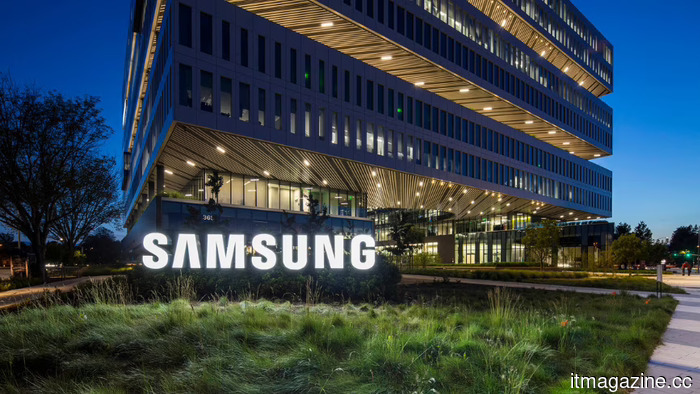 Samsung pledges $1.5 billion to establish a chip-testing facility in Vietnam, with an additional $2.5 billion available for future investments.
Samsung is allocating $1.5 billion for its inaugural specialized chip-testing facility in Vietnam, which is set to be operational by November 2027. A subsequent phase, potentially worth up to $2.5 billion, will depend on the completion of the first phase.
Samsung pledges $1.5 billion to establish a chip-testing facility in Vietnam, with an additional $2.5 billion available for future investments.
Samsung is allocating $1.5 billion for its inaugural specialized chip-testing facility in Vietnam, which is set to be operational by November 2027. A subsequent phase, potentially worth up to $2.5 billion, will depend on the completion of the first phase.
 Europe's efforts to reduce the control of Big Tech face challenges from its own internal divisions.
The EU’s Tech Sovereignty Package, set to be released on Wednesday, has been moderated by internal discussions between advocates of European preferences and supporters of interoperability.
Europe's efforts to reduce the control of Big Tech face challenges from its own internal divisions.
The EU’s Tech Sovereignty Package, set to be released on Wednesday, has been moderated by internal discussions between advocates of European preferences and supporters of interoperability.
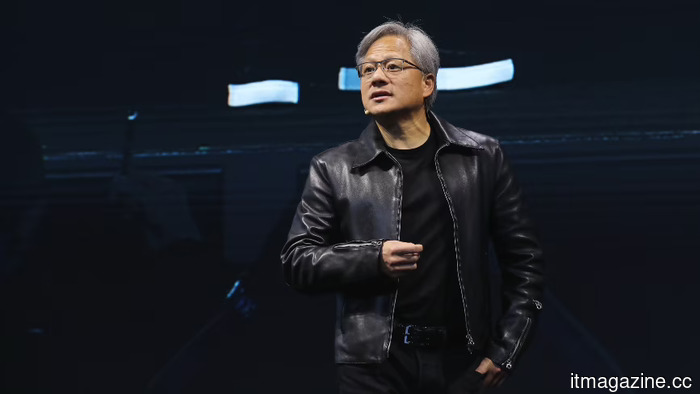 NVIDIA's Jensen Huang refers to Taiwan as the 'epicenter' of the AI revolution, noting that spending has reached $150 billion annually.
During Computex 2026, Jensen Huang announced that Nvidia's annual expenditure in Taiwan will hit $150 billion, positioning Taiwan as the "epicenter" of the AI revolution.
NVIDIA's Jensen Huang refers to Taiwan as the 'epicenter' of the AI revolution, noting that spending has reached $150 billion annually.
During Computex 2026, Jensen Huang announced that Nvidia's annual expenditure in Taiwan will hit $150 billion, positioning Taiwan as the "epicenter" of the AI revolution.
 Aurzen merges Roku TV with SGS-certified brightness for large-screen applications.
The D1R lineup from Aurzen features a built-in Roku TV, native 1080P resolution, and confirmed brightness ratings, offering a more practical approach to contemporary home projection.
SK Hynix enters the trillion-dollar club, fueled by orders for Nvidia's HBM4.
On Wednesday, SK Hynix's market capitalization exceeded $1 trillion in trading in Seoul, making the Korean memory company the third chip manufacturer, following Nvidia and TSMC, to reach this milestone.
SpaceX secures a $2.29 billion contract from the Space Force for the Golden Dome infrastructure.
The US Space Force has granted SpaceX $2.29 billion to develop the Space Data Network Backbone on Starshield satellites, which will serve as the communications backbone for the Golden Dome missile defense system.
Aurzen merges Roku TV with SGS-certified brightness for large-screen applications.
The D1R lineup from Aurzen features a built-in Roku TV, native 1080P resolution, and confirmed brightness ratings, offering a more practical approach to contemporary home projection.
SK Hynix enters the trillion-dollar club, fueled by orders for Nvidia's HBM4.
On Wednesday, SK Hynix's market capitalization exceeded $1 trillion in trading in Seoul, making the Korean memory company the third chip manufacturer, following Nvidia and TSMC, to reach this milestone.
SpaceX secures a $2.29 billion contract from the Space Force for the Golden Dome infrastructure.
The US Space Force has granted SpaceX $2.29 billion to develop the Space Data Network Backbone on Starshield satellites, which will serve as the communications backbone for the Golden Dome missile defense system.
Introducing the speakers: Who will be presenting at the TNW, Oneflow & Flexas event in Amsterdam?
Four guests, one question: in a world where everyone has AI, what will distinguish a successful SaaS company? Introducing the panel for the gathering on June 3, 2026, in Amsterdam.