
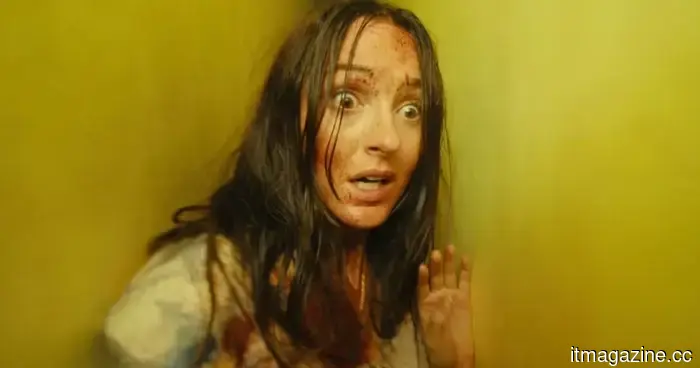
EXCLUSIVE: The director and cast of Backrooms discuss the process of transforming a viral web series into one of A24’s most disturbing horror films.
In recent years, numerous well-known YouTubers have successfully transitioned into horror filmmaking, with A24’s Backrooms potentially being the most ambitious example to date. Directed by 20-year-old Kane Parsons, the film centers on therapist Mary (Renate Reinsve) as she attempts to locate her patient Carl (Chiwetel Ejiofor), who mysteriously disappears into a bizarre alternate dimension concealed behind his furniture store.
Although Backrooms is inspired by an internet creepypasta, Parsons gained prominence by popularizing the concept through his viral YouTube shorts, thus turning an online myth into one of the modern internet's defining horror phenomena. With his feature film debut, Parsons joins a roster of creators-turned-filmmakers from the online sphere, including RackaRacka (Talk to Me), Chris Stuckmann (Shelby Oaks), Markiplier (Iron Lung), and Curry Barker (Obsession). The film also contributes to the growing trend of liminal horror narratives similar to Skinamarink and I Saw the TV Glow.
In an interview with Digital Trends, Parsons, along with Ejiofor and Reinsve, discussed the process of adapting Backrooms for the big screen, transforming it from low-budget shorts into a thoughtful narrative focused on characters.
Backrooms transforms liminal horror into a haunting exploration of character
A24 / A24
Much like NEON’s liminal horror success Exit 8, Backrooms captures the dread of the commonplace, turning ordinary environments into something profoundly unsettling. At its core, this surreal sci-fi horror is a meditation on how individuals find solace in their routines, even if it leads to self-imposed isolation.
Both Mary and Carl feel trapped in unsatisfying lives, with Carl particularly yearning for liberation. After not achieving his aspiration of becoming an architect, he finds himself in a dead-end position at a furniture store, where the Backrooms provide an escape from his bleak existence. Parsons enhances these themes with the film’s nostalgic 1990s setting, liminal visuals, and a found-footage-inspired filmmaking approach.
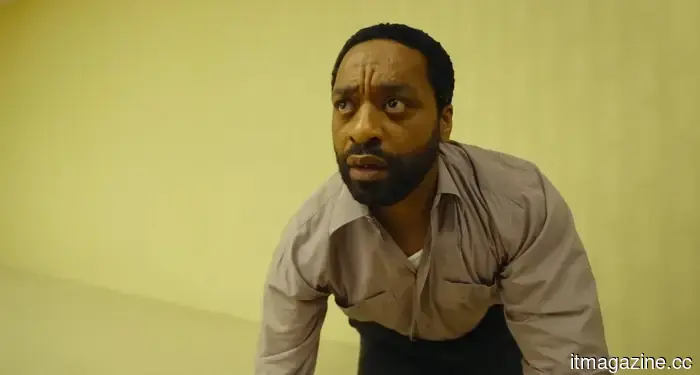
During his conversation with Digital Trends, Ejiofor characterized Backrooms as a “psychological investigation” of Carl, whose psyche is intertwined with the film’s continually evolving maze.
“What I appreciated was that this character possessed a complexity that mirrored his experiences within the Backrooms in a way that was both bizarre and compelling. There was something within Carl’s psychology that explained the environment, which I understood emotionally. I found that to be profoundly cinematic,” Ejiofor shared.
Throughout the film, the Backrooms appear shaped by Carl’s recollections. This endless labyrinth is populated by furniture from his store and props from one of his commercials, symbolizing how his work has engulfed his life. Ultimately, the movie employs familiar objects to create an unsettling atmosphere filled with oddities like mutilated seagulls, distorted street signs, and grotesque, human-like figures.
This monotonous and repetitive environment also reflects Carl’s loneliness in his daily life. Simultaneously, Backrooms illustrates how Carl's isolation is partly self-imposed. By diving deeper into the Backrooms, Carl symbolically retreats into his own psyche, where he can embody the person he has always wished to become. His fixation on mapping the Backrooms echoes his unrealized architectural dreams in the real world.
Backrooms blurs the delicate line between doctor and patient
A24 / A24
While Parsons had a wealth of online lore to draw from for his film, one of the most compelling aspects of Backrooms is the relationship between Mary and Carl. Following his divorce and stagnant job, Carl frequently seeks therapy from Mary, often reenacting moments from his unsuccessful marriage during their sessions.
Although Mary endeavors to assist Carl with his issues, Backrooms emphasizes that she is also a person dealing with her own emotional struggles. Her traumatic upbringing compelled her to try and help others as a therapist, culminating in a self-help book that failed to reach the audience she desired.
As the film progresses, it becomes clear that Mary does not possess all the solutions. Like Carl, she grapples with the confusion in their lives—a chaos that manifests in the very nature of the Backrooms.
In her discussion with Digital Trends, Reinsve expressed her intrigue at how the Backrooms' environment reflected the characters' journeys.
“The interaction between the characters mirrored what was transpiring within the Backrooms, laden with layers of psychology while also pointing towards the realities of our world, influenced by technology and development. It was this multifaceted portrayal that captivated me,” Reinsve said.
Ultimately, Backrooms conveys the idea that Carl must be prepared to change in order to enhance his life. Rather than addressing his personal challenges, Carl continues to bemoan how unjust life has been to him, which only exacerbates his situation. This message contributes to an unexpectedly profound and mature narrative from a young filmmaker.
How does Backrooms fare?
In summary, Backrooms offers a mind-bending and anxiety-ind
Other articles
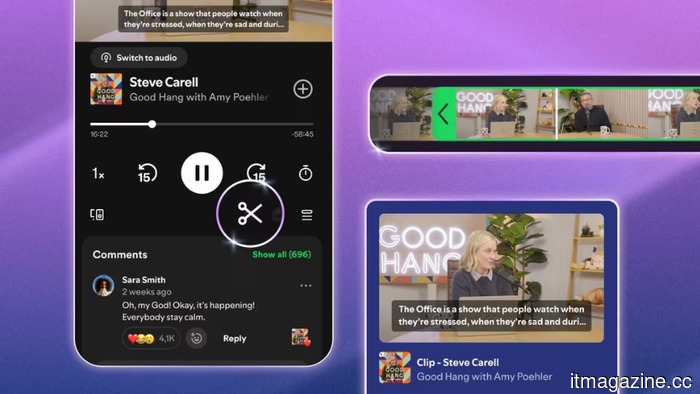 Spotify now enables listeners to clip and share snippets from any podcast.
Spotify introduces Podcast Clips, allowing listeners to cut and share audio snippets from episodes using a new scissors icon, accessible globally on mobile for both free and Premium users.
Spotify now enables listeners to clip and share snippets from any podcast.
Spotify introduces Podcast Clips, allowing listeners to cut and share audio snippets from episodes using a new scissors icon, accessible globally on mobile for both free and Premium users.
 Next month, the taxation on Samsung's Galaxy flagship could become more burdensome.
Samsung’s premium smartphones in Greece may experience a price increase starting in June, as a report suggests that the Galaxy S, Galaxy Z, and Galaxy FE models could rise by at least €100.
Next month, the taxation on Samsung's Galaxy flagship could become more burdensome.
Samsung’s premium smartphones in Greece may experience a price increase starting in June, as a report suggests that the Galaxy S, Galaxy Z, and Galaxy FE models could rise by at least €100.
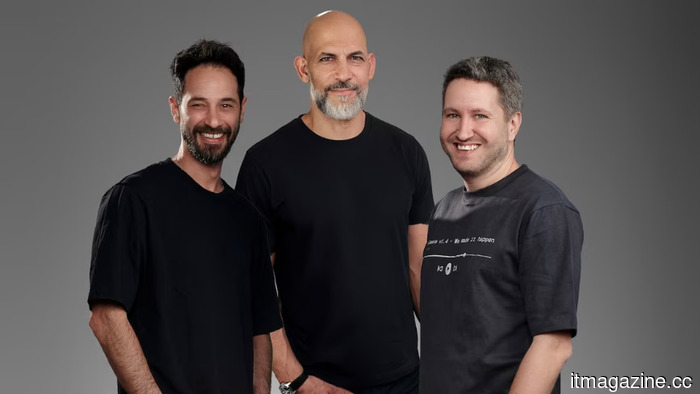 Airis Labs emerges from stealth mode with $60 million in funding and a proposal focused on video intelligence for defense agencies.
Defence-AI startup Airis Labs has come out of stealth mode with a total funding of $60 million, which includes a Series B round of $31 million led by PSG Equity, and is relocating its scaling operations to Washington DC.
Airis Labs emerges from stealth mode with $60 million in funding and a proposal focused on video intelligence for defense agencies.
Defence-AI startup Airis Labs has come out of stealth mode with a total funding of $60 million, which includes a Series B round of $31 million led by PSG Equity, and is relocating its scaling operations to Washington DC.
 Germany and Spain are opposing Brussels' proposals to impose a ban on Huawei equipment throughout the entire bloc.
Germany and Spain are opposing the European Commission's proposed binding legislation concerning Huawei and ZTE, pointing to the potential risk of retaliation from Beijing and the expenses related to the development of European AI infrastructure.
Germany and Spain are opposing Brussels' proposals to impose a ban on Huawei equipment throughout the entire bloc.
Germany and Spain are opposing the European Commission's proposed binding legislation concerning Huawei and ZTE, pointing to the potential risk of retaliation from Beijing and the expenses related to the development of European AI infrastructure.
 YouTube will now automatically label videos that are generated by AI.
YouTube is transitioning from a system of voluntary creator disclosures to an automatic detection method using AI for videos. This will include clear labels and permanent markers for content created with its tools or validated by C2PA metadata.
YouTube will now automatically label videos that are generated by AI.
YouTube is transitioning from a system of voluntary creator disclosures to an automatic detection method using AI for videos. This will include clear labels and permanent markers for content created with its tools or validated by C2PA metadata.
 Robinhood enables AI agents to engage in stock trading and utilize credit cards.
Robinhood introduces autonomous stock trading through MCP and a virtual credit card for AI agents that offers 3% cashback, making it the first significant retail brokerage to allow bots to take control.
Robinhood enables AI agents to engage in stock trading and utilize credit cards.
Robinhood introduces autonomous stock trading through MCP and a virtual credit card for AI agents that offers 3% cashback, making it the first significant retail brokerage to allow bots to take control.
EXCLUSIVE: The director and cast of Backrooms discuss the process of transforming a viral web series into one of A24’s most disturbing horror films.
Kane Parsons, Chiwetel Ejiofor, and Renate Reinsve discuss how A24’s Backrooms transforms the popular viral liminal horror series into a chilling psychological film that explores themes of isolation, liminal spaces, and emotional trauma.